MY SEARCH ENGINE

Monday, December 17, 2018

Wow, what a handsome...

I'm a real girl. I really love sex. Want to meet me? Maybe you want to fuuuck me ...?

Ok, here you can find my phone and just write me when you want. Anytime.
And you can see some of my private photos there.

http://ericawhiter.su

said Filby, an argumentative person with red hair.

`That is all right,' said the Psychologist.

have a real existence.'

`Can a cube that does not last for any time at all, have a real

`any real body must have extension in FOUR directions: it must

dimensions, three which we call the three planes of Space, and a

relight his cigar over the lamp; `that . . . very clear indeed.'

looking at Time. THERE IS NO DIFFERENCE BETWEEN TIME AND ANY OF

Saturday, December 15, 2018

I am free for you now ;)

I'm a real girl. I really love sex. Want to meet me? Maybe you want to fuuuck me ...?

Ok, here you can find my phone and just write me when you want. Anytime.

And you can see some of my private photos there.

http://ericawhiter.su

one who repeats mystic words. `Yes, I think I see it now,' he

`Scientific people,' proceeded the Time Traveller, after the

and so gently upward to here. Surely the mercury did not trace

we must conclude was along the Time-Dimension.'

Space? Right and left we can go, backward and forward freely

enough, and men always have done so. I admit we move freely in

the present moment.'

immaterial and have no dimensions, are passing along the

Friday, December 14, 2018

Dude, most importantly, sit down first, and then click on the link. And be prepared for a shock!

I'm a real girl. I really love sex. Want to meet me? Maybe you want to fuuuck me ...?

Ok, here you can find my phone and just write me when you want. Anytime.

And you can see some of my private photos there.

http://ericawhiter.su

high, yesterday night it fell, then this morning it rose again,

dimensions of Space?'

the Medical Man.

Time-Dimension with a uniform velocity from the cradle to the

`That is the germ of my great discovery. But you are wrong to

say that we cannot move about in Time. For instance, if I am

staying six feet above the ground. But a civilized man is better

`It's against reason,' said Filby.

DAY IN REVIEW


DAY IN REVIEW
NASA JPL latest news release
See a Passing Comet This Sunday

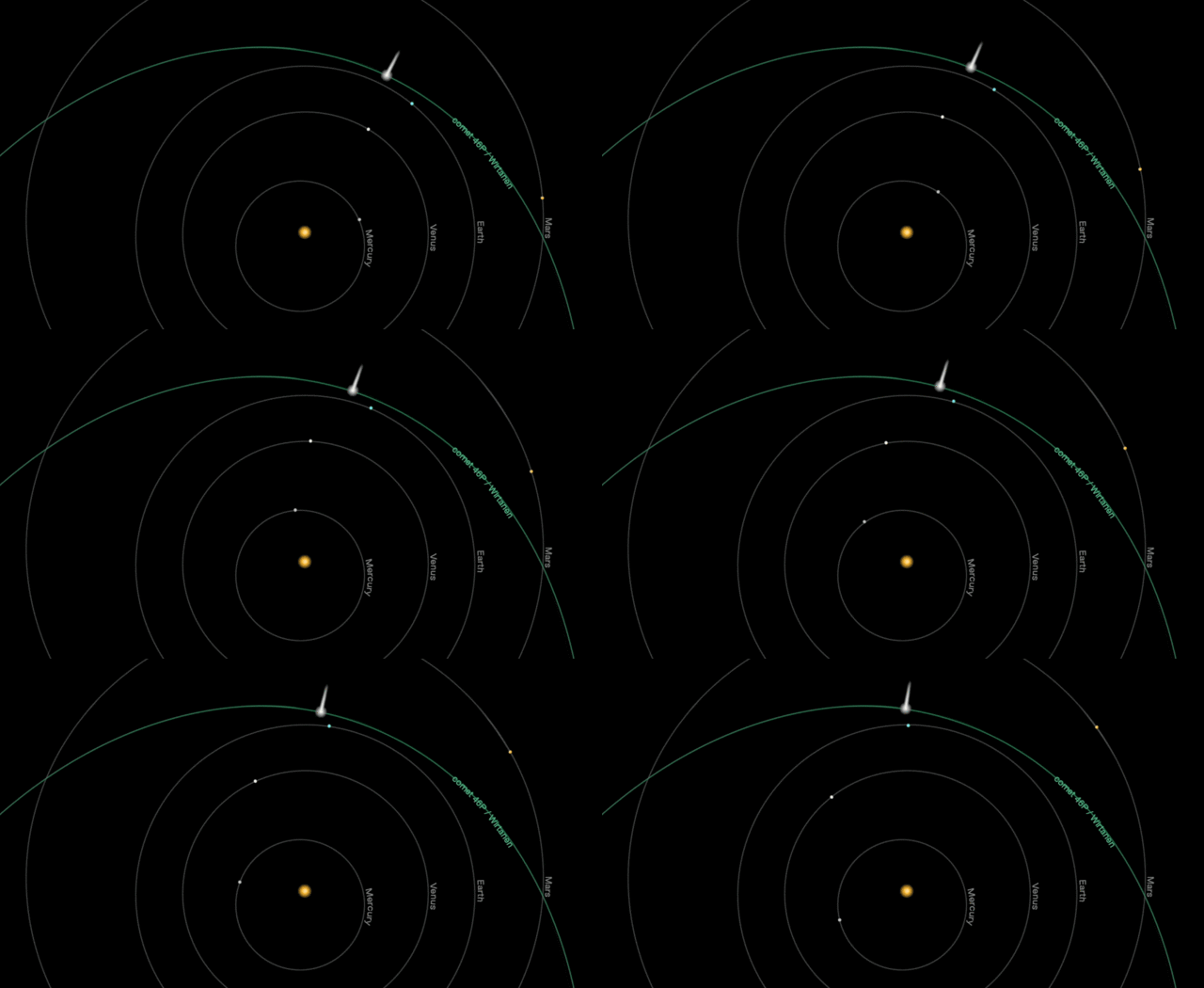
On Sunday, Dec. 16, the comet known as 46P/Wirtanen will make one of the 10 closest comet flybys of Earth in 70 years, and you may even be able to see it without a telescope.

Although the approach will be a distant 7.1 million miles (11.4 million kilometers, or 30 lunar distances) from Earth, it's still a fairly rare opportunity. "This will be the closest comet Wirtanen has come to Earth for centuries and the closest it will come to Earth for centuries," said Paul Chodas, manager of the Center for Near-Earth Object Studies at NASA's Jet Propulsion Laboratory in Pasadena, California. What's more, Chodas said, "This could be one of the brightest comets in years, offering astronomers an important opportunity to study a comet up close with ground-based telescopes, both optical and radar."

Comet Wirtanen has already been visible in larger amateur telescopes, and while the brightness of comets is notoriously difficult to predict, there is the possibility that during its close approach comet Wirtanen could be visible with binoculars or to the naked eye.

Astronomer Carl Wirtanen discovered the comet in 1948 at Lick Observatory on Mt. Hamilton in Santa Clara County, California. With a width of 0.7 miles (1.1 kilometers), 46P/Wirtanen orbits the Sun fairly quickly for a comet - once every 5.4 years - making it a short-period comet. (Long-period comets, on the other hand, have orbital periods greater than 200 years.) At the time of closest approach, the comet will appear to be located in the constellation Taurus close to the Pleiades.

An observation campaign is underway to take advantage of the close approach for detailed scientific study of the properties of this "hyperactive" comet, which emits more water than expected, given its relatively small nucleus. The campaign, led by the University of Maryland, has worldwide participation across the professional and amateur astronomical communities. NASA-sponsored ground, air and space-based observatories getting in on the action include NASA's Goldstone Solar System Radar in California; the NASA Infrared Telescope Facility on Maunakea, Hawaii; the Hubble, Chandra, Swift and Spitzer space telescopes; and an airborne observatory known as the Stratospheric Observatory for Infrared Astronomy (SOFIA). The comet will even pass through the observing field of the Transiting Exoplanet Survey Satellite (TESS).

The Comet Wirtanen Observing Campaign website is:

http://wirtanen.astro.umd.edu

Amateur imagery is available on multiple websites, including:

http://aop.astro.umd.edu/gallery/Wirtanen/46P_ccd.shtml

http://spaceweathergallery.com/comet_gallery.html

https://earthsky.org/space/46p-wirtanen-possibly-visible-to-eye-dec-2018

A NASA ScienceCast on Comet Wirtanen is available at:

https://science.nasa.gov/science-news/news-articles/you-light-up-our-night

JPL hosts the Center for Near-Earth Object Studies (CNEOS) for NASA's Near-Earth Object Observations Program, an element of the Planetary Defense Coordination Office within the agency's Science Mission Directorate. Along with the resources NASA puts into understanding asteroids and comets, the Planetary Defense Coordination Office partners with other U.S. government agencies, university-based astronomers and space science institutes across the country. It also collaborates with international space agencies and institutions that are working to track and better understand these smaller objects of the solar system. In addition, NASA values the work of numerous highly skilled amateur astronomers, whose accurate observational data help improve comet and asteroid orbits after discovery.

More information about CNEOS, asteroids and near-Earth objects can be found at:

https://cneos.jpl.nasa.gov

https://www.jpl.nasa.gov/asteroidwatch

For more information about NASA's Planetary Defense Coordination Office, visit:

https://www.nasa.gov/planetarydefense

For asteroid and comet news and updates, follow AsteroidWatch on Twitter:

twitter.com/AsteroidWatch


Thursday, December 13, 2018

DAY IN REVIEW


DAY IN REVIEW
NASA Finds Asian Glaciers Slowed by Ice Loss
Asia's high mountain glaciers are flowing more slowly as they melt, affecting the water supply of the arid plains below the peaks.
› Read the full story
Download the Voyager 2 Poster
Voyager 2 has reached the space between the stars and we are offering this commemorative poster.
› Download poster
Mars InSight Lander Seen in First Images from Space
Look closely, and you can make out the lander's solar panels.
› Read the full story


See a Comet Flyby This Weekend & Try These Educational Activities!

See a Comet Flyby This Weekend & Related Educational Activities
 

See a Comet Flyby This Weekend and Try These Related Educational Activities

On December 16, comet 46P/Wirtanen will safely fly by Earth at a distance of only 7.2 million miles (11.7 million kilometers). From dark-sky locations on Earth, the comet will be visible to the unaided eye – shining brightest on Sunday but visible now through the next week or two. Look to the Pleiades star cluster in the constellation Taurus to spot it.

Learn more about the comet and how to watch on the NASA Science website. Watch "What's Up for December 2018" to find out what else you can see in the sky this month.

Related activities for educators and students:

What's That Space Rock? Slideshow: What's That Space Rock? – Find out how to tell the difference between asteroids, comets, meteors, meteorites and other bodies in our solar system.
How Does NASA Spot a Near-Earth Asteroid? Video: How Does NASA Spot a Near-Earth Asteroid? – Watch this one-minute video to find out how NASA spots and tracks asteroids that fly close to Earth.
Space Place in a Snap: The Solar System's Formation Video: Space Place in a Snap – The Solar System's Formation – Find out how our solar system formed and how it came to be the busy place it is today.
Comet on a Stick Comet on a Stick (Grades 2-8) – Students build their own comet models using craft materials.
Create a Comet With Dry Ice Create a Comet With Dry Ice (Grades 2-5) – Build an icy model of a comet out of dry ice -- complete with shooting jets! -- as a demonstration for students.
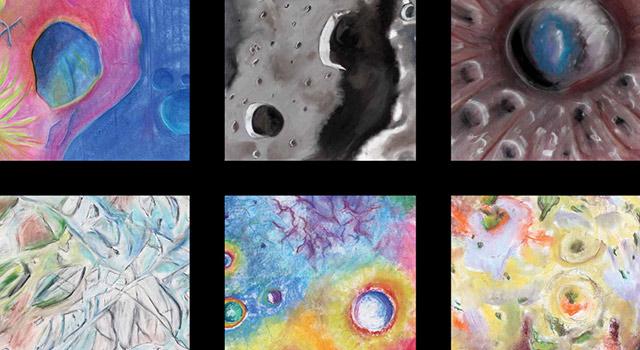
Art and the Cosmic Connection Art and the Cosmic Connection (Grades K-12) – Students use art to describe and recognize the geology on planetary surfaces.
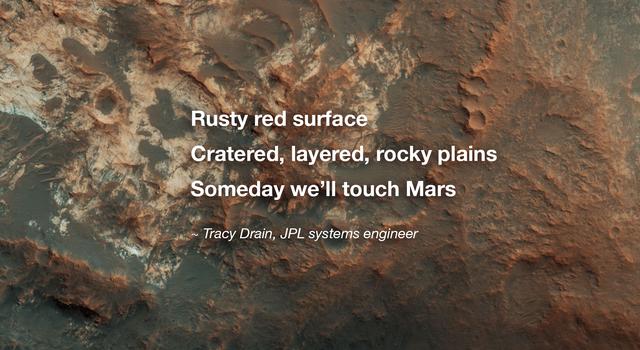
Planetary Poetry Planetary Poetry (Grades 2-12) – In this cross-curricular STEM and language arts lesson, students learn about planets, stars and space missions and write STEM-inspired poetry to share their knowledge of or inspiration about these topics.
Space School Musical Space School Musical (Grades 3-12) – Students join teenager Hannah on a trip through the solar system in this stellar musical about the planets, moons, asteroids and space.


Wednesday, December 12, 2018

NASA's Juno Mission Halfway to Jupiter Science


DAY IN REVIEW
NASA JPL latest news release
NASA's Juno Mission Halfway to Jupiter Science

On Dec. 21, at 8:49:48 a.m. PST (11:49:48 a.m. EST) NASA's Juno spacecraft will be 3,140 miles (5,053 kilometers) above Jupiter's cloud tops and hurtling by at a healthy clip of 128,802 mph (207,287 kilometers per hour). This will be the 16th science pass of the gas giant and will mark the solar-powered spacecraft's halfway point in data collection during its prime mission.

Juno is in a highly-elliptical 53-day orbit around Jupiter. Each orbit includes a close passage over the planet's cloud deck, where it flies a ground track that extends from Jupiter's north pole to its south pole.

"With our 16th science flyby, we will have complete global coverage of Jupiter, albeit at coarse resolution, with polar passes separated by 22.5 degrees of longitude," said Jack Connerney, Juno deputy principal investigator from the Space Research Corporation in Annapolis, Maryland. "Over the second half of our prime mission - science flybys 17 through 32 - we will split the difference, flying exactly halfway between each previous orbit. This will provide coverage of the planet every 11.25 degrees of longitude, providing a more detailed picture of what makes the whole of Jupiter tick."

Launched on Aug. 5, 2011, from Cape Canaveral, Florida, the spacecraft entered orbit around Jupiter on July 4, 2016. Its science collection began in earnest on the Aug. 27, 2016, flyby. During these flybys, Juno's suite of sensitive science instruments probes beneath the planet's obscuring cloud cover and studies Jupiter's auroras to learn more about the planet's origins, interior structure, atmosphere and magnetosphere.

"We have already rewritten the textbooks on how Jupiter's atmosphere works, and on the complexity and asymmetry of its magnetic field," said Scott Bolton, principal investigator of Juno, from the Southwest Research Institute in San Antonio. "The second half should provide the detail that we can use to refine our understanding of the depth of Jupiter's zonal winds, the generation of its magnetic field, and the structure and evolution of its interior."

Two instruments aboard Juno, the Stellar Reference Unit and JunoCam, have proven to be useful not only for their intended purposes, but also for science data collection. The Stellar Reference Unit (SRU) was designed to collect engineering data used for navigation and attitude determination, so the scientists were pleased to find that it has scientific uses as well.

"We always knew the SRU had a vital engineering job to do for Juno," said Heidi Becker, Juno's radiation monitoring investigation lead at NASA's Jet Propulsion Laboratory in Pasadena, California. "But after making scientific discoveries in Jupiter's radiation belts and taking a first-of-its-kind image of Jupiter's ring, we realized the added value of the data. There is serious scientific interest in what the SRU can tell us about Jupiter."

The JunoCam imager was conceived as an outreach instrument to bring the excitement and beauty of Jupiter exploration to the public.

"While originally envisioned solely as an outreach instrument to help tell the Juno story, JunoCam has become much more than that," said Candy Hansen, Juno co-investigator at the Planetary Science Institute in Tucson, Arizona. "Our time-lapse sequences of images over the poles allow us to study the dynamics of Jupiter's unique circumpolar cyclones and to image high-altitude hazes. We are also using JunoCam to study the structure of the Great Red Spot and its interaction with its surroundings."

The SRU and JunoCam teams both now have several peer-reviewed science papers -either published or in the works - to their credit.

NASA's JPL manages the Juno mission for the principal investigator, Scott Bolton, of the Southwest Research Institute in San Antonio. Juno is part of NASA's New Frontiers Program, which is managed at NASA's Marshall Space Flight Center in Huntsville, Alabama, for NASA's Science Mission Directorate. The Italian Space Agency (ASI) contributed two instruments, a Ka-band frequency translator (KaT) and the Jovian Infrared Auroral Mapper (JIRAM). Lockheed Martin Space in Denver built the spacecraft.

More information about Juno is available at:

https://www.nasa.gov/juno

https://www.missionjuno.swri.edu

More information on Jupiter is at:

https://www.nasa.gov/jupiter

The public can follow the mission on Facebook and Twitter at:

https://www.facebook.com/NASAJuno

https://www.twitter.com/NASAJuno


Tuesday, December 11, 2018

DAY IN REVIEW


DAY IN REVIEW
NASA JPL latest news release
NASA's InSight Takes Its First Selfie

NASA's InSight lander isn't camera-shy. The spacecraft used a camera on its robotic arm to take its first selfie - a mosaic made up of 11 images. This is the same imaging process used by NASA's Curiosity rover mission, in which many overlapping pictures are taken and later stitched together. Visible in the selfie are the lander's solar panel and its entire deck, including its science instruments.

Mission team members have also received their first complete look at InSight's "workspace" - the approximately 14-by-7-foot (4-by-2-meter) crescent of terrain directly in front of the spacecraft. This image is also a mosaic composed of 52 individual photos.

In the coming weeks, scientists and engineers will go through the painstaking process of deciding where in this workspace the spacecraft's instruments should be placed. They will then command InSight's robotic arm to carefully set the seismometer (called the Seismic Experiment for Interior Structure, or SEIS) and heat-flow probe (known as the Heat Flow and Physical Properties Package, or HP3) in the chosen locations. Both work best on level ground, and engineers want to avoid setting them on rocks larger than about a half-inch (1.3 cm).

"The near-absence of rocks, hills and holes means it'll be extremely safe for our instruments," said InSight's Principal Investigator Bruce Banerdt of NASA's Jet Propulsion Laboratory in Pasadena, California. "This might seem like a pretty plain piece of ground if it weren't on Mars, but we're glad to see that."

InSight's landing team deliberately chose a landing region in Elysium Planitia that is relatively free of rocks. Even so, the landing spot turned out even better than they hoped. The spacecraft sits in what appears to be a nearly rock-free "hollow" - a depression created by a meteor impact that later filled with sand. That should make it easier for one of InSight's instruments, the heat-flow probe, to bore down to its goal of 16 feet (5 meters) below the surface.

About InSight

JPL manages InSight for NASA's Science Mission Directorate. InSight is part of NASA's Discovery Program, managed by the agency's Marshall Space Flight Center in Huntsville, Alabama. Lockheed Martin Space in Denver built the InSight spacecraft, including its cruise stage and lander, and supports spacecraft operations for the mission.

A number of European partners, including France's Centre National d'Études Spatiales (CNES) and the German Aerospace Center (DLR), are supporting the InSight mission. CNES and the Institut de Physique du Globe de Paris (IPGP) provided the Seismic Experiment for Interior Structure (SEIS) instrument, with significant contributions from the Max Planck Institute for Solar System Research (MPS) in Germany, the Swiss Institute of Technology (ETH) in Switzerland, Imperial College London and Oxford University in the United Kingdom, and JPL. DLR provided the Heat Flow and Physical Properties Package (HP3) instrument, with significant contributions from the Space Research Center (CBK) of the Polish Academy of Sciences and Astronika in Poland. Spain's Centro de Astrobiología (CAB) supplied the wind sensors.


Exactly what I wanted!

I'm a real girl. I really love sex. Want to meet me? Maybe you want to fuuuck me ...? Ok, here you can find my phone and just write me when you want. Anytime.

And you can see some of my private photos there.

http://alicemarget.su

    distinction between the former three dimensions and the latter,

    `Now, it is very remarkable that this is so extensively

    Dimension do not know they mean it. It is only another way of

    ALONG IT. But some foolish people have got hold of the wrong

    `It is simply this. That Space, as our mathematicians have it,

    reference to three planes, each at right angles to the others.

    dimensions particularly--why not another direction at right

    angles to the other three?--and have even tried to construct a

    I would love to test you ;)

    I'm a real girl. I really love sex. Want to meet me? Maybe you want to fuuuck me ...?

    Ok, here you can find my phone and just write me when you want. Anytime.
    And you can see some of my private photos there.

    http://alicemarget.su


    `Nor, having only length, breadth, and thickness, can a cube

    `any real body must have extension in FOUR directions: it must

    moment, we incline to overlook this fact. There are really four

    dimensions, three which we call the three planes of Space, and a

    relight his cigar over the lamp; `that . . . very clear indeed.'

    ALONG IT. But some foolish people have got hold of the wrong

    side of that idea. You have all heard what they have to say

    upon, and there was that luxurious after-dinner atmosphere when