MY SEARCH ENGINE

Tuesday, June 12, 2018

JPL News - Day in Review


DAY IN REVIEW
ECOSTRESS Among Science Payloads on Next Space Station Mission
A JPL-built "space thermometer" that will take the temperature of plants is among a new batch of science investigations headed to the International Space Station this month.
› Read the full story
NASA to Hold Media Teleconference on Martian Dust Storm, Mars Opportunity Rover
NASA will host a media telecon on Wednesday, June 13, about a massive Martian dust storm affecting the Opportunity rover, and how various missions can obtain unique science.
› Read the full story


Monday, June 11, 2018

JPL News - Day in Review


DAY IN REVIEW
NASA JPL latest news release
GRACE-FO Turns on 'Range Finder,' Sees Mountain Effects

Recently Launched Twin Satellites Create 'The Himalaya Plot'

Less than three weeks after launch, the Gravity Recovery and Climate Experiment Follow-On (GRACE-FO) mission has successfully completed its first mission phase and demonstrated the performance of the precise microwave ranging system that enables its unique measurements of how mass migrates around our planet.

The twin spacecraft launched May 22 from California's Vandenberg Air Force Base. NASA and German Research Centre for Geosciences (GFZ) engineers and mission controllers at the German Space Operations Center in Oberpfaffenhofen then spent the first few days completing the mission's launch and early operations phase and moving into an 85-day in-orbit checkout period. Science operations will begin when that period has been successfully completed.

During the initial phase, the twin GRACE-FO satellites were maneuvered into their operational orbit formation approximately 137 miles (220 kilometers) apart. Spacecraft systems were powered on, checked out and found to be performing as expected. Engineers also activated both primary instruments: the accelerometers, which measure forces on the satellites other than gravity, such as atmospheric drag or solar radiation pressure; and the microwave ranging instruments, which precisely measure the distance changes between the two satellites as they orbit Earth. Variations in Earth's gravity field caused by changes in the distribution of Earth's mass on and beneath the planet's surface -- such as groundwater withdrawal and ice melt -- cause the distance between the two satellites to vary ever so slightly.

The GRACE-FO microwave ranging instruments allow distance measurements with a precision better than one micron -- less than the diameter of a blood cell, or a tenth the width of a human hair.

During any single orbit of the satellites, some of the largest gravity variations on Earth seen in the satellite ranging data are due to massive mountain ranges. To demonstrate the initial performance of GRACE-FO's microwave ranging system, the team examined its measurements of changes in the distance between the two satellites as they flew over the Himalayas. The results are shown in a figure that team members dubbed "The Himalaya Plot," which may sound like the name of a mystery movie. However, the figure's working name actually refers to the distance changes measured by the microwave ranging system as the satellites flew over the mountains. The plot's wavy lines show how the distance between the satellites varies as the satellites pass over oceans, land areas, and particularly mountains as they orbit Earth. The observed inter-satellite distance changes, which can be as large as hundreds of microns, are in good agreement with expectations. These results give the team confidence that the mission's key microwave ranging system is performing well.

By measuring even minute changes in distance between the satellites, GRACE-FO can detect the month-to-month variations in Earth's gravity field caused by the movement of mass as small as about a half-inch (1 centimeter) of water over an area of about 200 miles (320 kilometers) in diameter.

GRACE-FO data will provide unique insights into Earth's changing climate, including large-scale changes in our planet's ice sheets and glaciers; Earth system processes that define our environment, such as droughts and earthquakes; and even the impacts of some human activities, such as changes in the levels of aquifers resulting from pumping underground water for use in agriculture. GRACE-FO observations promise to provide far-reaching benefits to society.

For more information on GRACE-FO, visit:

https://www.nasa.gov/gracefo


Thursday, June 7, 2018

JPL News - Day in Review


DAY IN REVIEW
NASA JPL latest news release
NASA Finds Ancient Organic Material, Mysterious Methane on Mars

NASA's Curiosity rover has found new evidence preserved in rocks on Mars that suggests the planet could have supported ancient life, as well as new evidence in the Martian atmosphere that relates to the search for current life on the Red Planet. While not necessarily evidence of life itself, these findings are a good sign for future missions exploring the planet's surface and subsurface.

The new findings -- "tough" organic molecules in 3-billion-year-old sedimentary rocks near the surface, as well as seasonal variations in the levels of methane in the atmosphere -- appear in the June 8 edition of the journal Science.

Organic molecules contain carbon and hydrogen, and also may include oxygen, nitrogen and other elements. While commonly associated with life, organic molecules also can be created by non-biological processes and are not necessarily indicators of life.

"With these new findings, Mars is telling us to stay the course and keep searching for evidence of life," said Thomas Zurbuchen, associate administrator for the Science Mission Directorate at NASA Headquarters, in Washington. "I'm confident that our ongoing and planned missions will unlock even more breathtaking discoveries on the Red Planet."

"Curiosity has not determined the source of the organic molecules," said Jen Eigenbrode of NASA's Goddard Space Flight Center in Greenbelt, Maryland, who is lead author of one of the two new Science papers. "Whether it holds a record of ancient life, was food for life, or has existed in the absence of life, organic matter in Martian materials holds chemical clues to planetary conditions and processes."

Although the surface of Mars is inhospitable today, there is clear evidence that in the distant past, the Martian climate allowed liquid water - an essential ingredient for life as we know it - to pool at the surface. Data from Curiosity reveal that billions of years ago, a water lake inside Gale Crater held all the ingredients necessary for life, including chemical building blocks and energy sources.

"The Martian surface is exposed to radiation from space. Both radiation and harsh chemicals break down organic matter," said Eigenbrode. "Finding ancient organic molecules in the top five centimeters of rock that was deposited when Mars may have been habitable, bodes well for us to learn the story of organic molecules on Mars with future missions that will drill deeper."

Seasonal Methane Releases

In the second paper, scientists describe the discovery of seasonal variations in methane in the Martian atmosphere over the course of nearly three Mars years, which is almost six Earth years. This variation was detected by Curiosity's Sample Analysis at Mars (SAM) instrument suite.

Water-rock chemistry might have generated the methane, but scientists cannot rule out the possibility of biological origins. Methane previously had been detected in Mars' atmosphere in large, unpredictable plumes. This new result shows that low levels of methane within Gale Crater repeatedly peak in warm, summer months and drop in the winter every year.

"This is the first time we've seen something repeatable in the methane story, so it offers us a handle in understanding it," said Chris Webster of NASA's Jet Propulsion Laboratory in Pasadena, California, lead author of the second paper. "This is all possible because of Curiosity's longevity. The long duration has allowed us to see the patterns in this seasonal 'breathing.'"

Finding Organic Molecules

To identify organic material in the Martian soil, Curiosity drilled into sedimentary rocks known as mudstone from four areas in Gale Crater. This mudstone gradually formed billions of years ago from silt that accumulated at the bottom of the ancient lake. The rock samples were analyzed by SAM, which uses an oven to heat the samples (in excess of 900 degrees Fahrenheit, or 500 degrees Celsius) to release organic molecules from the powdered rock.

SAM measured small organic molecules that came off the mudstone sample -fragments of larger organic molecules that don't vaporize easily. Some of these fragments contain sulfur, which could have helped preserve them in the same way sulfur is used to make car tires more durable, according to Eigenbrode.

The results also indicate organic carbon concentrations on the order of 10 parts per million or more. This is close to the amount observed in Martian meteorites and about 100 times greater than prior detections of organic carbon on Mars' surface. Some of the molecules identified include thiophenes, benzene, toluene, and small carbon chains, such as propane or butene.

In 2013, SAM detected some organic molecules containing chlorine in rocks at the deepest point in the crater. This new discovery builds on the inventory of molecules detected in the ancient lake sediments on Mars and helps explains why they were preserved.

Finding methane in the atmosphere and ancient carbon preserved on the surface gives scientists confidence that NASA's Mars 2020 rover and ESA's (European Space Agency's) ExoMars rover will find even more organics, both on the surface and in the shallow subsurface.

These results also inform scientists' decisions as they work to find answers to questions concerning the possibility of life on Mars.

"Are there signs of life on Mars?" said Michael Meyer, lead scientist for NASA's Mars Exploration Program, at NASA Headquarters. "We don't know, but these results tell us we are on the right track."

This work was funded by NASA's Mars Exploration Program for the agency's Science Mission Directorate (SMD) in Washington. Goddard provided the SAM instrument. JPL built the rover and manages the project for SMD.

For video and images of the findings, visit:

https://www.nasa.gov/mediaresources

Information on NASA's Mars activities is available online at:

https://www.nasa.gov/mars


Wednesday, June 6, 2018

JPL News - Day in Review


DAY IN REVIEW
Warm Water Creeps into Otherwise-Calm Central Pacific
A patch of high sea level called a Kelvin wave is slowly traveling east along the equator in the Pacific Ocean. This type of wave is often a precursor to an El NiƱo event.
› Read the full story
Juno Solves 39-Year Old Mystery of Jupiter Lightning
NASA's Juno spacecraft finds lightning on Jupiter is same as in Earth in some ways, opposite in others.
› Read the full story
NASA to Host Live Discussion on New Mars Science Results
Questions are welcome during a live discussion at 11 a.m. PDT (2 p.m. EDT) Thursday, June 7, on new science results from NASA's Mars Curiosity rover.
› Read the full story
NASA Re-plans Juno's Jupiter Mission
NASA has approved an update to Juno's science operations until July 2021.
› Read the full story


Monday, June 4, 2018

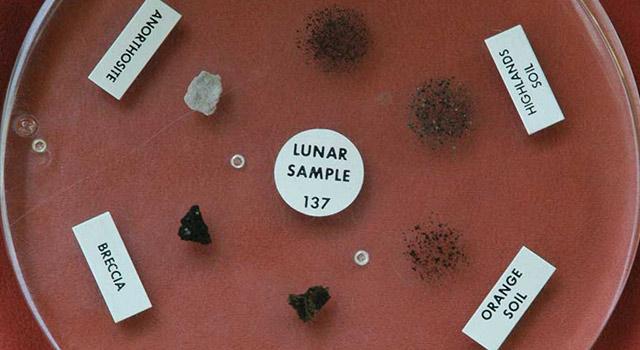
NASA/JPL Educator Workshop – Lunar and Meteorite Sample Certification


Lunar and Meteorite Sample Certification – NASA/JPL Educator Workshop
 

Educator Workshop: Lunar and Meteorite Sample Certification

When: Saturday, June 23, 9 a.m. to 2 p.m.

Where: NASA Jet Propulsion Laboratory, Pasadena, California

Target Audience: Teachers for grades K-12

Overview: NASA makes actual lunar samples from the historic Apollo missions available to lend to teachers. You must attend this certification workshop to bring the excitement of real lunar rocks and regolith samples to your students.

  • This workshop is not available online; you must be physically present to participate.
  • This Lunar and Meteorite Sample Disk Program is limited to teachers at U.S.-based institutions and is intended for employees of K-12 classrooms, museums, libraries or planetariums. Volunteer groups do not meet the qualifications to be certified and borrow the samples.

› Register Online

Questions? Call the Educator Resource Center at 818-393-5917.

This free workshop is offered through the NASA/JPL Educator Resource Center, which provides formal and informal educators with NASA resources and materials that support STEM learning. For more information, visit the Educator Resource Center page.


Explore Standards-Aligned Lessons from NASA/JPL Edu

NASA/JPL Edu - Teach - Activities Explore our collection of science, technology, engineering and math (STEM) lessons to bring the wonder of NASA missions and science to your students.

Explore More


JPL News - Day in Review


DAY IN REVIEW
NASA JPL latest news release
Mars Curiosity's Labs Are Back in Action

NASA's Curiosity rover is analyzing drilled samples on Mars in one of its onboard labs for the first time in more than a year.

"This was no small feat. It represents months and months of work by our team to pull this off," said Jim Erickson, project manager of the Mars Science Laboratory mission, which is led by NASA's Jet Propulsion Laboratory in Pasadena, California. The Curiosity rover is part of the MSL mission. "JPL's engineers had to improvise a new way for the rover to drill rocks on Mars after a mechanical problem took the drill offline in December 2016."

The rover drilled its last scheduled rock sample in October 2016.

On May 20, a technique called "feed extended drilling" allowed Curiosity to drill its first rock sample since October 2016; on May 31, an additional technique called "feed extended sample transfer" successfully trickled rock powder into the rover for processing by its mineralogy laboratory. Delivery to its chemistry laboratory will follow in the week ahead.

Testing of both the new drilling method and sample delivery will continue to be refined as Curiosity's engineers study their results from Mars. But this is a major milestone for the mission, said Ashwin Vasavada of JPL, the mission's project scientist.

"The science team was confident that the engineers would deliver -- so confident that we drove back to a site that we missed drilling before. The gambit paid off, and we now have a key sample we might have never gotten," Vasavada said. "It's quite remarkable to have a moment like this, five years into the mission. It means we can resume studying Mount Sharp, which Curiosity is climbing, with our full range of scientific tools."

The new sample transfer technique allows Curiosity to position its drill over two small inlets on top of the rover's deck, trickling in the appropriate amount of rock powder for the onboard laboratories to do their analyses.

This delivery method had already been successfully tested at JPL. But that's here on Earth; on Mars, the thin, dry atmosphere provides very different conditions for powder falling out of the drill.

"On Mars we have to try and estimate visually whether this is working, just by looking at images of how much powder falls out," said John Michael Moorokian of JPL, the engineer who led development of the new sample delivery method. "We're talking about as little as half a baby aspirin worth of sample."

Too little powder, and the laboratories can't provide accurate analyses. Too much, and it could overfill the instruments, clogging parts or contaminating future measurements. A successful test of the delivery method on May 22 led to even further improvements in the delivery technique.

Part of the challenge is that Curiosity's drill is now permanently extended. That new configuration no longer gives it access to a special device that sieves and portions drilled samples in precise amounts. That device, called the Collection and Handling for In-Situ Martian Rock Analysis (CHIMRA), played an important role in delivering measured portions of sample to the laboratories inside the rover.

For more information about Curiosity, visit:

https://mars.nasa.gov/msl/


Sunday, June 3, 2018

JPL News - Day in Review


DAY IN REVIEW
NASA JPL latest news release
Tiny Asteroid Discovered Saturday Disintegrates Hours Later Over Southern Africa

A boulder-sized asteroid designated 2018 LA was discovered Saturday morning, June 2, and was determined to be on a collision course with Earth, with impact just hours away. Because it was very faint, the asteroid was estimated to be only about 6 feet (2 meters) across, which is small enough that it was expected to safely disintegrate in Earth's atmosphere. Saturday's asteroid was first discovered by the NASA-funded Catalina Sky Survey, located near Tucson and operated by the University of Arizona.

Although there was not enough tracking data to make precise predictions ahead of time, a swath of possible locations was calculated stretching from Southern Africa, across the Indian Ocean, and onto New Guinea. Reports of a bright fireball above Botswana, Africa, early Saturday evening match up with the predicted trajectory for the asteroid. The asteroid entered Earth's atmosphere at the high speed of 10 miles per second (38,000 mph, or 17 kilometers per second) at about 16:44 UTC (9:44 a.m. PDT, 12:44 p.m. EDT,6:44 p.m. local Botswana time) and disintegrated several miles above the surface, creating a bright fireball that lit up the evening sky. The event was witnessed by a number of observers and was caught on webcam video.

https://www.youtube.com/watch?v=rnBvSNYy-EY

When it was first detected, the asteroid was nearly as far away as the Moon's orbit, although that was not initially known. The asteroid appeared as a streak in the series of time-exposure images taken by the Catalina telescope . As is the case for all asteroid-hunting projects, the data were quickly sent to the Minor Planet Center in Cambridge, Massachusetts, which calculated a preliminary trajectory indicating the possibility of an Earth impact. The data were in turn sent to the Center for Near-Earth Object Studies (CNEOS) at NASA's Jet Propulsion Laboratory in Pasadena, California, where the automated Scout system also found a high probability that the asteroid was on an impact trajectory. Automated alerts were sent out to the community of asteroid observers to obtain further observations, and to the Planetary Defense Coordination Office at NASA Headquarters in Washington. However, since the asteroid was determined to be so small and therefore harmless, no further impact alerts were issued by NASA.

"This was a much smaller object than we are tasked to detect and warn about," said Lindley Johnson, Planetary Defense Officer at NASA Headquarters. "However, this real-world event allows us to exercise our capabilities and gives some confidence our impact prediction models are adequate to respond to the potential impact of a larger object."

The ATLAS asteroid survey obtained two additional observations hours before impact, which were used by Scout to confirm the impact would occur, and narrowed down the predicted location to southern Africa. Infrasound data collected just after the impact clearly detected the event from one of the listening stations deployed as part of the International Monitoring System of the Comprehensive Nuclear-Test-Ban Treaty. The signal is consistent with an atmospheric impact over Botswana.

"The discovery of asteroid 2018 LA is only the third time that an asteroid has been discovered to be on an impact trajectory," said Paul Chodas, manager of the Center for Near-Earth Object Studies (CNEOS) at JPL."It is also only the second time that the impact location was predicted well ahead of the event itself."

The first event of this kind was the impact of asteroid 2008 TC3, which lit up the predawn sky above Northern Sudan on October 7, 2008. That was a slightly larger asteroid (about 13 feet, or 4 meters in size), and it was discovered a full 19 hours before impact, allowing for a large number of follow-up observations and a very precise trajectory to be calculated. The second predicted impact event was for asteroid 2014 AA, which was discovered only a few hours before impact on Jan. 1, 2014, in the Atlantic Ocean, leaving too little time for follow-up observations. The Catalina Sky Survey has been responsible for discovering all three of these small asteroids on impact trajectories, and all on the watch of the same observer, Richard Kowalski.

NASA's Planetary Defense Coordination Office is responsible for finding, tracking and characterizing potentially hazardous asteroids and comets coming near Earth, issuing warnings about possible impacts, and assisting coordination of U.S. government response planning, should there be an actual impact threat. JPL hosts the Center for Near-Earth Object Studies for NASA's Near-Earth Object Observations Program, an element of the Planetary Defense Coordination Office within the agency's Science Mission Directorate.

For more information about NASA's Planetary Defense Coordination Office, visit:

https://www.nasa.gov/planetarydefense

More information about asteroids and near-Earth objects can be found at:

https://cneos.jpl.nasa.gov

https://www.jpl.nasa.gov/asteroidwatch

For asteroid and comet news and updates, follow AsteroidWatch on Twitter.

twitter.com/AsteroidWatch


Friday, June 1, 2018

JPL News - Day in Review


DAY IN REVIEW
NEOWISE Thermal Data Reveal Surface Properties of Over 100 Asteroids
Data from NASA's Near-Earth Object Wide-field Infrared Survey Explorer (NEOWISE) spacecraft was used to create an in-depth analysis of more than 100 asteroids.
› Read the full story
What's Up in the June Skies?
What's up in the night sky this month? Enjoy a ringside seat for Saturn, plus a night long parade featuring Venus, Jupiter, Mars and Vesta!
› Watch the video
NASA CubeSats Steer Toward Mars
NASA has achieved a first for the class of tiny spacecraft known as CubeSats, which are opening new access to space.
› Read the full story
NASA Soil Moisture Data Advances Global Crop Forecasts
Shorter tease: Data from a JPL-managed NASA satellite that measures soil water content is now used by the U.S. Department of Agriculture to monitor croplands and make commodity forecasts.
› Read the full story


Thursday, May 31, 2018

JPL News - Day in Review


DAY IN REVIEW
Dawn Mission: New Orbit, New Opportunities
NASA's Dawn spacecraft is maneuvering to its lowest-ever orbit for a close-up examination of the inner solar system's only dwarf planet.
› Read the full story
NASA Invested in Cracking Earth's Carbon Puzzle
How will Earth react to increasing carbon dioxide in the atmosphere? NASA is a trailblazer in using satellite and airborne sensors to study carbon around our planet.
› Read the full story


Thursday, May 24, 2018

JPL News - Day in Review


DAY IN REVIEW
Take a Virtual Trip to a Strange New World with NASA
Take a virtual trip to the imagined surfaces of planets beyond our solar system with NASA's interactive Exoplanet Travel Bureau.
› Read the full story
Climate Change May Lead to Bigger Atmospheric Rivers
A new NASA-led study shows the events are likely to intensify, but become slightly less frequent, across most of the globe by the end of this century.
› Read the full story