MY SEARCH ENGINE

Tuesday, April 3, 2018

Perkhidmatan buat CV / Resume DAN Carikan Majikan - Kerja yang sesuai dgn Resume

Kami menyediakan khidmat Membuat Resume (English / B.Melayu) DAN Carikan Majikan - Kerja yang sesuai dgn Resume


Prosedur membuat Resume / CV :

1. Emelkan semua dibawah ke - my_cambridge[at]yahoo.com :


- Butir diri yang diperlukan seperti latar belakang anda, pengalaman, pendidikan, apa apa pencapaian yang berkaitan dengan bidang yang dipohon.

- Nyatakan maklumat syarikat yang ingin dipohon ATAU ingin kami carikan Majikan - kerja yang sesuai dengan anda ?

- Nayatakan samada anda ingin Resume (pendek biasa dalam 2 ~ 3 m/s) ATAU CV (panjang biasa 8 ~ 10 m/s - biasanya dikepilkan hasil penyelidikan di Universiti)

- Nyatakan samada ingin dalam bahasa Melayu ATAU English


2. Kami akan reply dengan "Quotation Harga" serta akaun pembayaran.


3. Buat pembayaran dan kerja kerja membuat resume akan dimulakan.


4. Resume/CV yang telah siap akan diemelkan dalam format Words, dalam tempoh 2 ~ 4 hari


*Maklumat lanjut di http://www.EnglishtoMalay.co.nr / http://MyCambridge.blogspot.my


*****Share INFO ini di Wall Facebook Anda !


buat resume online buat resume kerja buat resume bahasa melayu buat resume online free buat resume free buat resume guna iphone buat resume secara online buat resume powerpoint buat resume guna word buat resume 2017 buat resume buat resume guna apa buat resume guna microsoft apa aplikasi buat resume apps buat resume cara buat resume di android cara buat resume guna adobe photoshop cara buat resume guna android cara buat cv atau resume buat resume.blogspot buat resume baru buat resume bahasa inggris cara buat resume bahasa melayu cara buat resume bahasa inggeris cara buat resume bahasa english cara buat resume bergambar cara buat resume bahasa inggris cara buat resume biasiswa buat resume.blogspot.com buat resume di jobstreet.com cara buat cover resume cara buat resume cara buat resume mohon kerja cara buat resume ringkas cara buat resume terbaik cara buat resume lengkap cara buat resume online buat resume di jobstreet buat resume di jobsdb cara buat resume dalam bahasa melayu cara buat resume dalam bahasa inggris cara buat resume dengan betul cara buat resume dalam telepon cara buat resume diri cara buat resume dan cover letter cara buat resume dalam english cara buat resume english cara buat resume email cara buat resume melalui email cara buat resume guna email cara buat resume untuk email cara buat resume di email cara nak buat resume format cara buat format resume format buat resume buat resume guna powerpoint buat resume guna handphone buat resume guna excel buat resume guna phone buat resume guna photoshop cara buat resume guna microsoft word cara buat resume hotel cara buat resume kerja hotel cara buat resume di hp cara buat resume internship cara buat resume interview cara buat resume infografik cara buat resume inggris cara buat resume latihan industri buat resume jobstreet buat resume jobsdb buat resume jobstret cara buat resume jururawat cara buat resume temuduga jururawat cara buat resume di jobsdb cara buat resume jurnal cara buat resume jobsdb contoh resume buat jobstreet buat resume kerja online cara buat resume kerja kerajaan cara buat resume kerja kilang cara buat resume kerja kerani cara buat resume kreatif cara buat resume kerja bank cara buat resume kerajaan nak buat resume kerja buat resume lengkap buat resume lamaran kerja cara buat resume lepasan spm contoh buat resume lepasan spm contoh buat resume lengkap cara nak buat resume lepasan spm cara buat resume yang lengkap cara buat resume guna laptop buat resume mudah buat resume menarik buat resume memohon kerja cara buat resume menggunakan microsoft word cara buat resume minta kerja cara buat resume mohon kerja kerajaan cara buat resume menarik nak buat resume nak buat resume online buat resume online bahasa melayu cara nak buat resume online objektif buat resume buat curriculum vitae online contoh buat resume online buat resume percuma buat resume pekerjaan cara buat resume pekerjaan cara buat resume permohonan kerja cara buat resume pdf cara buat resume praktikal cara buat resume pelajar cara buat resume paling mudah buat resume ringkas buat resume sample cara buat resume spm cara buat resume spa cara buat resume sambung belajar cara buat resume separa perubatan cara buat resume step by step cara buat surat resume contoh buat surat resume cara nak buat resume spa buat resume terbaik cara buat resume temuduga cara buat resume taraf spm cara buat resume temuduga spa cara buat resume tiada pengalaman kerja cara buat resume tanpa pengalaman kerja contoh buat resume terkini cara nak buat resume terbaik cara buat resume untuk praktikal cara buat resume untuk kerja cara buat resume untuk lepasan spm cara buat resume untuk cari kerja cara buat resume untuk temuduga kerajaan cara buat resume untuk spa cara buat resume untuk biasiswa cara buat resume untuk minta kerja cara buat resume untuk kerja offshore cara buat resume untuk temuduga spa cara buat video resume cara nak buat video resume cara buat resume guna word buat resume yang baik cara buat resume yang betul cara buat resume yang ringkas cara buat resume yang terbaik contoh buat resume yang betul cara buat resume yang menarik cara cara buat resume yang betul cara nak buat resume yang baik cara buat resume yang baik dan benar cara buat resume yang benar cara buat resume 2015 cara buat resume 2014 contoh buat resume 2015 agensi cari kerja di klang agensi cari kerja di penang agensi cari kerja di kuantan agensi cari kerja di shah alam agensi cari kerja kuantan agensi cari kerja melaka agensi cari kerja klang agensi cari kerja shah alam agensi cari kerja di johor agensi cari kerja di ipoh agensi cari kerja cari kerja guna agensi cari kerja guna agensi pekerjaan cari kerja melalui agensi pekerjaan

JPL News - Day in Review


DAY IN REVIEW
NASA JPL latest news release
NASA Announces New Hubble Fellows Selected for 2018

NASA has selected 24 new Fellows for its prestigious NASA Hubble Fellowship Program (NHFP). The program enables outstanding postdoctoral scientists to pursue independent research in any area of NASA Astrophysics, using theory, observation, experimentation, or instrument development. Each fellowship provides the awardee up to three years of support.

The new NHFP preserves the legacy of NASA's previous postdoctoral fellowship programs, the Hubble, Einstein and Sagan Fellowships. Once selected, fellows are named to one of three sub-categories corresponding to three broad scientific questions NASA has sought to answer about the universe:

  • How does the universe work? - Einstein Fellows
  • How did we get here? - Hubble Fellows
  • Are we alone? - Sagan Fellows

The NHFP continues to be one of the highlights of NASA's pursuit of excellence in space science.

"The NASA Hubble Fellowship Program selects some of the best new scientists and provides opportunities for them to excel in the field of astrophysics," said Paul Hertz, Astrophysics Division Director at NASA Headquarters, Washington. "Their discoveries will advance our understanding of the cosmos and bring us closer to solving the mysteries of the universe."

The newly selected NHFP Fellows will begin their programs in the fall of 2018 at a host university or research center of their choosing in the United States. The list below provides the names of the 2018 awardees, their host institutions, and their proposed research topics:

Einstein Fellows

  • Kate Alexander, Northwestern University, Quantifying the Diversity of Relativistic Transients with Radio Observations
  • Benedikt Diemer, Harvard University, Mapping the True Boundary of Dark Matter Halos with the Splashback Radius
  • Ke Fang, Stanford University, The Highest-energy Electromagnetic Counterparts to Neutron Star Mergers
  • Maximiliano Isi, Massachusetts Institute of Technology, Fundamental Physics in the Era of Gravitational Wave Astronomy
  • Ben Margalit, University of California-Berkeley, Interpreting the Diverse Transient Sky
  • Aaron Smith, Massachusetts Institute of Technology, Radiation Signatures of the First Galaxies and Supermassive Black Holes
  • Vladimir Zhdankin, Princeton University, First-Principles Modeling of Astrophysical Turbulence in Collisionless, Nonthermal Plasmas

Hubble Fellows

  • Philip Cowperthwaite, Carnegie Observatories, Driving the Growth of Joint Gravitational Wave and Electromagnetic Astronomy
  • Daniel Goldstein, Jet Propulsion Laboratory,Putting a New Generation of Strongly Lensed Supernovae to Work
  • Max Gronke, University of California-Santa Barbara, Casting (Lyman-Alpha) Light on Galaxy Formation
  • Melodie Kao, Arizona State University, How Do Substellar Objects Generate Magnetic Fields?
  • Charlotte Mason, Smithsonian Astrophysical Observatory, Revolutionizing Reionization with JWST
  • Aaron Meisner, Caltech, Revealing the Sun's Coolest, Nearest Neighbors with NEOWISE-Reactivation
  • Erica Nelson, Harvard University, The Emergence of Galactic Structure
  • Anna Schauer, University of Texas-Austin, Minihaloes: Formation Sites of the First Stars and the Onset of Reionization
  • Irene Shivaei, University of Arizona, Unveiling the Obscured Early Universe in the JWST Era
  • Tuguldur Sukhbold, The Ohio State University, Core-Collapse Supernovae Across Metallicities and Engines
  • Jamie Tayar, University of Hawaii-Institute for Astronomy, Subgiants: Models, Rotation, Convection, and Planets
  • Yuan-Sen Ting, Institute for Advanced Study, Chemically Tagging the Milky Way

Sagan Fellows

  • Ian Czekala, University of California-Berkeley, A Uniform Measurement of Pre-Main Sequence Stellar Masses and System Architectures Using Protoplanetary Disks
  • Johan Mazoyer, Jet Propulsion Laboratory, Can We Detect Exo-Earths with Future Large Space-Based Coronagraphic Instruments?
  • Erik Petigura, Caltech, The Origin of Small Planets
  • Kamber Schwarz, University of Arizona, The Evolution of Volatile Molecules from Protoplanetary Disks to Exoplanet Atmospheres
  • Daniel Tamayo, Princeton University, A Million-Fold Speedup in the Dynamical Characterization of Exoplanet Systems

More than 500 of the world's prominent and active scientists in astrophysics have been supported in their early careers since NASA began the fellowship program in 1990 with the creation of the original Hubble Fellowship. The Space Telescope Science Institute (STScI) administers the NHFP on behalf of NASA, in collaboration with the NASA Exoplanet Science Institute (NExScI) at Caltech in Pasadena, California, and the Chandra X-ray Center (CXC) at the Smithsonian Astrophysical Observatory in Cambridge, Massachusetts.

An important part of the NHFP are the Symposia, which allow Fellows the opportunity to present results of their research, to meet each other and the scientific and administrative staff who manage the program.

The Chandra X-ray Center administers the Einstein Fellowship program for NASA. NASA's Marshall Space Flight Center in Huntsville, Alabama, manages the Chandra program for NASA's Science Mission Directorate in Washington. The Smithsonian Astrophysical Observatory controls Chandra's science and flight operations. STScI administers the Hubble Fellowship program for NASA. STScI is the science operations center for the Hubble Space Telescope and the science and mission operations center for the James Webb Space Telescope, scheduled for launch in 2020. STScI is operated for NASA by the Association of Universities for Research in Astronomy, in Washington. The NASA Exoplanet Science Institute, which is operated at Caltech in coordination with the Jet Propulsion Laboratory, administers the Sagan Fellowship program for NASA.

For photos and more information about the 2018 NHFP Fellows and this program visit:

http://hubblesite.org/news_release/news/2018-22

https://nhfp.stsci.edu/nhfp-2018-fellows


Monday, April 2, 2018

Save the date! Tickets for Explore JPL will be distributed at 9 a.m. PDT Saturday, April 7


DAY IN REVIEW
Online Tickets to 'Explore JPL' Available Soon
Information about ticketing for this year's "Explore JPL" event at JPL
› Read the full story
NASA Invests in Shapeshifters, Biobots, Other Visionary Technology
NASA is investing in technology concepts, including several from JPL, that may one day be used for future space exploration missions.
› Read the full story
What's Up in the April Skies?
The Moon, Mars and Saturn form a pretty triangle in early April. Lyrid meteors are visible late in the month, peaking high overhead on the 22nd.
› Watch the video
Mars Report: March 30, 2018
NASA's InSight arrives at Vandenberg AFB and readies for launch, Opportunity uses its grinder for the first time in 300 sols, and Curiosity celebrates 2,000 Martian days on the Red Planet.
› Watch the video


Friday, March 30, 2018

JPL News - Day in Review


DAY IN REVIEW
NASA Visualizes the Dance of a Melting Snowflake
A video featuring the first 3-D model of a melting snowflake and other snowflake research.
› Read the full story
NASA is Ready to Study the Heart of Mars
NASA is about to go on a journey to study the center of Mars.
› Read the full story


Wednesday, March 28, 2018

JPL News - Day in Review


DAY IN REVIEW
NASA JPL latest news release
'Marsquakes' Could Shake Up Planetary Science

Starting next year, scientists will get their first look deep below the surface of Mars.

That's when NASA will send the first robotic lander dedicated to exploring the planet's subsurface. InSight, which stands for Interior Exploration using Seismic Investigations, will study marsquakes to learn about the Martian crust, mantle and core.

Doing so could help answer a big question: how are planets born?

Seismology, the study of quakes, has already revealed some of the answers here on Earth, said Bruce Banerdt, Insight's principal investigator at NASA's Jet Propulsion Laboratory, Pasadena, California. But Earth has been churning its geologic record for billions of years, hiding its most ancient history. Mars, at half the size of Earth, churns far less: it's a fossil planet, preserving the history of its early birth.

"During formation, this ball of featureless rock metamorphosed into a diverse and fascinating planet, almost like caterpillar to a butterfly," Banerdt said. "We want to use seismology to learn why Mars formed the way it did, and how planets take shape in general."

A Planetary CT Scan

When rocks crack or shift, they give off seismic waves that bounce throughout a planet. These waves, better known as quakes, travel at different speeds depending on the geologic material they travel through.

Seismometers, like InSight's SEIS instrument, measure the size, frequency and speed of these quakes, offering scientists a snapshot of the material they pass through.

"A seismometer is like a camera that takes an image of a planet's interior," Banerdt said. "It's a bit like taking a CT scan of a planet."

Mars' geologic record includes lighter rocks and minerals -- which rose from the planet's interior to form the Martian crust -- and heavier rocks and minerals that sank to form the Martian mantle and core. By learning about the layering of these materials, scientists can explain why some rocky planets turn into an "Earth" rather than a "Mars" or "Venus" -- a factor that is essential to understanding where life can appear in the universe.

A Fuzzy Picture

Each time a quake happens on Mars, it will give InSight a "snapshot" of the planet's interior. The InSight team estimates the spacecraft will see between a couple dozen to several hundred quakes over the course of the mission. Small meteorites, which pass through the thin Martian atmosphere on a regular basis, will also serve as seismic "snapshots."

"It will be a fuzzy picture at first, but the more quakes we see, the sharper it will get," Banerdt said.

One challenge will be getting a complete look at Mars using only one location. Most seismology on Earth takes measurements from multiple stations. InSight will have the planet's only seismometer, requiring scientists to parse the data in creative ways.

"We have to get clever," Banerdt said. "We can measure how various waves from the same quake bounce off things and hit the station at different times."

Moonquakes and Marsquakes

InSight won't be the first NASA mission to do seismology.

The Apollo missions included four seismometers for the Moon. Astronauts exploded mortar rounds to create vibrations, offering a peek about 328 feet (100 meters) under the surface. They crashed the upper stages of rockets into the Moon, producing waves that enabled them to probe its crust. They also detected thousands of genuine moonquakes and meteorite impacts.

The Viking landers attempted to conduct seismology on Mars in the late 1970s. But those seismometers were located on top of the landers, which swayed in the wind on legs equipped with shock absorbers.

"It was a handicapped experiment," Banerdt said. "I joke that we didn't do seismology on Mars -- we did it three feet above Mars."

InSight will measure more than seismology. The Doppler shift from a radio signal on the lander can reveal whether the planet's core is still molten; a self-burrowing probe is designed to measure heat from the interior. Wind, pressure and temperature sensors will allow scientists to subtract vibrational "noise" caused by weather. Combining all this data will give us the most complete picture of Mars yet.

JPL, a division of Caltech in Pasadena, manages the InSight Project for NASA's Science Mission Directorate, Washington. Lockheed Martin Space in Denver, Colorado, built and tested the spacecraft. InSight is part of NASA's Discovery Program, which is managed by NASA's Marshall Space Flight Center in Huntsville, Alabama.

For more information about InSight:

https://mars.nasa.gov/insight/


Monday, March 26, 2018

JPL News - Day in Review


DAY IN REVIEW
Kepler Beyond Planets: Finding Exploding Stars
The Kepler space telescope, famous for finding exoplanets, has also been valuable in tracking exploding stars known as supernovae.
› Read the full story
NASA Renews Focus on Earth's Frozen Regions
In 2018, NASA will intensify its focus on one of the most critical but remote parts of our changing planet with the launch of two new satellite missions and an array of airborne campaigns.
› Read the full story


Thursday, March 22, 2018

JPL News - Day in Review


DAY IN REVIEW
NASA JPL latest news release
NASA Invites Media to Discuss First Mission to Study Mars Interior

First Interplanetary Launch from West Coast

NASA's next mission to the Red Planet will be the topic of a media briefing at 2 p.m. PDT (5 p.m. EDT) Thursday, March 29, at NASA's Jet Propulsion Laboratory in Pasadena, California. The briefing will air live on NASA Television and the agency's website.

NASA's Interior Exploration using Seismic Investigations, Geodesy and Heat Transport (InSight) lander will study the deep interior of Mars to learn how all rocky planets formed, including Earth and its moon. The lander's instruments include a seismometer to detect marsquakes and a probe that will monitor the flow of heat in the planet's subsurface.

Briefing participants will be:

  • Thomas Zurbuchen, associate administrator for NASA's Science Mission Directorate in Washington
  • Bruce Banerdt, InSight principal investigator at JPL
  • Tom Hoffman, InSight project manager at JPL
  • Jaime Singer, InSight instrument deployment lead at JPL

Media and the public may ask questions on social media during the briefing using #asknasa.

InSight will be the first planetary spacecraft to take off from the West Coast. It's scheduled to launch May 5 aboard a United Launch Alliance Atlas V rocket from Space Launch Complex-3 at Vandenberg Air Force Base in California. If pre-dawn skies are clear, the launch will be visible from Santa Maria to San Diego, California.

Follow the mission on Twitter at:

https://twitter.com/nasainsight


Wednesday, March 21, 2018

Watch LIVE tomorrow night at 7 p.m. PDT: Planning Cassini’s Grand Finale: A Retrospective


Von Karman Lecture Series - March
NASA JPL latest news release
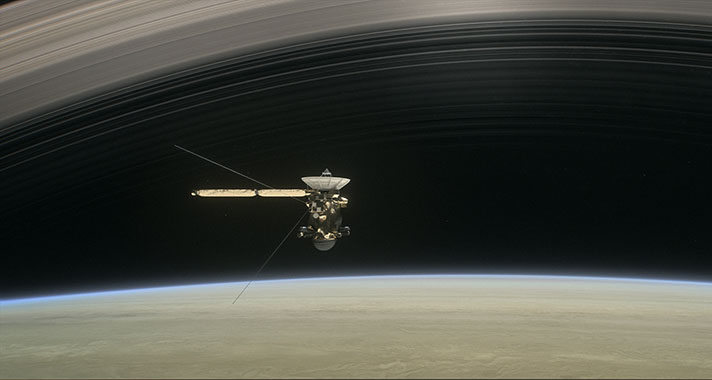
Planning Cassini's Grand Finale: A Retrospective

Mission planning is a core strength of JPL engineering, along with deep space communications and navigation. This month's talk, by Cassini mission planner Erick Sturm, will provide a look back at the various scenarios and contingency plans the Cassini team made as they steered the spacecraft into unexplored space during its 2017 Grand Finale. Sturm will discuss how the possible scenarios -- some of which could have been mission-ending -- compared to the mission as it was actually flown, along with some science highlights from the finale.

Watch Live via Ustream

Speaker: Erick Sturm - JPL Systems Engineer - Mission Planning lead for the Cassini Mission


Tuesday, March 20, 2018

JPL News - Day in Review


DAY IN REVIEW
NASA JPL latest news release
New 'AR' Mobile App Features 3-D NASA Spacecraft

NASA spacecraft travel to far-off destinations in space, but a new mobile app produced by NASA's Jet Propulsion Laboratory, Pasadena, California, brings spacecraft to users. The new app, called Spacecraft AR, uses the latest augmented reality (AR) technology to put virtual 3-D models of NASA's robotic space explorers into any environment with a flat surface.

You can download the new app here.

JPL developed the Spacecraft AR app in collaboration with Google. The app uses Google's ARCore technology to bring 3-D spacecraft into users' devices using native mobile augmented reality. ("Native mobile" AR uses the built-in capabilities of a mobile device to interact with 3-D environments and objects.)

The initial version of the app works with Android devices that support ARCore, with plans to add additional device compatibility in the near future, including iOS devices.

To create the experience of having virtual spacecraft in your space, Spacecraft AR uses the same high-quality 3-D models as a previously released NASA app called Spacecraft 3-D, but with a breakthrough new capability. Whereas Spacecraft 3-D works best with a printed image called a target or marker, Spacecraft AR works with a flat surface -- no target required.

"The Spacecraft AR app is an exciting new way to get up close and personal with NASA's robotic missions," said Kevin Hussey, manager of JPL's visualization team, which developed Spacecraft 3-D and worked on the new app with Google. "We can't wait for people to try it, and we're looking forward to adding many more spacecraft to the app in the future."

Within the Spacecraft AR app, users swipe to select among missions that observe and explore Earth, Mars and the other planets, and choose the spacecraft they would like to see. Once the app detects a flat surface, users simply tap the screen to place the spacecraft into the scene in front of them. They can take and share photos directly from the app and view in-depth information about each mission. And for those using the app in spaces that are large enough, there's even a button to view the spacecraft at their actual sizes.

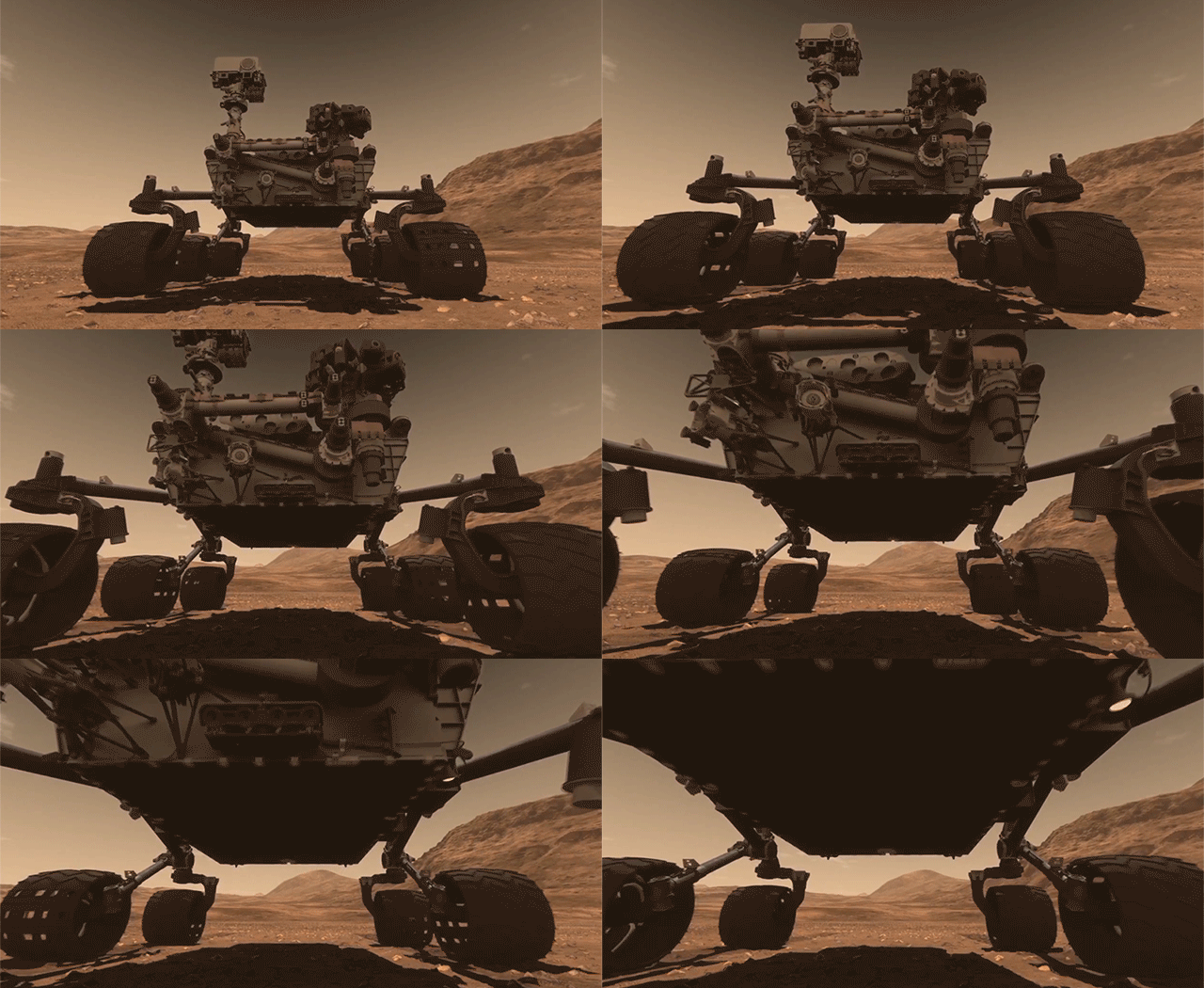
At launch, the app includes: NASA's Curiosity Mars rover, Juno, Cassini and Voyager. Users can also check out the giant, 70-meter NASA Deep Space Network dish. More spacecraft are planned in future updates to the app.

JPL is a division of Caltech in Pasadena, which manages the laboratory for NASA.


Thursday, March 15, 2018

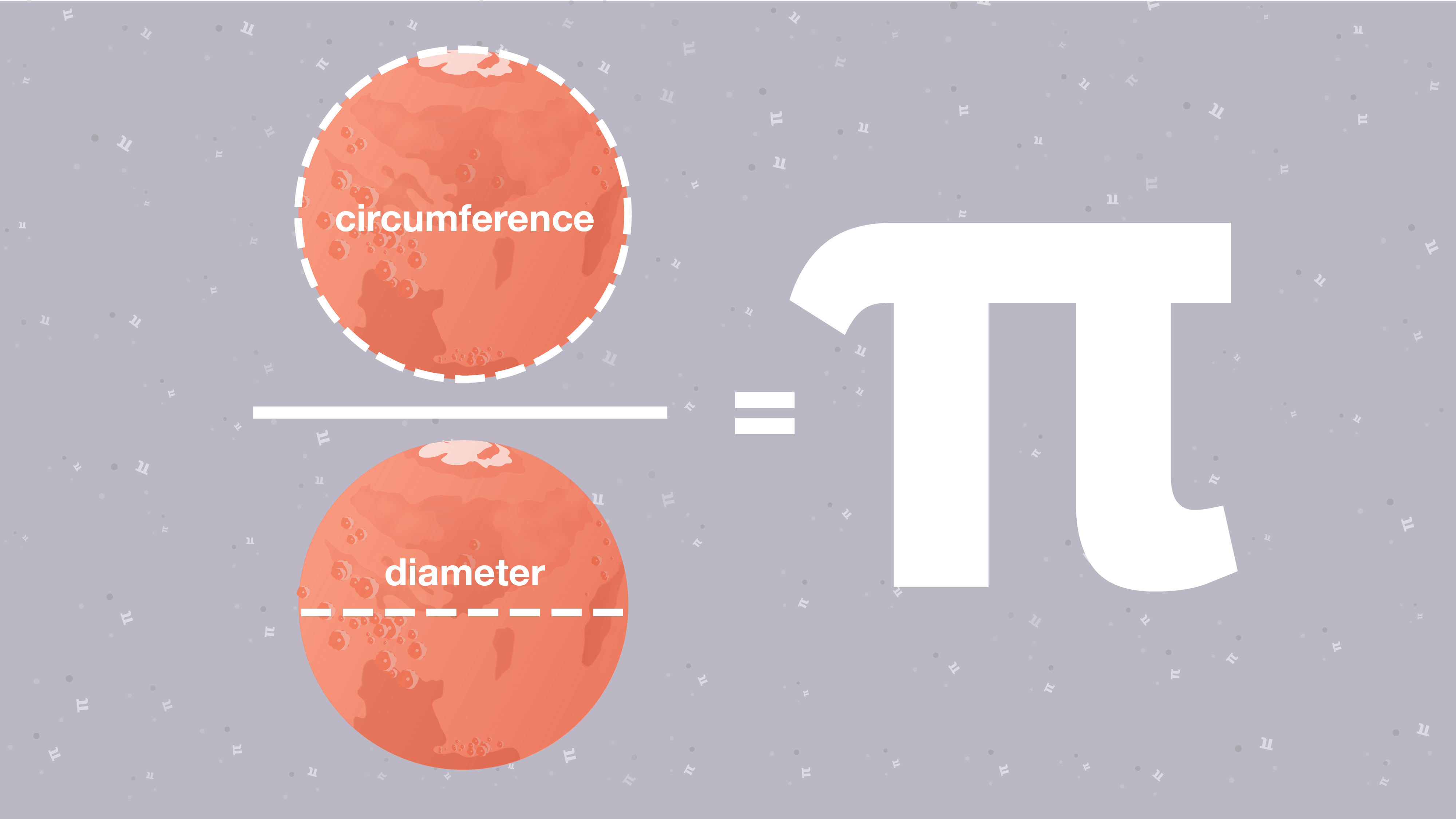
Answers to the 2018 NASA Pi Day Challenge Are Here!

The Answers to the 2018 NASA Pi Day Challenge Are Here!
 

The Answers to the 2018 NASA Pi Day Challenge Are Here!

Those who took on any of the science puzzlers in our 2018 NASA Pi Day Challenge know that pi can take you far – like, outer space far. Now you can check out the official answer key to see if your pi skills mean you can hang like a NASA space explorer.

Check Your Answers

Why celebrate pi just one day a year? Check out these pi-related activities and resources that you can do all year long!

Oh, the Places We Go: 18 Ways NASA Uses Pi Oh, the Places We Go: 18 Ways NASA Uses Pi – Whether it's sending spacecraft to other planets, driving rovers on Mars, finding out what planets are made of or how deep alien oceans are, pi takes us far at NASA. Find out how pi helps us explore space.
Blog: How Many Decimals of Pi Do We Really Need? Blog: How Many Decimals of Pi Do We Really Need? – While you may have memorized more than 70,000 digits of pi, world record holders, a JPL engineer explains why you really only need a tiny fraction of that for most calculations.
The 'Pi in the Sky' Challenge The 'Pi in the Sky' Challenge – Can you use pi to solve these stellar puzzlers faced by NASA scientists and engineers? Check it out – plus, download the free poster!

Resources for Educators

Teachable Moment: Pi Goes the Distance at NASA Teachable Moment: Pi Goes the Distance at NASA – Learn about Pi Day and how you can join the celebration with NASA by taking part in the agency's annual Pi Day Challenge. Delve into the science behind this year's challenge and explore related resources for educators. It's all in the latest installment of Teachable Moments.
'Pi in the Sky' Lesson Collection 'Pi in the Sky' Lesson Collection – Explore an online catalog of lessons from the "Pi in the Sky" series for grades 4-12. Each lesson includes an illustrated poster, handouts and answer key, plus a list of applicable Common Core Math and Next Generation Science Standards.