MY SEARCH ENGINE

Monday, December 11, 2017

JPL News - Day in Review


DAY IN REVIEW
NASA JPL latest news release
NASA's Juno Probes the Depths of Jupiter's Great Red Spot

Data collected by NASA's Juno spacecraft during its first pass over Jupiter's Great Red Spot in July 2017 indicate that this iconic feature penetrates well below the clouds. Other revelations from the mission include that Jupiter has two previously uncharted radiation zones. The findings were announced Monday at the annual American Geophysical Union meeting in New Orleans.

"One of the most basic questions about Jupiter's Great Red Spot is: how deep are the roots?" said Scott Bolton, Juno's principal investigator from the Southwest Research Institute in San Antonio. "Juno data indicate that the solar system's most famous storm is almost one-and-a-half Earths wide, and has roots that penetrate about 200 miles (300 kilometers) into the planet's atmosphere."

The science instrument responsible for this in-depth revelation was Juno's Microwave Radiometer (MWR). "Juno's Microwave Radiometer has the unique capability to peer deep below Jupiter's clouds," said Michael Janssen, Juno co-investigator from NASA's Jet Propulsion Laboratory in Pasadena, California. "It is proving to be an excellent instrument to help us get to the bottom of what makes the Great Red Spot so great."

Jupiter's Great Red Spot is a giant oval of crimson-colored clouds in Jupiter's southern hemisphere that race counterclockwise around the oval's perimeter with wind speeds greater than any storm on Earth. Measuring 10,000 miles (16,000 kilometers) in width as of April 3, 2017, the Great Red Spot is 1.3 times as wide as Earth.

"Juno found that the Great Red Spot's roots go 50 to 100 times deeper than Earth's oceans and are warmer at the base than they are at the top," said Andy Ingersoll, professor of planetary science at Caltech and a Juno co-investigator. "Winds are associated with differences in temperature, and the warmth of the spot's base explains the ferocious winds we see at the top of the atmosphere."

The future of the Great Red Spot is still very much up for debate. While the storm has been monitored since 1830, it has possibly existed for more than 350 years. In the 19th century, the Great Red Spot was well over two Earths wide. But in modern times, the Great Red Spot appears to be diminishing in size, as measured by Earth-based telescopes and spacecraft. At the time NASA's Voyagers 1 and 2 sped by Jupiter on their way to Saturn and beyond, in 1979, the Great Red Spot was twice Earth's diameter. Today, measurements by Earth-based telescopes indicate the oval that Juno flew over has diminished in width by one-third and height by one-eighth since Voyager times.

Juno also has detected a new radiation zone, just above the gas giant's atmosphere, near the equator. The zone includes energetic hydrogen, oxygen and sulfur ions moving at almost light speed.

"The closer you get to Jupiter, the weirder it gets," said Heidi Becker, Juno's radiation monitoring investigation lead at JPL. "We knew the radiation would probably surprise us, but we didn't think we'd find a new radiation zone that close to the planet. We only found it because Juno's unique orbit around Jupiter allows it to get really close to the cloud tops during science collection flybys, and we literally flew through it."

The new zone was identified by the Jupiter Energetic Particle Detector Instrument (JEDI) investigation. The particles are believed to be derived from energetic neutral atoms (fast-moving ions with no electric charge) created in the gas around the Jupiter moons Io and Europa. The neutral atoms then become ions as their electrons are stripped away by interaction with the upper atmosphere of Jupiter.

Juno also found signatures of a high-energy heavy ion population within the inner edges of Jupiter's relativistic electron radiation belt -- a region dominated by electrons moving close to the speed of light. The signatures are observed during Juno's high-latitude encounters with the electron belt, in regions never explored by prior spacecraft. The origin and exact species of these particles is not yet understood. Juno's Stellar Reference Unit (SRU-1) star camera detects the signatures of this population as extremely high noise signatures in images collected by the mission's radiation monitoring investigation.

To date, Juno has completed eight science passes over Jupiter. Juno's ninth science pass will be on Dec. 16.

Juno launched on Aug. 5, 2011, from Cape Canaveral, Florida, and arrived in orbit around Jupiter on July 4, 2016. During its mission of exploration, Juno soars low over the planet's cloud tops -- as close as about 2,100 miles (3,400 kilometers). During these flybys, Juno is probing beneath the obscuring cloud cover of Jupiter and studying its auroras to learn more about the planet's origins, structure, atmosphere and magnetosphere.

JPL manages the Juno mission for the principal investigator, Scott Bolton, of Southwest Research Institute in San Antonio. The Juno mission is part of the New Frontiers Program managed by NASA's Marshall Space Flight Center in Huntsville, Alabama, for the Science Mission Directorate. Lockheed Martin Space Systems, Denver, built the spacecraft. JPL is a division of Caltech in Pasadena, California.

More information on the Juno mission is available at:

https://www.nasa.gov/juno

https://www.missionjuno.swri.edu

The public can follow the mission on Facebook and Twitter at:

http://www.facebook.com/NASAJuno

http://www.twitter.com/NASAJuno


This message sent to chantybanty1.chanti@blogger.com from jplnewsroom@jpl.nasa.gov

NASA Jet Propulsion Laboratory
NASA's Jet Propulsion Laboratory
4800 Oak Grove Dr
Pasadena, CA 91109

Friday, December 8, 2017

JPL News - Day in Review


DAY IN REVIEW
NASA JPL latest news release
NASA Airborne Science Team Surveys California Fires

A team of NASA scientists is using a high-altitude aircraft and a sophisticated imaging spectrometer built by NASA's Jet Propulsion Laboratory in Pasadena, California, to study environmental impacts caused by the devastating Southern California wildfires. NASA's ER-2, based at Armstrong Flight Research Center in Palmdale, California, flies as high as 70,000 feet (21,300 meters), almost twice as high as a commercial airliner.

NASA uses the unique perspective of the ER-2 for science research missions over much of the world. This month, the aircraft has been flying locally over California, testing early versions of science instruments that may one day be launched into space aboard a satellite to observe our home planet Earth.

During these engineering test flights, the aircraft carried several science instruments aboard. One of them - a JPL spectrometer called AVIRIS - was in the right place at the right time when fires broke out in Los Angeles and Ventura Counties on Tuesday, December 4.

AVIRIS (Airborne Visible/Infrared Imaging Spectrometer), is a modern instrument with an extensive heritage that can peer through smoke and dust to see information about the ground surface below. This includes observations of trees and other foliage that end up being fuel for wildfires.

During a fire, the instrument can see aerosols, or particle matter, produced from the smoke, as well as the combustion process as fuel burns, and can accurately measure fire temperatures.

AVIRIS can also observe fine details of vegetation, such as the water content in leaves and what types of species of plants are growing prior to a fire burning in a region. Scientists can use the instrument to fly over regions before a fire to get a base measurement of a certain area, fly over the same area again after a fire, and then compare the before-and-after images to determine the fire's severity.

"The vision is that these types of measurements could be available from space in the next decade. The resulting information would then be used to develop fuel maps in advance that could be used to make better predictions about where you could mitigate risk by clearing brush and trees," said JPL's Rob Green, principal investigator of the AVIRIS instrument.

Green continued, "Additionally, if a fire starts and authorities know exactly how much fuel is present in a region, the data will enable authorities to react quicker and provide a better assessment of how to approach extinguishing the fire and protect surrounding areas."

NASA has funded this effort as part of its ongoing research, but is sharing the data with universities and government agencies like the U.S. Geological Survey, the University of California, and the University of Utah. Scientists at these organizations are working together to achieve a better understanding of response to fires, fire behavior, impacts to forest carbon dynamics, total area burned and smoke aerosols -- all of which have impacts to disaster preparedness, prevention, human health and safety.

AVIRIS flew over the regions affected by the current fires during summer 2017 and will compare those observations with current measurements of fire temperatures and burn area to explore the relationship between fuel sources and the areas now burning. Flying these areas again in the coming months could help determine how severely the wildfires impacted the region and help quantify how plant life rejuvenates and repopulates in these areas.

For more information on AVIRIS, visit:

https://aviris.jpl.nasa.gov/


This message sent to chantybanty1.chanti@blogger.com from jplnewsroom@jpl.nasa.gov

NASA Jet Propulsion Laboratory
NASA's Jet Propulsion Laboratory
4800 Oak Grove Dr
Pasadena, CA 91109

Thursday, December 7, 2017

JPL News - Day in Review


DAY IN REVIEW
JPL Deploys a CubeSat for Astronomy
A training program allowed early-career engineers to test an innovative design.
› Read the full story
The Moon Shines Brightly Among NASA's 2017 Highlights
The year in review: 2017 was a year of groundbreaking discoveries and record-setting exploration at NASA.
› Read the full story


This message sent to chantybanty1.chanti@blogger.com from jplnewsroom@jpl.nasa.gov

NASA Jet Propulsion Laboratory
NASA's Jet Propulsion Laboratory
4800 Oak Grove Dr
Pasadena, CA 91109

Wednesday, December 6, 2017

JPL News - Day in Review


DAY IN REVIEW
Found: Most Distant Black Hole
Scientists have uncovered a rare relic from the early universe: the farthest known supermassive black hole.
› Read the full story
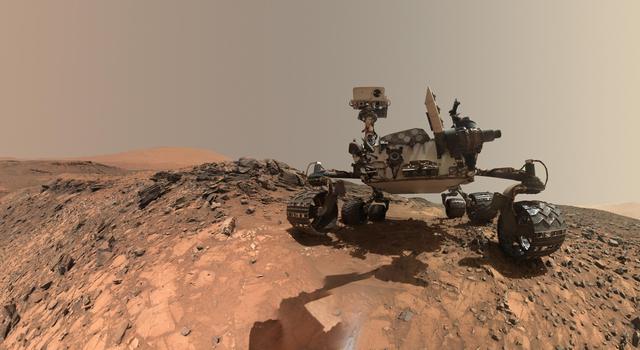
NASA Mars Rover Team's Tilted Winter Strategy Works
NASA's Mars rover Opportunity has passed the shortest-daylight weeks of the Martian year with its solar panels in clean condition for a potential dust-storm season in 2018.
› Read the full story


This message sent to chantybanty1.chanti@blogger.com from jplnewsroom@jpl.nasa.gov

NASA Jet Propulsion Laboratory
NASA's Jet Propulsion Laboratory
4800 Oak Grove Dr
Pasadena, CA 91109

Tuesday, December 5, 2017

Celebrate Computer Science Education Week With NASA/JPL Education

Celebrate Computer Science Week With NASA/JPL Education
 

Celebrate Computer Science Education Week With NASA/JPL Education

This week is Computer Science Education Week, an annual event meant to encourage and inspire K-12 students to explore computer programming. Students, teachers and curious learners of all ages are participating by using an hour of their week to create computer code as part of the Hour of Code initiative. Whether your students are experienced programmers or just learning the basics, this is a great opportunity to take part and get students engaged in computer science!

Try this lesson from NASA/JPL Edu to get involved and bring the excitement of NASA Mars exploration to students:

Explore Mars With Scratch Explore Mars With Scrach (Grades 3-8) – Students learn about surface features on Mars, then use the visual programming language Scratch to create a Mars exploration game.


Explore more STEM lessons from NASA/JPL Edu online at jpl.nasa.gov/edu/teach


This message sent to chantybanty1.chanti@blogger.com from education@jpl.nasa.gov

NASA/JPL Edu
NASA's Jet Propulsion Laboratory
4800 Oak Grove Dr
Pasadena, CA 91109

Friday, December 1, 2017

JPL News - Day in Review


DAY IN REVIEW
Voyager 1 Fires Up Thrusters After 37 Years
The Voyager team is able to use a set of four backup thrusters, dormant since 1980, for orienting the spacecraft.
› Read the full story
What's Up in the December Skies?
What's Up for December? The best meteor shower of the year and the brightest stars in familiar constellations.
› Watch the video
The Voyagers in Popular Culture
The Voyagers have been featured in many movies, TV shows and songs during the course of their epic 40-year journeys.
› Read the full story


This message sent to chantybanty1.chanti@blogger.com from jplnewsroom@jpl.nasa.gov

NASA Jet Propulsion Laboratory
NASA's Jet Propulsion Laboratory
4800 Oak Grove Dr
Pasadena, CA 91109

Thursday, November 30, 2017

JPL News - Day in Review


DAY IN REVIEW
NASA JPL latest news release
Take the Driver's Seat on Sea Level Science

A new NASA sea level simulator lets you bury Alaska's Columbia glacier in snow, and, year by year, watch how it responds. Or you can melt the Greenland and Antarctic ice sheets and trace rising seas as they inundate the Florida coast.

Computer models are critical tools for understanding the future of a changing planet, including melting ice, rising seas and shifting precipitation patterns. But typically, these mathematical representations -- long chains of computer code giving rise to images of dynamic change -- are accessible mainly to scientists.

› DOWNLOAD VIDEO DIY Glacier Modeling with NASA's Virtual Earth System Laboratory

The new simulator, however, allows anyone with a computer to perform idealized experiments with sea level and learn about its complexities. Developed by scientists at NASA's Jet Propulsion Laboratory in Pasadena, California, the interactive platform, called the Virtual Earth System Laboratory (VESL), provides the public with a taste of how NASA models important Earth processes.

The platform will also prove useful to scientists as a convenient way to create visual representations of data.

While many interface tools are available to explore sea level effects, VESL stands apart for its strong representation of Earth's cryosphere - the melting ice caps, ice sheets and glaciers that are major contributors to sea level rise.

And the simulator is not just a simplified version of a model or a menu of preexisting results. It is direct access to the complex, number-crunching model itself, though with limited scenarios and factors that can be adjusted.

"It's the real software, being used on the fly, live, without being prerecorded or precomputed," said Eric Larour of JPL, who led VESL's development. "You have access to a segment of an ice sheet model or sea level model, running NASA's software."

Despite these capabilities, VESL won't overtax computers.

"A key to making the interface tool work is cloud computing," Larour said. Instead of burdening your own computer with heavy demand, "you can access a JPL cloud to run big simulations."

The VESL platform allows the user to control one or two parameters for each model scenario. For example, in a version of the model configured to represent Columbia Glacier, a slider allows users to change snowfall amounts and examine how the change affects the glacier's behavior in subsequent years. For a sea level simulation, sliders control the rates at which the ice sheets on Antarctica and Greenland are melting.

"You can explore different aspects of the model that maybe even the scientists didn't explore," Larour said.

The site will be updated frequently to keep up with the latest, peer-reviewed research. Scientists will eventually be able to use the graphical interface to display and present new data sets or model results, while lay users will be able to replicate published research results for themselves using models that are "open source," or publicly available.

"As we make progress, [the public] can rerun the science that we actually do," Larour said. "If anybody has concerns or finds issues with our simulation, they have the ability to replicate our results. We would welcome feedback and inputs to improve our science."

VESL was developed over five years by members of the Ice Sheet System Model development team at JPL and the University of California, Irvine (UCI), with the help of several students, including Dan Cheng from UCI and Gilberto Perez, who attended both Cal Poly Pomona and UCI.

The website hosting the simulator will also include a public outreach section, being developed by Daria Halkides, a scientist and outreach exhibit developer of Earth & Space Research in Seattle and a JPL affiliate.

"VESL was initially intended for scientists," Larour said. "Then we realized it could also be an excellent tool for public outreach. These simulations are so easy to run, and visually so compelling, that any person from the public can go and run them and probably understand what is going on."

You can find VESL at:

https://vesl.jpl.nasa.gov/

A paper describing the development of the ice sheet simulator, titled "A JavaScript API for the Ice Sheet System Model: Towards on online interactive model for the Cryosphere Community," appears today in the journal Geoscientific Model Development.


This message sent to chantybanty1.chanti@blogger.com from jplnewsroom@jpl.nasa.gov

NASA Jet Propulsion Laboratory
NASA's Jet Propulsion Laboratory
4800 Oak Grove Dr
Pasadena, CA 91109

Wednesday, November 29, 2017

JPL News - Day in Review


DAY IN REVIEW
Exoplanet Has Smothering Stratosphere Without Water
The massive exoplanet WASP-18b seems to have a smothering stratosphere loaded with carbon monoxide and devoid of water.
› Read the full story


This message sent to chantybanty1.chanti@blogger.com from jplnewsroom@jpl.nasa.gov

NASA Jet Propulsion Laboratory
NASA's Jet Propulsion Laboratory
4800 Oak Grove Dr
Pasadena, CA 91109

Tuesday, November 28, 2017

JPL News - Day in Review


DAY IN REVIEW
NASA Finds VA Metro Area Is Sinking Unevenly
The Hampton Roads metropolitan area is sinking at highly uneven rates, with a few spots subsiding 7 to 10 times faster than the area average.
› Read the full story
NASA Builds its Next Mars Rover Mission
The 2020 mission's hardware is coming together at JPL.
› Read the full story


This message sent to chantybanty1.chanti@blogger.com from jplnewsroom@jpl.nasa.gov

NASA Jet Propulsion Laboratory
NASA's Jet Propulsion Laboratory
4800 Oak Grove Dr
Pasadena, CA 91109

Sunday, November 26, 2017

Jawatan Kosong (RM2,500) Guru Tuisyen Math, BM, Eng @ Nibong Tebal Penang/ Lahat iPoh Perak


Kami mencari guru tuisyen untuk mengajar dirumah pelajar di  :
- Bahasa melayu ( standard 4 and standard 2) @ Residensi Merbok Nibong Tebal
- English dan matematik pra sekolah @ Lahat Ipoh Perak

Maklumat lanjut disini  >> http://www.1hometuisyen.blogspot.com/p/kadar-bayaran-tuisyen-di-rumah.html 


*Sila share ini dgn rakan facebook anda

.

 http://majalah30.blogspot.com/p/blog-page_17.html

jawatan kosong guru tuisyen, kerja kosong guru tuisyen, kekosongan guru home tuition, jawatan kosong cikgu tution, kerja kosong cikgu tuisyen, jawatan kosong guru tuisyen ke rumah, jawatan kosong tuisyen di rumah, kerja sambilan guru tuisyen, kerja part time cikgu tuisyen, jobs home tutor, vacancy part time tuition teacher, pengajar SPM diperlukan, pengajar PT3 diperlukan, pengajar UPSR diperlukan, pengajar STPM diperlukan, pengajar matrikulasi diperlukan, jawatan kosong guru tuisyen, kerja kosong guru tuisyen, kekosongan guru home tuition, jawatan kosong cikgu tution, kerja kosong cikgu tuisyen, jawatan kosong guru tuisyen ke rumah, jawatan kosong tuisyen di rumah, kerja sambilan guru tuisyen, kerja part time cikgu tuisyen, jobs home tutor, vacancy part time tuition teacher, pengajar SPM diperlukan, pengajar PT3 diperlukan, pengajar UPSR diperlukan, pengajar STPM diperlukan, pengajar matrikulasi diperlukan, jawatan kosong guru tuisyen, kerja kosong guru tuisyen, kekosongan guru home tuition, jawatan kosong cikgu tution, kerja kosong cikgu tuisyen, jawatan kosong guru tuisyen ke rumah, jawatan kosong tuisyen di rumah, kerja sambilan guru tuisyen, kerja part time cikgu tuisyen, jobs home tutor, vacancy part time tuition teacher, pengajar SPM diperlukan, pengajar PT3 diperlukan, pengajar UPSR diperlukan, pengajar STPM diperlukan, pengajar matrikulasi diperlukan, jawatan kosong guru tuisyen, kerja kosong guru tuisyen, kekosongan guru home tuition, jawatan kosong cikgu tution, kerja kosong cikgu tuisyen, jawatan kosong guru tuisyen ke rumah, jawatan kosong tuisyen di rumah, kerja sambilan guru tuisyen, kerja part time cikgu tuisyen, jobs home tutor, vacancy part time tuition teacher, pengajar SPM diperlukan, pengajar PT3 diperlukan, pengajar UPSR diperlukan, pengajar STPM diperlukan, pengajar matrikulasi diperlukan, jobs, job, vacancies, vacancy, part time, opening, teaching, tutor, tuition, job tutor, work, employment, employee, workforce, workplace, oppurtunities, jobs, job, vacancies, vacancy, part time, opening, teaching, tutor, tuition, job tutor, work, employment, employee, workforce, workplace, oppurtunities,