MY SEARCH ENGINE

Wednesday, May 17, 2017

JPL News - Day in Review


DAY IN REVIEW
NASA JPL latest news release
Scientists Look to Skies to Improve Tsunami Detection

A team of scientists from Sapienza University in Rome, Italy, and NASA's Jet Propulsion Laboratory in Pasadena, California, has developed a new approach to assist in the ongoing development of timely tsunami detection systems, based upon measurements of how tsunamis disturb a part of Earth's atmosphere.

The new approach, called Variometric Approach for Real-time Ionosphere Observation, or VARION, uses observations from GPS and other global navigation satellite systems (GNSS) to detect, in real time, disturbances in Earth's ionosphere associated with a tsunami. The ionosphere is the layer of Earth's atmosphere located from about 50 to 621 miles (80 to 1,000 kilometers) above Earth's surface. It is ionized by solar and cosmic radiation and is best known for the aurora borealis (northern lights) and aurora australis (southern lights).

When a tsunami forms and moves across the ocean, the crests and troughs of its waves compress and extend the air above them, creating motions in the atmosphere known as internal gravity waves. The undulations of internal gravity waves are amplified as they travel upward into an atmosphere that becomes thinner with altitude. When the waves reach an altitude of between 186 to 217 miles (300 to 350 kilometers), they cause detectable changes to the density of electrons in the ionosphere. These changes can be measured when GNSS signals, such as those of GPS, travel through these tsunami-induced disturbances.

VARION was designed under the leadership of Sapienza's Mattia Crespi. The main author of the algorithm is Giorgio Savastano, a doctoral student in geodesy and geomatics at Sapienza and an affiliate employee at JPL, which conducted further development and validation of the algorithm. The work was outlined recently in a Sapienza- and NASA-funded study published in Nature's Scientific Reports journal.

In 2015, Savastano was awarded a fellowship by Consiglio Nazionale degli Ingegneri (CNI) and Italian Scientists and Scholars in North America Foundation (ISSNAP) for a two-month internship at JPL, where he joined the Ionospheric and Atmospheric Remote Sensing Group under the supervision of Attila Komjathy and Anthony Mannucci.

"VARION is a novel contribution to future integrated operational tsunami early warning systems," said Savastano. "We are currently incorporating the algorithm into JPL's Global Differential GPS System, which will provide real-time access to data from about 230 GNSS stations around the world that collect data from multiple satellite constellations, including GPS, Galileo, GLONASS and BeiDou." Since significant tsunamis are infrequent, exercising VARION using a variety of real-time data will help validate the algorithm and advance research on this tsunami detection approach.

Savastano says VARION can be included in design studies for timely tsunami detection systems that use data from a variety of sources, including seismometers, buoys, GNSS receivers and ocean-bottom pressure sensors.

Once an earthquake is detected in a specific location, a system could begin processing real-time measurements of the distribution of electrons in the ionosphere from multiple ground stations located near the quake's epicenter, searching for changes that may be correlated with the expected formation of a tsunami. The measurements would be collected and processed by a central processing facility to provide risk assessments and maps for individual earthquake events. The use of multiple independent data types is expected to contribute to the system's robustness.

"We expect to show it is feasible to use ionospheric measurements to detect tsunamis before they impact populated areas," said Komjathy. "This approach will add additional information to existing systems, complementing other approaches. Other hazards may also be targeted using real-time ionospheric observations, including volcanic eruptions or meteorites."

Observing the ionosphere, and how terrestrial weather below it interfaces with space above, continues to be an important focus for NASA. Two new missions -- the Ionospheric Connection Explorer and the Global-scale Observations of the Limb and Disk -- are planned to launch by early 2018 to observe the ionosphere, which should ultimately improve a wide array of models used to protect humans on the ground and satellites in space.


This message sent to chantybanty1.chanti@blogger.com from jplnewsroom@jpl.nasa.gov

NASA Jet Propulsion Laboratory
NASA's Jet Propulsion Laboratory
4800 Oak Grove Dr
Pasadena, CA 91109

Lunar and Meteorite Sample Certification – NASA/JPL Teacher Workshop


Lunar and Meteorite Sample Certification Workshop
 

Lunar and Meteorite Sample Certification Workshop

When: Saturday, June 17, 9 a.m. to 2 p.m.

Where: NASA Jet Propulsion Laboratory, Pasadena, California

Target Audience: Teachers for grades K-12

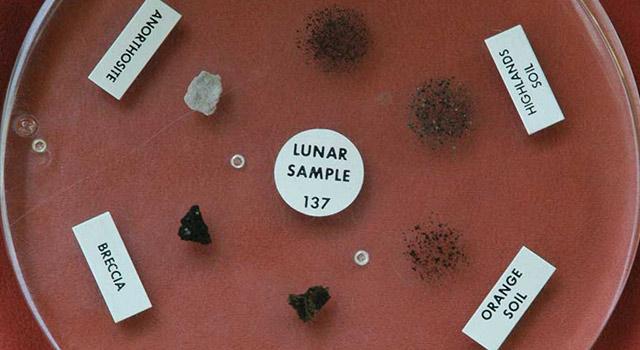
Overview: NASA makes actual lunar samples from the historic Apollo missions available to lend to teachers. You must attend this certification workshop to bring the excitement of real lunar rocks and regolith samples to your students.

  • This workshop is not available online; you must be physically present to participate.
  • This workshop is limited to teachers at U.S.-based institutions.

› Register online!

Questions? Call the Educator Resource Center at 818-393-5917.

This free workshop is offered through the NASA/JPL Educator Resource Center, which provides formal and informal educators with NASA resources and materials that support STEM learning. For more information, visit the Educator Resource Center page.


Discover More From NASA Space Place

The Space Place Newsletter NASA Space Place is a premier destination for science, technology, engineering and mathematics content for children between the ages of 8 and 13. Subscribe to The Space Place Newsletter to discover new educational games, videos and hands-on activities.


This message sent to chantybanty1.chanti@blogger.com from education@jpl.nasa.gov

NASA/JPL Edu
NASA's Jet Propulsion Laboratory
4800 Oak Grove Dr
Pasadena, CA 91109

Invoice 153660088 05/17/2017

Invoice 63657988 05/17/2017

Invoice 68833689 05/17/2017

Tuesday, May 16, 2017

JPL News - Day in Review


DAY IN REVIEW
NASA JPL latest news release
Movie Shows Ceres at Opposition from Sun

NASA's Dawn spacecraft successfully observed Ceres at opposition on April 29, taking images from a position exactly between the sun and Ceres' surface. Mission specialists had carefully maneuvered Dawn into a special orbit so that the spacecraft could view Occator Crater, which contains the brightest area of Ceres, from this new perspective.

A new movie shows these opposition images, with contrast enhanced to highlight brightness differences. The bright spots of Occator stand out particularly well on an otherwise relatively bland surface. Dawn took these images from an altitude of about 12,000 miles (20,000 kilometers).

Based on data from ground-based telescopes and spacecraft that previously viewed planetary bodies at opposition, scientists correctly predicted that Ceres would appear brighter from this opposition configuration. This increase in brightness, or "surge," relates the size of the grains of material on the surface, as well as the porosity of those materials. The science motivation for performing these observations is further explained in the March issue of the Dawn Journal blog.

Dawn's observations of Ceres during its more than two years there cover a broader range of illumination angles than almost any body in the solar system. This provides scientists with an opportunity to gain new insights into the surface properties. They are currently analyzing the new data.

The new observations and images were largely unaffected by the loss of function of Dawn's third reaction wheel. The spacecraft is healthy and orients itself using its hydrazine thrusters.

Dawn's mission is managed by JPL for NASA's Science Mission Directorate in Washington. Dawn is a project of the directorate's Discovery Program, managed by NASA's Marshall Space Flight Center in Huntsville, Alabama. UCLA is responsible for overall Dawn mission science. Orbital ATK Inc., in Dulles, Virginia, designed and built the spacecraft. The German Aerospace Center, Max Planck Institute for Solar System Research, Italian Space Agency and Italian National Astrophysical Institute are international partners on the mission team.

For a complete list of Dawn mission participants, visit:

https://dawn.jpl.nasa.gov/mission


This message sent to chantybanty1.chanti@blogger.com from jplnewsroom@jpl.nasa.gov

NASA Jet Propulsion Laboratory
NASA's Jet Propulsion Laboratory
4800 Oak Grove Dr
Pasadena, CA 91109

Monday, May 15, 2017

JPL News - Day in Review


DAY IN REVIEW
NASA JPL latest news release
Mars Rover Opportunity Begins Study of Valley's Origin

NASA's Mars Exploration Rover Opportunity has reached the main destination of its current two-year extended mission -- an ancient fluid-carved valley incised on the inner slope of a vast crater's rim.

As the rover approached the upper end of "Perseverance Valley" in early May, images from its cameras began showing parts of the area in greater resolution than what can be seen in images taken from orbit above Mars.

"The science team is really jazzed at starting to see this area up close and looking for clues to help us distinguish among multiple hypotheses about how the valley formed," said Opportunity Project Scientist Matt Golombek of NASA's Jet Propulsion Laboratory, Pasadena, California.

The process that carved Perseverance Valley into the rim of Endeavour Crater billions of years ago has not yet been identified. Among the possibilities: It might have been flowing water, or might have been a debris flow in which a small amount of water lubricated a turbulent mix of mud and boulders, or might have been an even drier process, such as wind erosion. The mission's main objective with Opportunity at this site is to assess which possibility is best supported by the evidence still in place.

The upper end of the valley is at a broad notch in the crest of the crater rim. The rover team's plan for investigating the area begins with taking sets of images of the valley from two widely separated points at that dip in the rim. This long-baseline stereo imaging will provide information for extraordinarily detailed three-dimensional analysis of the terrain. The valley extends down from the rim's crest line into the crater, at a slope of about 15 to 17 degrees for a distance of about two football fields.

"The long-baseline stereo imaging will be used to generate a digital elevation map that will help the team carefully evaluate possible driving routes down the valley before starting the descent," said Opportunity Project Manager John Callas of JPL.

Reversing course back uphill when partway down could be difficult, so finding a path with minimum obstacles will be important for driving Opportunity through the whole valley. Researchers intend to use the rover to examine textures and compositions at the top, throughout the length and at the bottom, as part of investigating the valley's history.

While the stereo imaging is being analyzed for drive-planning, the team plans to use the rover to examine the area immediately west of the crater rim at the top of the valley. "We expect to do a little walkabout just outside the crater before driving down Perseverance Valley," Golombek said.

The mission has begun its 150th month since the early 2004 landing of Opportunity in the Meridiani Planum region of Mars. In the first three months, which were originally planned as the full length of the mission, it found evidence in rocks that acidic water flowed across parts of Mars and soaked the subsurface early in the planet's history.

For nearly half of the mission -- 69 months -- Opportunity has been exploring sites on and near the western rim of Endeavour Crater, where even older rocks are exposed. The crater spans about 14 miles (22 kilometers) in diameter. Opportunity arrived from the northwest at a point corresponding to about the 10 o'clock position on the circle if north is noon; Perseverance Valley slices west to east at approximately the 8 o'clock position.

Opportunity hustled southward to reach the crown of the valley in recent weeks. In mid-April it finished about two-and-a-half years on a rim segment called "Cape Tribulation." In seven drives between then and arriving at the destination on May 4, it covered 377 yards (345 meters), bringing the mission's total odometry to about 27.8 miles (44.7 kilometers).

Opportunity and the next-generation Mars rover, Curiosity, as well as three active NASA Mars orbiters and surface missions to launch in 2018 and 2020 are all part of ambitious robotic exploration to understand Mars, which helps lead the way for sending humans to Mars in the 2030s. JPL, a division of Caltech in Pasadena, California, built Opportunity and manages the mission for NASA's Science Mission Directorate, Washington. For more information about Opportunity, visit:

https://www.nasa.gov/rovers

https://marsrovers.jpl.nasa.gov


This message sent to chantybanty1.chanti@blogger.com from jplnewsroom@jpl.nasa.gov

NASA Jet Propulsion Laboratory
NASA's Jet Propulsion Laboratory
4800 Oak Grove Dr
Pasadena, CA 91109

Thursday, May 11, 2017

Scanned image

Image data in PDF format has been attached to this email.

JPL News - Day in Review


DAY IN REVIEW
NASA JPL latest news release
'Warm Neptune' Has Unexpectedly Primitive Atmosphere

A study combining observations from NASA's Hubble and Spitzer space telescopes reveals that the distant planet HAT-P-26b has a primitive atmosphere composed almost entirely of hydrogen and helium. Located about 437 light-years away, HAT-P-26b orbits a star roughly twice as old as the sun.

The analysis is one of the most detailed studies to date of a "warm Neptune," or a planet that is Neptune-sized and close to its star. The researchers determined that HAT-P-26b's atmosphere is relatively clear of clouds and has a strong water signature, although the planet is not a water world. This is the best measurement of water to date on an exoplanet of this size.

The discovery of an atmosphere with this composition on this exoplanet has implications for how scientists think about the birth and development of planetary systems. Compared to Neptune and Uranus, the planets in our solar system with about the same mass, HAT-P-26b likely formed either closer to its host star or later in the development of its planetary system, or both.

"Astronomers have just begun to investigate the atmospheres of these distant Neptune-mass planets, and almost right away, we found an example that goes against the trend in our solar system," said Hannah Wakeford, a postdoctoral researcher at NASA's Goddard Space Flight Center in Greenbelt, Maryland, and lead author of the study published in the May 12, 2017, issue of Science. "This kind of unexpected result is why I really love exploring the atmospheres of alien planets."

To study HAT-P-26b's atmosphere, the researchers used data from transits -- occasions when the planet passed in front of its host star. During a transit, a fraction of the starlight gets filtered through the planet's atmosphere, which absorbs some wavelengths of light but not others. By looking at how the signatures of the starlight change as a result of this filtering, researchers can work backward to figure out the chemical composition of the atmosphere.

In this case, the team pooled data from four transits measured by Hubble and two seen by Spitzer. Together, those observations covered a wide range of wavelengths from yellow light through the near-infrared region.

"To have so much information about a warm Neptune is still rare, so analyzing these data sets simultaneously is an achievement in and of itself," said co-author Tiffany Kataria of NASA's Jet Propulsion Laboratory in Pasadena, California.

Because the study provided a precise measurement of water, the researchers were able to use the water signature to estimate HAT-P-26b's metallicity. Astronomers calculate the metallicity, an indication of how rich the planet is in all elements heavier than hydrogen and helium, because it gives them clues about how a planet formed.

To compare planets by their metallicities, scientists use the sun as a point of reference, almost like describing how much caffeine beverages have by comparing them to a cup of coffee. Jupiter has a metallicity about 2 to 5 times that of the sun. For Saturn, it's about 10 times as much as the sun. These relatively low values mean that the two gas giants are made almost entirely of hydrogen and helium.

The ice giants Neptune and Uranus are smaller than the gas giants but richer in the heavier elements, with metallicities of about 100 times that of the sun. So, for the four outer planets in our solar system, the trend is that the metallicities are lower for the bigger planets.

Scientists think this happened because, as the solar system was taking shape, Neptune and Uranus formed in a region toward the outskirts of the enormous disk of dust, gas and debris that swirled around the immature sun. Summing up the complicated process of planetary formation in a nutshell: Neptune and Uranus would have been bombarded with a lot of icy debris that was rich in heavier elements. Jupiter and Saturn, which formed in a warmer part of the disk, would have encountered less of the icy debris.

Two planets beyond our solar system also fit this trend. One is the Neptune-mass planet HAT-P-11b. The other is WASP-43b, a gas giant twice as massive as Jupiter.

But Wakeford and her colleagues found that HAT-P-26b bucks the trend. They determined its metallicity is only about 4.8 times that of the sun, much closer to the value for Jupiter than for Neptune.

"This analysis shows that there is a lot more diversity in the atmospheres of these exoplanets than we were expecting, which is providing insight into how planets can form and evolve differently than in our solar system," said David K. Sing of the University of Exeter and the second author of the paper. "I would say that has been a theme in the studies of exoplanets: Researchers keep finding surprising diversity."

JPL manages the Spitzer Space Telescope for NASA's Science Mission Directorate, Washington. Science operations are conducted at the Spitzer Science Center at Caltech in Pasadena. Spacecraft operations are based at Lockheed Martin Space Systems Company, Littleton, Colorado. Data are archived at the Infrared Science Archive housed at the Infrared Processing and Analysis Center at Caltech. Caltech manages JPL for NASA.

The Hubble Space Telescope is a project of international cooperation between NASA and ESA (European Space Agency). NASA's Goddard Space Flight Center in Greenbelt, Maryland, manages the telescope. The Space Telescope Science Institute (STScI) in Baltimore conducts Hubble science operations. STScI is operated for NASA by the Association of Universities for Research in Astronomy, Inc., in Washington.

For more information about Spitzer, visit:

http://www.nasa.gov/spitzer

For images and more information about Hubble, visit:

http://www.nasa.gov/hubble


This message sent to chantybanty1.chanti@blogger.com from jplnewsroom@jpl.nasa.gov

NASA Jet Propulsion Laboratory
NASA's Jet Propulsion Laboratory
4800 Oak Grove Dr
Pasadena, CA 91109

Copy_594337