MY SEARCH ENGINE

Wednesday, May 12, 2021

More to Explore on Mars

A student challenge for summer – plus, build a Mars helicopter with us! 

More to Explore on Mars This Summer

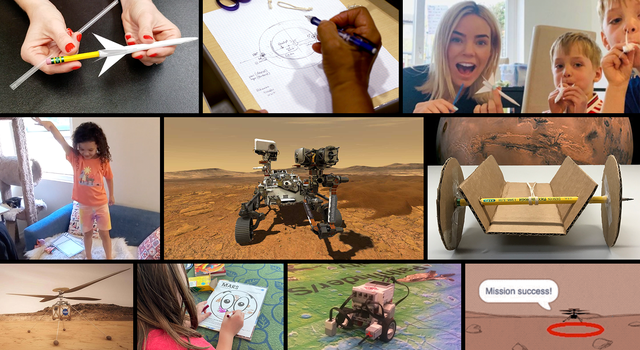
Summertime is just around the corner, and with it comes new opportunities to get students engaged in NASA's exploration of Mars. Whether you are looking to close out the school year or looking ahead at summer learning for youth or yourself, read on to find out about newly added events and opportunities to join the adventure with NASA!

Upcoming Events

Mission to Mars Student Challenge for Summer Camps

MAY 13 - JULY 15

Mission to Mars Student Challenge for Summer Camps

Are you a camp or afterschool-group leader? Learn about an exciting opportunity to immerse your youth in the latest exploration of Mars with NASA. Our popular Mission to Mars Student Challenge is back with a summertime edition!

Learn More and Register

Learning Space With NASA Live Stream – Build Your Own Mars Helicopter

WEDNESDAY, MAY 19, 9 AM PDT

Learning Space with NASA Live Stream – Build Your Own Mars Helicopter

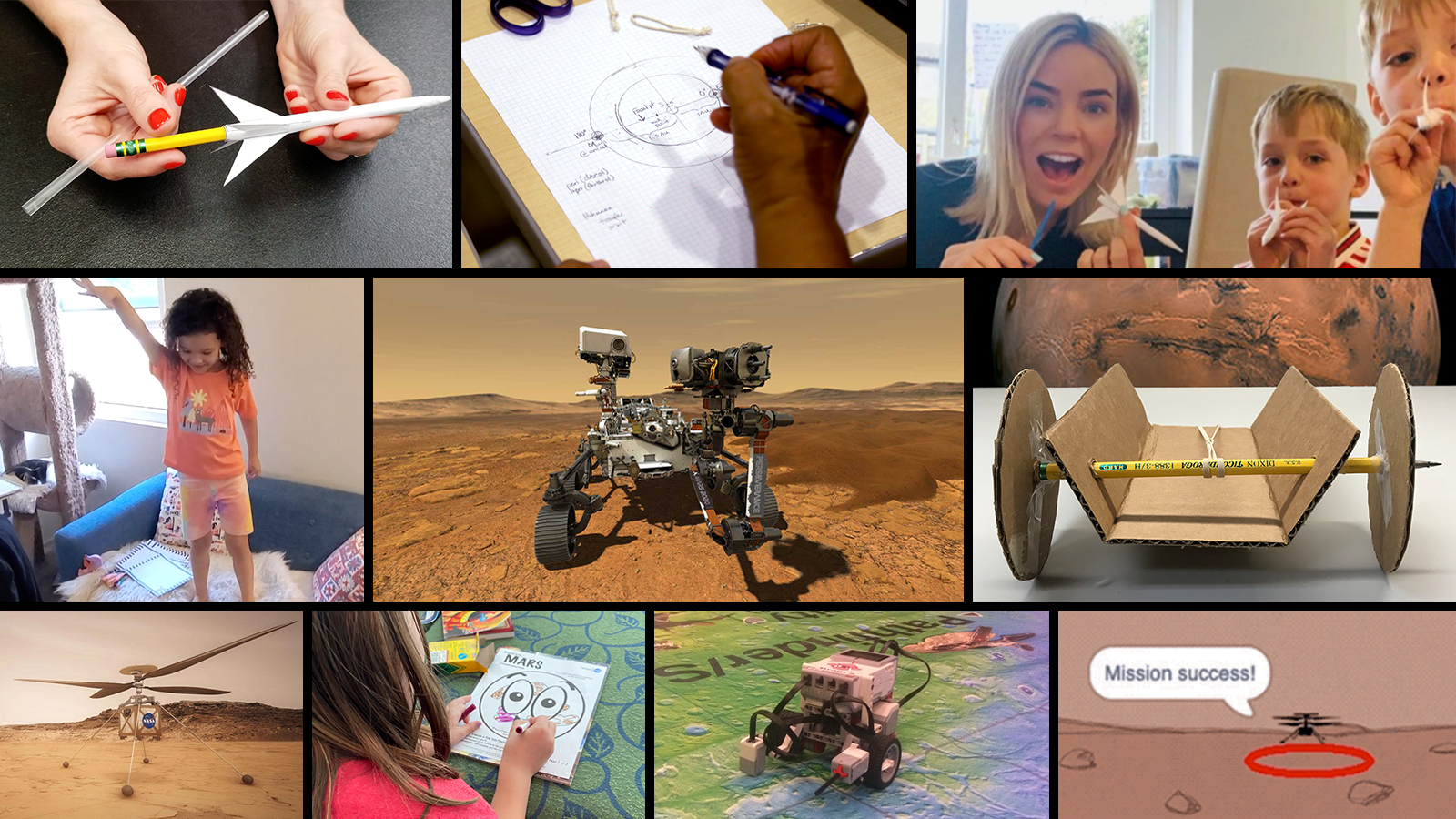
In this live stream for students in grades K-8, we'll build our own paper helicopters as we learn about the first helicopter to fly on Mars. Plus, we'll answer your questions during a live Q&A.

Register for Q&A

Watch Online

Get the Latest from NASA STEM!

NASA EXPRESS newsletter

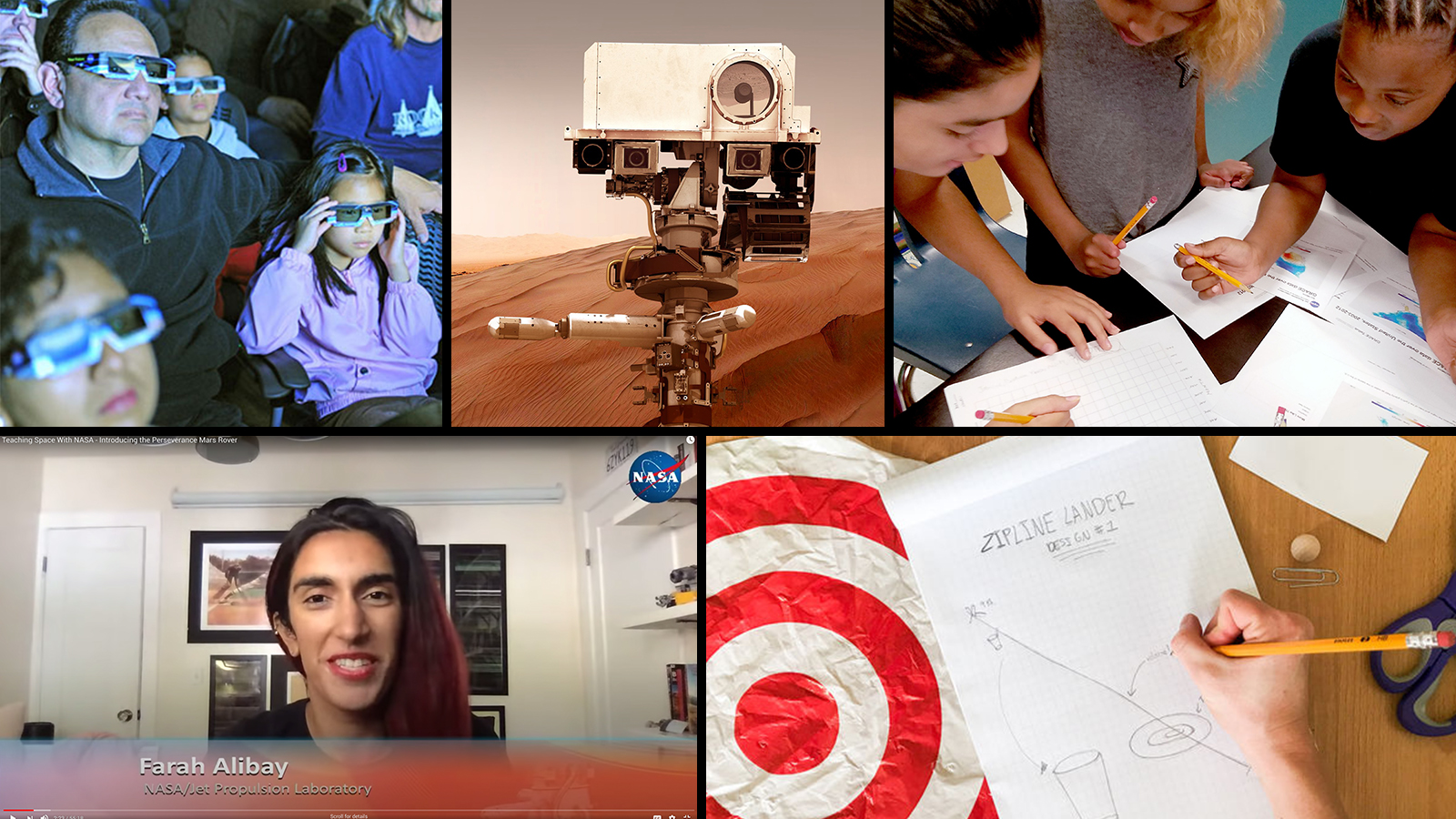
Did you know that NASA has a weekly newsletter for educators and students? Sign up for the NASA EXPRESS to get the latest NASA STEM resources and opportunities for the education community delivered to your inbox every Thursday.

Subscribe today


Explore More

Educator Resources: NASA's Mission to Mars Student Challenge

Educator Resources

Student Activities: Learning Space With NASA at Home

Student Activities

Live Streams

Live Streams: Teaching Space With NASA

Events

Educational Events from NASA-JPL Edu

Teachable Moments

Teachable Moments: NASA's Perseverance Rover Lands on Mars

Educator Resources

Educator Resources: NASA #CountdownToMars STEM Toolkit
 
@NASAJPLedu Facebook@NASAJPL_Edu TwitterJPL Education Website@NASAJPL_Edu Instagram@nasajpledu YouTube

Tuesday, May 11, 2021

Day in Review


DAY IN REVIEW
Perseverance’s Robotic Arm Starts Conducting Science
NASA’s newest Mars rover is beginning to study the floor of an ancient crater that once held a lake.
› Read the full story
As NASA’s Voyager 1 Surveys Interstellar Space, Its Density Measurements Are Making Waves
In the sparse collection of atoms that fills interstellar space, Voyager 1 has measured a long-lasting series of waves where it previously only detected sporadic bursts.
› Read the full story


Monday, May 10, 2021

Day in Review


DAY IN REVIEW
A lava flow from Hawaii’s Kilauea Volcano enters the ocean near Isaac Hale Beach Park on August 5, 2018.
Caldera Collapse Increases the Size and Duration of Volcanic Eruptions

Scientists have figured out what triggers large-scale volcanic eruptions and what conditions likely lead to them.

Hawaii’s Kilauea is one of the most active volcanoes in the world. Because of this and its relative ease of accessibility, it is also among the most heavily outfitted with monitoring equipment – instruments that measure and record everything from earthquakes and ground movement to lava volume and advancement.

Kilauea’s 2018 eruption, however, was especially massive. In fact, it was the volcano’s largest eruption in over 200 years. Scientists at NASA’s Jet Propulsion Laboratory in Southern California used the abundance of data collected from this rare event to shed light on the cause of large-scale eruptions like this one and, perhaps more importantly, what mechanisms trigger them.

“Ultimately, what caused this eruption to be so much larger than normal was the collapse of the volcano’s caldera – the large, craterlike depression at the volcano’s summit,” said JPL’s Alberto Roman, lead author of the new study published recently in Nature. “During a caldera collapse, a massive block of rock near the top of the volcano slides down into the volcano. As it slides, gets stuck on the jagged walls around it, and slides some more, the block of rock squeezes out more magma than would ordinarily be expelled.”

But what the science team really wanted to know was what caused the caldera to collapse in the first place – and they found their answer.

The likely culprit? Vents – openings through which lava flows – located a distance away from, and at a much lower elevation than, the volcano’s summit.

“Sometimes, volcanoes erupt at the summit, but an eruption can also occur when lava breaks through vents much lower down the volcano,” said JPL’s Paul Lundgren, co-author of the study. “Eruption through these low-elevation vents likely led to the collapse of the caldera.”

Lundgren compares this type of vent to the spigot on a collapsible water jug you’d take on a camping trip. As the water level drops toward the location of the spigot, the flow of water slows or stops. Likewise, the lower down the volcano a vent (or “spigot”) is located, the longer lava is likely to flow before reaching a stopping point.

A large quantity of magma can be expelled quickly from the chamber (or chambers) beneath the volcano through these vents, leaving the rocky floor and walls of the caldera above the chamber without sufficient support. The rock from the caldera can then collapse into the magma chamber.

As the rock falls, it pressurizes the magma chambers – for Kilauea, the research team identified two of them – increasing the magma flow to the distant vents as well as the total volume of the eruption. The pressurization is akin to squeezing the water jug to force out the last little bit of water.

After developing their model of these eruption processes, taking advantage of the myriad data available from Kilauea, they also compared the model’s predictions to observations from similar eruptions driven by caldera collapse at other volcanoes. The results were consistent. Even though the model doesn’t predict when a volcano is going to erupt, it can provide crucial insight into the likely severity of an eruption once it begins.

“If we see an eruption at a low-elevation vent, that is a red flag or warning that caldera collapse is possible,” said Roman. “Similarly, if we detect earthquakes consistent with the slipping of the caldera rock block, we now know that the eruption will likely be much larger than usual.”


Sunday, May 9, 2021

RE: Follow up

Are you interested to purchase any of the following LinkedIn email databases?
FREE Sample available

  1. CEOs, owners, Presidents and MDs email list
  2. CIO, CTO, CISO, VP/Director/Manager of IT, IT Compliance, IT Risk, BI, Cloud, Database and IT Security managers email list
  3. CFO, Controller, VP/Director/Manager of Finance, Accounts Payable, Accounts Receivable, Audit managers email list
  4. VP/Director/Manager of Customer Service and Customer Success managers email list
  5. Trader/investors email list
  6. Telecom managers, VOIP managers, Cloud architect, Cloud managers, Storage managers email list
  7. Small Business owners email list
  8. Purchasing and Procurement Managers email list
  9. Physicians, Doctors, Nurses, Dentists, Therapists email list
  10. Pharmacist and pharmacy owners email list
  11. Oil, Gas and utility industry decision makers email list
  12. New & Used Car Dealers email list
  13. Marketing, social media, Sales, demand generation, Lead generation decision makers email list
  14. Manufacturing Industry decision makers email list
  15. Logistics, shipping, and supply chain managers email list
  16. ISV/VARs/Resellers email list
  17. Individual insurance agents email list
  18. HR, Training, Learning & Development, Employee Benefits, Talent Acquisition, Recruiting decision makers email list
  19. Hospitals, clinics, private practices, Pharmaceutical and biotechnology company's top decision makers email list
  20. Homeowners, Apartment owners, Building owner email list
  21. High net worth individuals/investors email list
  22. Health, environment & Safety managers email list
  23. Government decision makers email list
  24. General and corporate counsels email list
  25. Fleet managers, Trucking company owners email list
  26. Financial planner/advisors email list
  27. Facilities, office and maintenance managers email list
  28. Event and Meeting planners, organizers, and exhibitors email list
  29. Engineers email list
  30. Education industry executives email list - Principals, Dean, Admins and teachers from Schools, Colleges and Universities
  31. E-commerce or online retailers email list
  32. Data scientist, Data Analytics and Database Administrators email list
  33. CPA and Bookkeepers email list
  34. Compliance and Risk Management managers email list
  35. Commercial property owners email list
  36. Builders, property developers and construction industry decision makers email list
  37. Attorneys and Lawyers email list
  38. Architects and interior designers email list
Please let me know your thoughts.

Sara taylor
Email Database Provider


Unsubscribe