MY SEARCH ENGINE

Tuesday, April 27, 2021

Upcoming Virtual Events from NASA-JPL Edu

Join us online in May to learn about NASA's search for habitable worlds beyond Earth 
NASA-JPL Edu Virtual Events - May 2021

Did you know that scientists have discovered thousands of planets outside of our solar system known as exoplanets? Some of these worlds might even have the right conditions to sustain life. Join us online in May to hear from NASA experts leading research into these distant planets and the search for habitable worlds beyond Earth. Plus, we'll answer your questions and share educational resources you can use to bring this exciting NASA science to students. Participation for some events is limited – register today!

May Events for Educators

Teaching Space With NASA Live Stream – The Search for Exoplanets

Live Stream

WEDNESDAY, MAY 5 AT 3 PM PDT (6 PM EDT)

In this educational live stream, NASA experts will discuss how we look for planets outside of our solar system. Plus, we'll answer your questions. All audiences are welcome.

 
Virtual Educator Workshop: Exploring Exoplanets With NASA

Virtual Educator Workshop

SATURDAY, MAY 8 AT 10 AM PDT (6 PM EDT)

In this educator workshop, we will dive into how NASA searches for habitable worlds outside our solar system and how to bring this fascinating research into your math and science lessons. Participation is limited. Register to attend.

Related Education Resources

Educator Guides

Educator Guides: Exploring Exoplanets With Kepler

Students use math concepts related to transits to discover real-world data about Mercury, Venus and planets outside our solar system.

Science | Grades 6-12 | 30-60 mins

Educator Guides: Habitable Hunt: A 'Pi in the Sky' Math Problem

In this illustrated math problem, students use the mathematical constant pi to find the "habitable zone" around a distant star and determine which of its planets are in that zone.

Math | Grades 11-12 | Less than 30 mins

Student Activities

Student Project: Space Origami – Make Your Own Starshade

Make your own model of this folding NASA space technology designed to help capture the first images of planets outside our solar system!

Engineering | Grades 4-12 | Less than 30 mins

Slideshow: Ocean Worlds

Where might oceans – and living things – exist beyond Earth? Scientists have their eyes on these places in our own solar system.

Science | Grades 3-12 | Less than 30 mins


More Upcoming Events

Webinar: Taking Flight: How Girls Can Grow up to Be Engineers – Internships and Other Opportunities

Public Event

April 29 at 1 p.m. PDT

Meet female engineers working on the Mars helicopter at NASA-JPL, who will explain how they got their start – and how you can, too.

Webinar: Teaching Space With NASA Live Stream – Tracking Asteroids

Public Event

June 9 at 3 p.m. PDT

In this educational live stream, NASA experts will discuss how we track and study comets and asteroids. Plus, we'll answer your questions!


Explore More

Educator Resources: NASA's Mission to Mars Student Challenge

Educator Resources

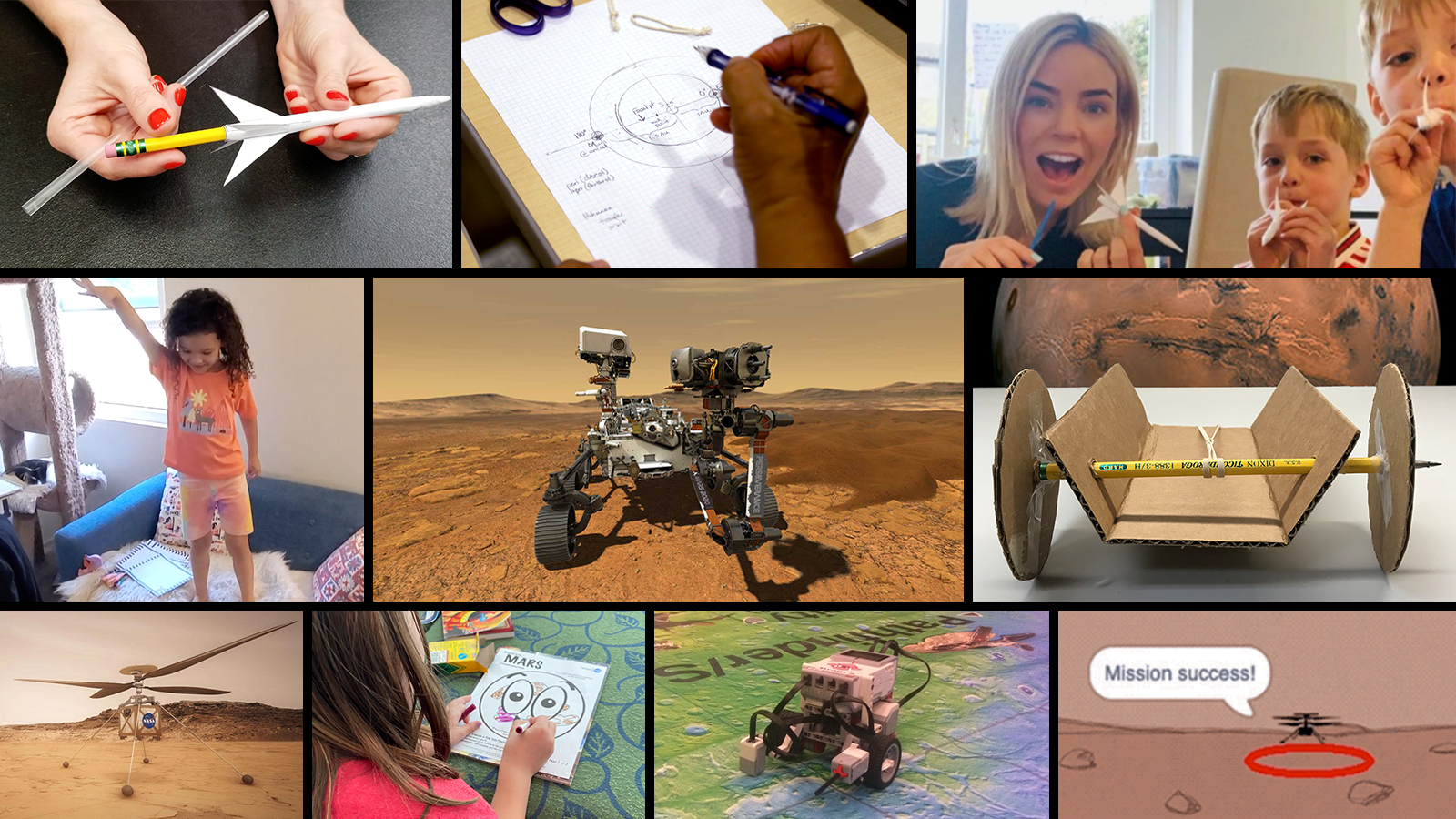
Student Activities: Learning Space With NASA at Home

Student Activities

Live Streams

Live Streams: Teaching Space With NASA

Educator Resources

Teachable Moments

Educator Resources

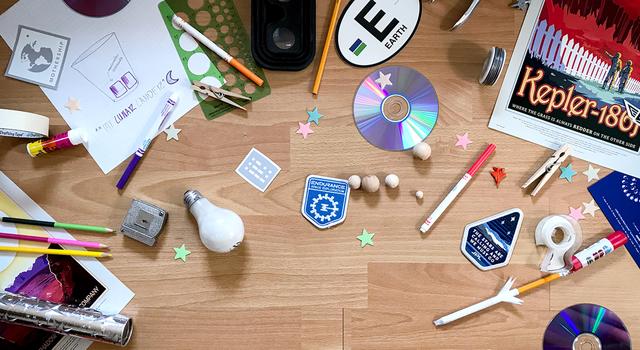
STEM Lessons for Educators

Student Activities

STEM Activities for Students
 
@NASAJPLedu Facebook@NASAJPL_Edu TwitterJPL Education Website@NASAJPL_Edu Instagram@nasajpledu YouTube

Monday, April 26, 2021

Tuition MUET, iELTS, SPM, PT3, UPSR - Express 1 BULAN !

1. Kelas Mandarin / English Dewasa (utk Kerja / Bizness)

2. Tuisyen MUET / iELTS / SPM / UPSR (Express ATAU Biasa)

3. Kelas AL-Quran Dewasa & Kanak-kanak @ Di rumah / Online


>> Maklumat Lanjut disini >> http://www.MyCambridge.blogspot.com


#Pahala >> Share INFO ini di Facebook & Twitter dgn rakan yg sangat memerlukannya !


#tips belajar bahasa inggeris di IPT #kelas bahasa inggeris SPM belajar di rumah #Tuisyen bahasa inggeris PT3 #cara belajar bahasa inggeris di UiTM dengan cepat #cara cepat belajar bahasa inggeris di rumah Klang #belajar bahasa inggeris di rumah sendiri seremban #belajar bahasa inggeris di rumah putrajaya #belajar bahasa inggeris di rumah melaka #tuition ielts #cara mudah belajar BI #tuition ielts #tuition ielts #kelas english dewasa jarak jauh #Kursus Bahasa Inggeris bersijil #Kelas English dengan sijil #kursus bahasa inggeris online cepat #Free kursus bahasa inggeris cepat #Past Year Question iELTS #Cara daftar ielts #Tips iELts #Cara Lulus ielts #Tuisyen Muet Cuti Semester UiTM #Kelas Muet Unisel #Kelas English Ekspress #Kelas Bahasa Inggeris 1 Bulan #Kelas English Dewasa #Putrajaya #Melaka #Bangi #Banting #Seremban #UKM #UM #UPM #USIM #OUM #USM english Short Course #PJJ

Cooperation Offer

Hey!

As you can see, this is not a formal email, and unfortunately, it does not mean anything good for you.
BUT do not despair, it is not critical. I am going to explain to you everything right now.

I have access to your electronic devices, which are the part of the local network you regularly use.
I have been tracking your activity for the last few months.

How did that happen?
You visited some hacked adult websites with Exploit, and your device was exposed to my malicious software (I bought it in Darknet from specialists in this field).
This is a very complex software, operating as Trojan Horse. It updates regularly, and your antivirus can not detect it.
The program has a keylogger; it can turn your camera and microphone on and off, send files and provide access to your local network.

It took me some time to get access to the information from other devices, and as of now,
I have all your contacts with conversations, info about your locations, what you like, your favourite websites, etc.

Just recently, I came up with an awesome idea to create the video where you cum in one part of the screen, while the video was simultaneously playing on another screen. That was fun!

Rest assured that I can easily send this video to all your contacts with a couple clicks, and I assume that you would like to prevent this scenario.

With that in mind, here is my proposal:
Transfer the amount equivalent to 1650 USD to my Bitcoin wallet, and I will forget about the entire thing. I will also delete all data and videos permanently.

In my opinion, this is a somewhat modest price for my work.
If you don't know how to use Bitcoins, search it in Bing or Google 'how can I purchase Bitcoins' or other stuff like that.

My Bitcoin wallet: 1Cg1X5xS6wkLqPksNcsVzm41Mf24PsrE1

You have 55 hours to reply and you should also bear the following in mind:
It makes no sense to reply me - the address has been generated automatically.
It makes no sense to complain either, since the letter along with my Bitcoin wallet cannot be tracked.
Everything has been orchestrated precisely.

If I ever detect that you mentioned anything about this letter to anyone - the video will be immediately shared, and your contacts will be the first to receive it.
Following that, the video will be posted on the web!

Remember! Time tracking will start as soon as you open this email, I am monitoring this!

Good luck and take it easy! It was just bad luck, next time please be careful.

Sunday, April 25, 2021

Day in Review


DAY IN REVIEW
NASA’s Ingenuity Mars Helicopter can be seen hovering during its third flight on April 25, 2021, as seen by the left Navigation Camera aboard NASA’s Perseverance Mars rover.
NASA's Ingenuity Mars Helicopter Flies Faster, Farther on Third Flight

The craft’s April 25 flight was conducted at speeds and distances beyond what had ever been previously demonstrated, even in testing on Earth.

NASA’s Ingenuity Mars Helicopter continues to set records, flying faster and farther on Sunday, April 25, 2021 than in any tests it went through on Earth. The helicopter took off at 1:31 a.m. EDT (4:31 a.m. PDT), or 12:33 p.m. local Mars time, rising 16 feet (5 meters) – the same altitude as its second flight. Then it zipped downrange 164 feet (50 meters), almost half the length of a football field, reaching a top speed of 6.6 feet per second (2 meters per second).

After data came back from Mars starting at 10:16 a.m. EDT (7:16 a.m. PDT), Ingenuity’s team at NASA’s Jet Propulsion Laboratory in Southern California was ecstatic to see the helicopter soaring out of view. They’re already digging through a trove of information gathered during this third flight that will inform not just additional Ingenuity flights but possible Mars rotorcraft in the future.

“Today’s flight was what we planned for, and yet it was nothing short of amazing,” said Dave Lavery, the project’s program executive for Ingenuity Mars Helicopter at NASA Headquarters in Washington. “With this flight, we are demonstrating critical capabilities that will enable the addition of an aerial dimension to future Mars missions.”

The Mastcam-Z imager aboard NASA’s Perseverance Mars rover, which is parked at “Van Zyl Overlook” and serving as a communications base station, captured video of Ingenuity. In the days ahead, segments of that video will be sent back to Earth showing most of the helicopter’s 80-second journey across its flight zone.

The Ingenuity team has been pushing the helicopter’s limits by adding instructions to capture more photos of its own – including from the color camera, which captured its first images on Flight Two. As with everything else about these flights, the additional steps are meant to provide insights that could be used by future aerial missions.

The helicopter’s black-and-white navigation camera, meanwhile, tracks surface features below, and this flight put the onboard processing of these images to the test. Ingenuity’s flight computer, which autonomously flies the craft based on instructions sent up hours before data is received back on Earth, utilizes the same resources as the cameras. Over greater distances, more images are taken. If Ingenuity flies too fast, the flight algorithm can’t track surface features.

“This is the first time we’ve seen the algorithm for the camera running over a long distance,” said MiMi Aung, the helicopter’s project manager at JPL. “You can’t do this inside a test chamber.”

Vacuum chambers at JPL are filled with wispy air, primarily carbon dioxide, to simulate the thin Martian atmosphere; they don’t have room for even a tiny helicopter to move more than about 1.6 feet (half a meter) in any direction. That posed a challenge: Would the camera track the ground as designed while moving at higher speed on the Red Planet?

Lots of things have to go just right for the camera to do that, said Gerik Kubiak, a JPL software engineer. Aside from focusing on the algorithm that tracks surface features, the team needs the correct image exposures: Dust can obscure the images and interfere with camera performance. And the software must perform consistently.

“When you’re in the test chamber, you have an emergency land button right there and all these safety features,” Kubiak said. “We have done all we can to prepare Ingenuity to fly free without these features.”

With this third flight in the history books, the Ingenuity Mars Helicopter team is looking ahead to planning its fourth flight in a few days’ time.

The Ingenuity Mars Helicopter was built by JPL, which also manages this technology demonstration project for NASA Headquarters. It is supported by NASA’s Science Mission Directorate, Aeronautics Research Mission Directorate, and Space Technology Mission Directorate. NASA’s Ames Research Center and Langley Research Center provided significant flight performance analysis and technical assistance during Ingenuity’s development. AeroVironment Inc., Qualcomm, Snapdragon, and SolAero also provided design assistance and major vehicle components. The Mars Helicopter Delivery System was designed and manufactured by Lockheed Space Systems, Denver.


Thursday, April 22, 2021

Day in Review


DAY IN REVIEW
Ingenuity’s Second Flight As Seen by Perseverance
NASA’s Ingenuity Mars Helicopter Logs Second Successful Flight

The small rotorcraft’s horizons were expanded on its second flight.

NASA’s Ingenuity helicopter successfully completed its second Mars flight on April 22 – the 18th sol, or Martian day, of its experimental flight test window. Lasting 51.9 seconds, the flight added several new challenges to the first, which took place on April 19, including a higher maximum altitude, longer duration, and sideways movement.

“So far, the engineering telemetry we have received and analyzed tell us that the flight met expectations and our prior computer modeling has been accurate,” said Bob Balaram, chief engineer for the Ingenuity Mars Helicopter at NASA’s Jet Propulsion Laboratory in Southern California. “We have two flights of Mars under our belts, which means that there is still a lot to learn during this month of Ingenuity.”

For this second flight test at “Wright Brothers Field,” Ingenuity took off again at 5:33 a.m. EDT (2:33 a.m. PDT), or 12:33 p.m. local Mars time. But where Flight One topped out at 10 feet (3 meters) above the surface, Ingenuity climbed to 16 feet (5 meters) this time. After the helicopter hovered briefly, its flight control system performed a slight (5-degree) tilt, allowing some of the thrust from the counter-rotating rotors to accelerate the craft sideways for 7 feet (2 meters).

“The helicopter came to a stop, hovered in place, and made turns to point its camera in different directions,” said Håvard Grip, Ingenuity’s chief pilot at JPL. “Then it headed back to the center of the airfield to land. It sounds simple, but there are many unknowns regarding how to fly a helicopter on Mars. That’s why we’re here – to make these unknowns known.”

Operating an aircraft in a controlled manner at Mars is far more difficult than flying one on Earth. Even though gravity on Mars is about one third that of Earth’s, the helicopter must fly with the assistance of an atmosphere with only about 1% of the density at Earth’s surface. Each second of each flight provides an abundance of Mars in-flight data for comparison to the modeling, simulations, and tests performed back here on Earth. And NASA also gains its first practical experience operating a rotorcraft remotely at Mars. These datasets will prove invaluable for potential future Mars missions that could enlist next-generation helicopters to add an aerial dimension to their explorations.

The Ingenuity Mars Helicopter project is a high-risk, high-reward technology demonstration. If Ingenuity were to encounter difficulties during its 30-sol mission, the science-gathering of NASA’s Perseverance Mars rover mission wouldn’t be impacted.

As with the first test, the Perseverance rover obtained imagery of the flight attempt from 211 feet (64.3 meters) away at “Van Zyl Overlook” using its Navcam and Mastcam-Z imagers. The initial set of data – including imagery – from the flight was received by the Ingenuity team beginning at 9:20 a.m. EDT (6:20 a.m. PDT).

“For the second flight, we tried a slightly different approach to the zoom level on one of the cameras,” said Justin Maki, Perseverance project imaging scientist and Mastcam-Z deputy principal investigator at JPL. “For the first flight, one of the cameras was fully zoomed in on the takeoff and landing zone. For the second flight we zoomed that camera out a bit for a wider field of view to capture more of the flight.”

Because the data and imagery indicate that the Mars Helicopter not only survived the second flight but also flew as anticipated, the Ingenuity team is considering how best to expand the profiles of its next flights to acquire additional aeronautical data from the first successful flight tests on another world.

More About Ingenuity

The Ingenuity Mars Helicopter was built by JPL, which also manages this technology demonstration project for NASA Headquarters. It is supported by NASA’s Science Mission Directorate, Aeronautics Research Mission Directorate, and Space Technology Mission Directorate. NASA’s Ames Research Center and Langley Research Center provided significant flight performance analysis and technical assistance during Ingenuity’s development.

At NASA Headquarters, Dave Lavery is the program executive for the Ingenuity Mars Helicopter. At JPL, MiMi Aung is the project manager and J. (Bob) Balaram is chief engineer.

For more information about Ingenuity:

https://go.nasa.gov/ingenuity-press-kit

and

https://mars.nasa.gov/technology/helicopter

More About Perseverance

A key objective for Perseverance’s mission on Mars is astrobiology, including the search for signs of ancient microbial life. The rover will characterize the planet’s geology and past climate, pave the way for human exploration of the Red Planet, and be the first mission to collect and cache Martian rock and regolith (broken rock and dust).

Subsequent NASA missions, in cooperation with ESA (European Space Agency), would send spacecraft to Mars to collect these sealed samples from the surface and return them to Earth for in-depth analysis.

The Mars 2020 Perseverance mission is part of NASA’s Moon to Mars exploration approach, which includes Artemis missions to the Moon that will help prepare for human exploration of the Red Planet.

JPL, which is managed for NASA by Caltech in Pasadena, California, built and manages operations of the Perseverance rover.

For more about Perseverance:

nasa.gov/perseverance

and

mars.nasa.gov/mars2020/


Wednesday, April 21, 2021

Day in Review


DAY IN REVIEW
NASA’s Perseverance Mars Rover Extracts First Oxygen From Red Planet
The milestone, which the MOXIE instrument achieved by converting carbon dioxide into oxygen, points the way to future human exploration of the Red Planet.
› Read the full story
NASA to Participate in Tabletop Exercise Simulating Asteroid Impact
JPL’s Center for Near Earth Object Studies will lead the hypothetical impact scenario to see how international agencies respond to an actual impact prediction.
› Read the full story
Astronomers Release New All-Sky Map of Milky Way's Outer Reaches
The highlight of the new chart is a wake of stars, stirred up by a small galaxy set to collide with the Milky Way. The map could also offer a new test of dark matter theories.
› Read the full story


Rank pharma or adult sites with blackhat SEO

Special Blackhat plans for special website needs
https://blackhatseoservices.tk/


http://blackhatseoservices.tk/unsubsribe/