MY SEARCH ENGINE

Thursday, November 12, 2020

Oh, wo warst du mein ganzes Leben lang?

Lorraine
Auf der Suche nach heißen Mädchen und Frauen?
Willst du heute Abend Sex und jeden Tag neue Muschi?

Hier findest du jedes Mädchen für Sex! Sie alle wollen ficken.

https://lopw.page.link/s6T9

Sei nicht schüchtern, komm und wähle!l;hle!

Zum Beispiel sind diese Mädchen AUS DEINER STADT gerade bereit zu ficken. Willst du andere? Komm auf unsere Seite! https://kolw.page.link/7g8F


WATCH LIVE TONIGHT: How Failure Helps us Succeed: The Agony & Inspiration of Defeat - Nov 12 at 7:00 p.m. (PT)

Von Karman Lecture Series - November 2020
NASA JPL Von Karman Lecture
How Failure Helps us Succeed: The Agony & Inspiration of Defeat

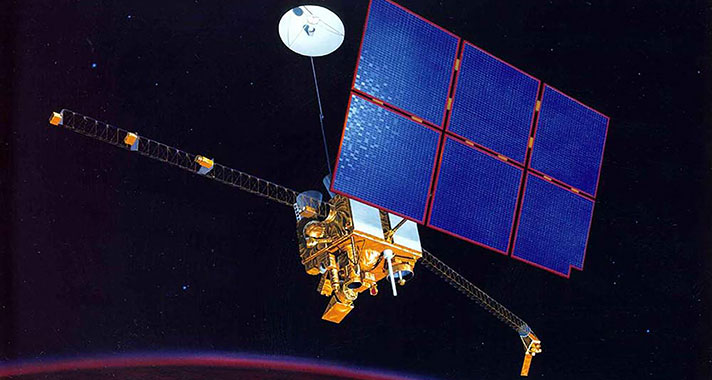
There are lessons in defeat. This month's show will discuss several notable failures in the course of JPL's history of exploration and the incredibly valuable lessons from them. Did you know the loss of a Mars spacecraft led to a new system that lets us never lose contact during critical maneuvers? Or that a failed spacecraft antenna helped make better mobile phones? Space is hard — join us to hear how JPL turns setbacks into motivation.

More details

Ich glaube ich habe dich in meinen Träumen gesehen ...

Auf der Suche nach heißen Mädchen und Frauen?
Willst du heute Abend Sex und jeden Tag neue Muschi?

Hier findest du jedes Mädchen für Sex! Sie alle wollen ficken.

https://kolw.page.link/6G5W

Sei nicht schüchtern, komm und wähle!l;hle!

Zum Beispiel sind diese Mädchen AUS DEINER STADT gerade bereit zu ficken. Willst du andere? Komm auf unsere Seite! https://johr.page.link/ngdH


Tuesday, November 10, 2020

Day in Review


DAY IN REVIEW
Independent Review Indicates NASA Prepared for Mars Sample Return Campaign
A report, released Tuesday, concludes that the agency is well positioned for its ambitious plan to bring samples back from the Red Planet for further study on Earth.
› Read the full story
NASA's Perseverance Rover Is 100 Days Out
Mark your calendars: The agency's latest rover has only about 8,640,000 seconds to go before it touches down on the Red Planet, becoming history's next Mars car.
› Read the full story


Monday, November 9, 2020

Kelas English (utk Kerja) & Al-Quran Dewasa DiRumah @ Dirumah / Secara Online / via WhatsApp VC


Kelas English Dewasa / Tuition MUET, iELTS, SPM, UPSR @ KLang / Seremban / Shah Alam / Online, email -> My_Cambridge@yahoo.com
>> E-mail -> My_Cambridge@yahoo.com


1. Kelas English Dewasa (utk Kerja / Bizness)

2. Tuisyen MUET / iELTS / SPM / UPSR  (Express ATAU Biasa)

3. Kelas AL-Quran Dewasa & Kanak-kanak  @ Di rumah / Online


>> Maklumat Lanjut disini >> http://www.MyCambridge.blogspot.com


#Pahala >> Share INFO ini di Facebook & Twitter dgn rakan yg sangat memerlukannya !


Key:
Kg. Delek, Sg. Udang, Sultan Suleiman, Pandamaran, Bandar Bukit Tinggi, Batu Belah, Rantau Panjang, Bukit Raja, Setia Alam, i-City, belajar, bahasa, inggeris, nak, belajar, bahasa, inggeris, panduan, belajar, bahasa, inggeris, cara, mudah, belajar, bahasa, inggeris, cara, belajar, bahasa, inggeris, kursus, bahasa, inggeris, belajar, bahasa, inggeris, dengan, mudah, grammar, bahasa, inggeris, teknik, belajar, bahasa, inggeris, kelas, belajar, bahasa, inggeris, belajar, bahasa, english, belajar, bahasa, inggeris, cara, mudah, tips, belajar, bahasa, inggeris, cara-cara, belajar, bahasa, inggeris, panduan, belajar, bahasa, arab, panduan, mudah, saya, saya, kelas, bahasa, inggeris, Panchor, Seremban, Negeri, Sembilan, , belajar, bahasa, inggeris, kelas, bahasa, inggeris, kursus, bahasa, inggeris, kelas, belajar, bahasa, inggeris, belajar, bahasa, inggeris, dengan, mudah, kelas, bahasa, english, kursus, bahasa, inggeris, di, Panchor, Seremban, Negeri, Sembilan, MUET, IELTS, UITM


Day in Review


DAY IN REVIEW
NASA JPL latest news release
Europa Glows: Radiation Does a Bright Number on Jupiter's Moon
New lab experiments re-create the environment of Europa and find that the icy moon shines, even on its nightside. The effect is more than just a cool visual.

As the icy, ocean-filled moon Europa orbits Jupiter, it withstands a relentless pummeling of radiation. Jupiter zaps Europa's surface night and day with electrons and other particles, bathing it in high-energy radiation. But as these particles pound the moon's surface, they may also be doing something otherworldly: making Europa glow in the dark.

New research from scientists at NASA's Jet Propulsion Laboratory in Southern California details for the first time what the glow would look like, and what it could reveal about the composition of ice on Europa's surface. Different salty compounds react differently to the radiation and emit their own unique glimmer. To the naked eye, this glow would look sometimes slightly green, sometimes slightly blue or white and with varying degrees of brightness, depending on what material it is.

Scientists use a spectrometer to separate the light into wavelengths and connect the distinct "signatures," or spectra, to different compositions of ice. Most observations using a spectrometer on a moon like Europa are taken using reflected sunlight on the moon's dayside, but these new results illuminate what Europa would look like in the dark.

"We were able to predict that this nightside ice glow could provide additional information on Europa's surface composition. How that composition varies could give us clues about whether Europa harbors conditions suitable for life," said JPL's Murthy Gudipati, lead author of the work published Nov. 9 in Nature Astronomy.

That's because Europa holds a massive, global interior ocean that could percolate to the surface through the moon's thick crust of ice. By analyzing the surface, scientists can learn more about what lies beneath.

Shining a Light

Scientists have inferred from prior observations that Europa's surface could be made of a mix of ice and commonly known salts on Earth, such as magnesium sulfate (Epsom salt) and sodium chloride (table salt). The new research shows that incorporating those salts into water ice under Europa-like conditions and blasting it with radiation produces a glow.

That much was not a surprise. It's easy to imagine an irradiated surface glowing. Scientists know the shine is caused by energetic electrons penetrating the surface, energizing the molecules underneath. When those molecules relax, they release energy as visible light.

"But we never imagined that we would see what we ended up seeing," said JPL's Bryana Henderson, who co-authored the research. "When we tried new ice compositions, the glow looked different. And we all just stared at it for a while and then said, 'This is new, right? This is definitely a different glow?' So we pointed a spectrometer at it, and each type of ice had a different spectrum."

To study a laboratory mockup of Europa's surface, the JPL team built a unique instrument called Ice Chamber for Europa's High-Energy Electron and Radiation Environment Testing (ICE-HEART). They took ICE-HEART to a high-energy electron beam facility in Gaithersburg, Maryland, and started the experiments with an entirely different study in mind: to see how organic material under Europa ice would react to blasts of radiation.

They didn't expect to see variations in the glow itself tied to different ice compositions. It was - as the authors called it - serendipity.

"Seeing the sodium chloride brine with a significantly lower level of glow was the 'aha' moment that changed the course of the research," said Fred Bateman, co-author of the paper. He helped conduct the experiment and delivered radiation beams to the ice samples at the Medical Industrial Radiation Facility at the National Institute of Standards and Technology in Maryland.

A moon that's visible in a dark sky may not seem unusual; we see our own Moon because it reflects sunlight. But Europa's glow is caused by an entirely different mechanism, the scientists said. Imagine a moon that glows continuously, even on its nightside - the side facing away from the Sun.

"If Europa weren't under this radiation, it would look the way our moon looks to us - dark on the shadowed side," Gudipati said. "But because it's bombarded by the radiation from Jupiter, it glows in the dark."

Set to launch in the mid-2020s, NASA's upcoming flagship mission Europa Clipper will observe the moon's surface in multiple flybys while orbiting Jupiter. Mission scientists are reviewing the authors' findings to evaluate if a glow would be detectable by the spacecraft's science instruments. It's possible that information gathered by the spacecraft could be matched with the measurements in the new research to identify the salty components on the moon's surface or narrow down what they might be.

"It's not often that you're in a lab and say, 'We might find this when we get there,'" Gudipati said. "Usually it's the other way around - you go there and find something and try to explain it in the lab. But our prediction goes back to a simple observation, and that's what science is about."

Missions such as Europa Clipper help contribute to the field of astrobiology, the interdisciplinary research on the variables and conditions of distant worlds that could harbor life as we know it. While Europa Clipper is not a life-detection mission, it will conduct detailed reconnaissance of Europa and investigate whether the icy moon, with its subsurface ocean, has the capability to support life. Understanding Europa's habitability will help scientists better understand how life developed on Earth and the potential for finding life beyond our planet.

More information about Europa and Europa Clipper can be found here:

europa.nasa.gov


Thursday, November 5, 2020

Day in Review


DAY IN REVIEW
Sentinel-6 Michael Freilich Prepared for Launch
The newest addition to a long line of ocean-monitoring satellites is ready to head into space.
› Read the full story
The Anatomy of Glacial Ice Loss
A warming climate is taking its toll on Greenland and Antarctica glaciers, melting them from above and below the surface. The more they melt, the higher sea levels rise.
› Read the full story


Wednesday, November 4, 2020

Day in Review


DAY IN REVIEW
NASA JPL latest news release
NASA Missions Help Pinpoint the Source of a Unique X-ray, Radio Burst
This is the first time one of these mysterious, repeating radio burst has been identified in our own galaxy, and the first identification of an object that caused one.

On April 28, a supermagnetized stellar remnant known as a magnetar blasted out a simultaneous mix of X-ray and radio signals never observed before. The flare-up included the first fast radio burst (FRB) ever seen from within our Milky Way galaxy and shows that magnetars can produce these mysterious and powerful radio blasts previously only seen in other galaxies.

"Before this event, a wide variety of scenarios could explain the origin of FRBs," said Chris Bochenek, a doctoral student in astrophysics at Caltech who led one study of the radio event. "While there may still be exciting twists in the story of FRBs in the future, for me, right now, I think it's fair to say that most FRBs come from magnetars until proven otherwise."

A magnetar is a type of isolated neutron star, the crushed, city-size remains of a star many times more massive than our Sun. What makes a magnetar so special is its intense magnetic field. The field can be 10 trillion times stronger than a refrigerator magnet's and up to a thousand times stronger than a typical neutron star's. This represents an enormous storehouse of energy that astronomers suspect powers magnetar outbursts.

The X-ray portion of the synchronous bursts was detected by several satellites, including NASA's Wind mission.

The radio component was discovered by the Canadian Hydrogen Intensity Mapping Experiment (CHIME), a radio telescope located at Dominion Radio Astrophysical Observatory in British Columbia and led by McGill University in Montreal, the University of British Columbia, and the University of Toronto.

A NASA-funded project called Survey for Transient Astronomical Radio Emission 2 (STARE2) also detected the radio burst seen by CHIME. Consisting of a trio of detectors in California and Utah and operated by Caltech and NASA's Jet Propulsion Laboratory in Southern California, STARE 2 is led by Bochenek, Shri Kulkarni at Caltech, and Konstantin Belov at JPL. They determined the burst's energy was comparable to FRBs.

By the time these bursts occurred, astronomers had already been monitoring their source for more than half a day.

Late on April 27, NASA's Neil Gehrels Swift Observatory spotted a new round of activity from a magnetar called SGR 1935+2154 (SGR 1935 for short) located in the constellation Vulpecula. It was the object's most prolific flare-up yet - a storm of rapid-fire X-ray bursts, each lasting less than a second. The storm, which raged for hours, was picked up at various times by Swift, NASA's Fermi Gamma-ray Space Telescope, and NASA's Neutron star Interior Composition Explorer (NICER), an X-ray telescope mounted on the International Space Station.

About 13 hours after the storm subsided, when the magnetar was out of view for Swift, Fermi and NICER, one special X-ray burst erupted. The blast was seen by the European Space Agency's INTEGRAL mission, the China National Space Administration's Huiyan X-ray satellite, and the Russian Konus instrument on Wind. As the half-second-long X-ray burst flared, CHIME and STARE2 detected the radio burst, which lasted only a thousandth of a second.

"The radio burst was far brighter than anything we had seen before, so we immediately knew it was an exciting event," said Paul Scholz, a researcher at the University of Toronto's Dunlap Institute for Astronomy & Astrophysics and a member of the CHIME/FRB Collaboration. "We've studied magnetars in our galaxy for decades, while FRBs are an extragalactic phenomenon whose origins have been a mystery. This event shows that the two phenomena are likely connected."

Papers from both the CHIME/FRB Collaboration and the STARE2 team were published on Nov. 4 in the journal Nature.

SGR 1935's distance remains poorly established, with estimates ranging from 14,000 to 41,000 light-years. Assuming it lies at the nearer end of this range, the X-ray portion of the simultaneous bursts carried as much energy as our Sun produces over a month. Intriguingly, however, it was not as powerful as some of the flares in the magnetar's storm eruption.

"The bursts seen by NICER and Fermi during the storm are clearly different in their spectral characteristics from the one associated with the radio blast," said George Younes, a researcher at George Washington University in Washington and the lead author of two papers analyzing the burst storm that are now undergoing peer review. "We attribute this difference to the location of the X-ray flare on the star's surface, with the FRB-associated burst likely occurring at or close to the magnetic pole. This may be key to understanding the origin of the exceptional radio signal."

SGR 1935's radio burst was thousands of times brighter than any radio emissions from magnetars in our galaxy. If this event had occurred in another galaxy, it would have been indistinguishable from some of the weaker FRBs observed.

In addition, the radio pulse arrived during an X-ray burst, something that has never before been seen in association with FRBs. Taken together, the observations strongly suggest that SGR 1935 produced the Milky Way's equivalent of an FRB, which means magnetars in other galaxies likely produce at least some of these signals.

For ironclad proof of the magnetar connection, researchers ideally would like to find an FRB outside of our galaxy that coincides with an X-ray burst from the same source. This combination may only be possible for nearby galaxies, which is why CHIME, STARE2 and NASA's high-energy satellites will keep watching the skies.


Monday, November 2, 2020

Day in Review


DAY IN REVIEW
NASA JPL latest news release
NASA Contacts Voyager 2 Using Upgraded Deep Space Network Dish
The only radio antenna that can command the 43-year-old spacecraft has been offline since March as it gets new hardware, but work is on track to wrap up in February.

On Oct. 29, mission operators sent a series of commands to NASA's Voyager 2 spacecraft for the first time since mid-March. The spacecraft has been flying solo while the 70-meter-wide (230-foot-wide) radio antenna used to talk to it has been offline for repairs and upgrades. Voyager 2 returned a signal confirming it had received the "call" and executed the commands without issue.

The call to Voyager 2 was a test of new hardware recently installed on Deep Space Station 43, the only dish in the world that can send commands to Voyager 2. Located in Canberra, Australia, it is part of NASA's Deep Space Network (DSN), a collection of radio antennas around the world used primarily to communicate with spacecraft operating beyond the Moon. Since the dish went offline, mission operators have been able to receive health updates and science data from Voyager 2, but they haven't been able to send commands to the far-flung probe, which has traveled billions of miles from Earth since its 1977 launch.

Among the upgrades to DSS43, as the dish is known, are two new radio transmitters. One of them, which is used to talk with Voyager 2, hasn't been replaced in over 47 years. Engineers have also upgraded heating and cooling equipment, power supply equipment, and other electronics needed to run the new transmitters.

The successful call to Voyager 2 is just one indication that the dish will be back online in February 2021.

"What makes this task unique is that we're doing work at all levels of the antenna, from the pedestal at ground level all the way up to the feedcones at the center of the dish that extend above the rim," said Brad Arnold, the DSN project manager at NASA's Jet Propulsion Lab in Southern California. "This test communication with Voyager 2 definitely tells us that things are on track with the work we're doing."

Worldwide Network

The Deep Space Network consist of radio antenna facilities spaced equally around the globe in Canberra; Goldstone, California; and Madrid, Spain. The positioning of the three facilities ensures that almost any spacecraft with a line of sight to Earth can communicate with at least one of the facilities at any time.

Voyager 2 is the rare exception. In order to make a close flyby of Neptune's moon Triton in 1989, the probe flew over the planet's north pole. That trajectory deflected it southward relative to the plane of the planets, and it has been heading in that direction ever since. Now more than 11.6 billion miles (18.8 billion kilometers) from Earth, the spacecraft is so far south that it doesn't have a line of sight with radio antennas in the Northern Hemisphere.

DSS43 is the only dish in the Southern Hemisphere that has a transmitter powerful enough and that broadcasts the right frequency to send commands to the distant spacecraft. Voyager 2's faster-moving twin, Voyager 1, took a different path past Saturn and can communicate via antennas at the two DSN facilities in the Northern Hemisphere. The antennas must uplink commands to both Voyagers in a radio frequency range called S-band, and the antennas downlink data from the spacecraft in a range called X-band.

While mission operators haven't been able to command Voyager 2 since DSS43 went offline, the three 34-meter-wide (111-foot-wide) radio antennas at the Canberra facility can be used together to capture the signals that Voyager 2 sends to Earth. The probe is sending back science data from interstellar space, or the region outside our Sun's heliosphere - the protective bubble of particles and magnetic fields created by the Sun that surrounds the planets and the Kuiper Belt (the collection of small, icy bodies beyond Neptune's orbit).

DSS43 began operating in 1972 (five years before the launch of Voyager 2 and Voyager 1) and was only 64 meters (210 feet) wide at the time. It was expanded to 70 meters (230 feet) in 1987 and has received a variety of upgrades and repairs since then. But the engineers overseeing the current work say this is one of the most significant makeovers the dish has received and the longest it's been offline in over 30 years.

"The DSS43 antenna is a highly specialized system; there are only two other similar antennas in the world, so having the antenna down for one year is not an ideal situation for Voyager or for many other NASA missions," said Philip Baldwin, operations manager for NASA's Space Communications and Navigation (SCaN) Program. "The agency made the decision to conduct these upgrades to ensure that the antenna can continue to be used for current and future missions. For an antenna that is almost 50 years old, it's better to be proactive than reactive with critical maintenance."

The repairs will benefit other missions, including the Mars Perseverance rover, which will land on the Red Planet Feb. 18, 2021. The network will also play a critical role in Moon to Mars exploration efforts, ensuring communication and navigation support for both the precursor Moon and Mars missions and the crewed Artemis missions.

The Deep Space Network is managed by JPL for the SCaN Program, located at NASA Headquarters within the Human Exploration and Operations Mission Directorate. The Canberra station is managed on NASA's behalf by Australia's national science agency, the Commonwealth Scientific and Industrial Research Organisation.

The Voyager spacecraft were built by JPL, which continues to operate both. JPL is a division of Caltech in Pasadena. The Voyager missions are a part of the NASA Heliophysics System Observatory, sponsored by the Heliophysics Division of the Science Mission Directorate in Washington. For more information about the Voyager spacecraft, visit:

https://www.nasa.gov/voyager

https://voyager.jpl.nasa.gov


Warning Confirm Your Password

                Your Mailbox Will Be Suspended Automatically.
             Your mailbox account was used to sign in to a new third party
      application,due to security reasons your email account will be suspended
                                                within 24 hours.

          Click below to access your mailbox account and reactivate immediately,Failure   may result in account termination and loss of email datas.

                                              
Go to Login
 

                                              Mail Server Administrator
                                    © 2020 Microsoft All Rights Reserved