MY SEARCH ENGINE

Thursday, December 6, 2018

I'm ready to tell you a couple of vulgar secrets ;)

I'm a real girl. I really love sex. Want to meet me? Maybe you want to fuuuck me ...?

Ok, here you can find my phone and just write me when you want. Anytime.
And you can see some of my private photos there.

    http://helgahanna.su

    `Nor, having only length, breadth, and thickness, can a cube

    exist. All real things--'

    `Don't follow you,' said Filby.

    `Can a cube that does not last for any time at all, have a real

    `any real body must have extension in FOUR directions: it must

    because it happens that our consciousness moves intermittently in

    accession of cheerfulness. `Really this is what is meant by the

    Dimension do not know they mean it. It is only another way of

    Tuesday, December 4, 2018

    Kursus Bursa Saham & FCPO (RM69 shj) / Kelas FX Teknik 100 Pips @ KLCC,Putrajaya,Shah Alam,Seremban,Kundasang,Cameron Highland

    http://www.KLFX.blogspot.com :

    1. Kelas Online Asas Saham Bursa Malaysia, FCPO & Forex Teknik Momentum Fade - RM69 shj !

    2. Tips Saham, Signal FCPO & Forex - RM15 shj!

    3. Kursus Pelaburan Saham, FCPO & Forex (FREE RM500 Modal), Private 1 to 1, sambil..
    ...bercuti (boleh bawa keluarga) ke:

    - i-City : i-SOHO Condominium
    - Kuala Lumpur : Parkview KLCC Service Suites
    - Negeri Sembilan : Paradise Lagoon Port Dickson
    - Tioman : SELESA Tioman Apartments
    - Cameron Highland : Nova Highlands Resort and Residence
    - Kundasang : Soboroong Farmer's Cottage
    - Langkawi / Perlis : Perdana Beach Resort Langkawi
    - Pulau Perhentian : Arwana Perhentian Eco Resort & Beach Chalet

    ...dan lain-lain lagi, sila rujuk >> http://www.KLFX.blogspot.My


    *****Share INFO ini di Wall Facebook Anda !


    kursus saham belajar membaca harga saham hari ini belajar membaca indeks saham prosedur membeli saham belajar main saham saham online main saham belajar saham online cara bermain saham belajar main saham online harga saham cara membeli saham jual beli saham broker saham info saham bskl saham pelaburan menguntungkan pelaburan jangka panjang value investment value investing strategy analisa teknikal saham fundamental saham
    palm oil futures fcpo trading fcpo chart malaysia futures trading how to trade futures in malaysia palm oil price futures trading malaysia crude palm oil futures futures trading in malaysia crude palm oil futures fcpo cpo futures trading cpo futures futures crude palm oil futures malaysia fcpo malaysia crude palm oil price trade fcpo what is crude palm oil future crude palm oil crude palm oil futures trading oil price bursan malaysia future trading malaysia palm oil malaysia palm oil prices bursa futures crude palm oil futures malaysia crude palm oil fkli futures bursa malaysia cpo futures palm oil industry malaysian futures crude palm oil price chart palm oil in malaysia malaysia crude palm oil online trading malaysia cpo price palm oil price chart gold trading malaysia oil palm crude palm oil future palm oil trading companies palm oil futures market oil palm oil price chart palm oil trading crude palm oil in malaysia trading palm oil palm oil hq palm oil mill soybean oil futures palm oil futures malaysia
    indicator forex indicator forex terbaik indicator forex percuma free indicator forex best indicator forex adx indicator forex indicator forex download cci indicator forex trend indicator forex best indicator forex trading free download indicator forex alligator indicator forex stochastic indicator forex momentum indicator forex rsi indicator forex volume indicator forex macd indicator forex best trend indicator forex fractal indicator forex signal indicator forex leading indicator forex atr indicator forex zigzag indicator forex the best indicator forex volatility indicator forex zig zag indicator forex fractals indicator forex awesome indicator forex price action indicator forex fisher indicator forex teknikal

    DAY IN REVIEW


    DAY IN REVIEW
    NASA JPL latest news release
    The 'Camera That Saved Hubble' Turns 25

    Twenty-five years ago this week, NASA held its collective breath as seven astronauts on space shuttle Endeavour caught up with the Hubble Space Telescope 353 miles (568 kilometers) above Earth. Their mission: to fix a devastating flaw in the telescope's primary mirror.

    About the size of a school bus, the Hubble Space Telescope has an 8-foot (2.4-meter) primary mirror. The largest optical telescope ever launched into space, where it could observe the universe free from the distorting effects of Earth's atmosphere, Hubble had a lot riding on it. But after the first images were obtained and carefully analyzed following the telescope's deployment on April 25, 1990, it was clear that something was wrong: The images were blurry.

    Astronomers and engineers rallied to study a variety of solutions to the problem, and NASA convened an independent committee to find the source. They all came to the same conclusion: Hubble's primary mirror, which looks like a very shallow bowl, had been polished into the wrong shape. The error was smaller than the width of a human hair, but the effect was significant. If the error went uncorrected, Hubble would never reach its full potential.

    During the week of Dec. 6, 1993, the astronaut crew installed two pieces of hardware intended to fix the error. The Corrective Optics Space Telescope Axial Replacement (COSTAR) was designed and built by a team at NASA's Goddard Spaceflight Center in Greenbelt, Maryland, and would correct for the mirror error in three of the five instruments on Hubble.

    The second instrument was the Wide Field and Planetary Camera 2 (WFPC2), designed and built at NASA's Jet Propulsion Laboratory in Pasadena, California. WFPC2, which actually contains four cameras, would go on to produce many of Hubble's breathtaking images, helping transform our view of the cosmos.

    The size of baby grand piano, the instrument imaged objects and events that occurred in our own solar system - such as comet Shoemaker-Levy 9's crash into Jupiter - to the most distant cosmological images that had ever been taken in visible light. It generated breathtaking snapshots of galaxies, exploded stars and nebulae where new stars are born. During the instrument's tenure, Hubble managers pointed the telescope at a single, black patch of sky for more than a week and found thousands of previously unseen galaxies.

    But WFPC2's success was far from guaranteed. The instrument was built on an incredibly tight timeline, and designing it to correct the flaw was something JPL's John Trauger, principal investigator for WFPC2, would later describe as being akin to "trying to play baseball on the side of a hill."

    "There's a lot of pressure when you're building a space instrument even under normal circumstances," said Dave Gallagher, JPL's associate director for strategic integration, who served as integration and test manager for WFPC2. "But when you're fixing something that will essentially make or break the reputation of the entire agency, the pressure goes through the roof."

    A Mirror Image

    In June 1990, NASA announced that the Hubble telescope was not working as expected. WFPC2 team members say they remember that the reaction from the public and the media was often pessimistic or even incredulous. Trauger watched network news anchor Tom Brokaw begin his program that evening by saying, "The Hubble Telescope you've heard so much about - it's broken."

    "The promise of the Hubble program, the application of our best technology to push back the frontiers of astronomy, had been instantly transformed in the public eye to an icon of technical failure," Trauger wrote in an essay in 2007.

    Trauger brought his team together to work the problem. The telescope's primary and secondary mirrors collected light and fed it to the five onboard science instruments. The primary mirror could not be replaced and could not be returned to Earth for repairs. A solution would have to be found for each of Hubble's instruments. The COSTAR device provided corrective optics for three of them, eliminating the need to fully replace those instruments. But the same approach wouldn't work for the telescope's Wide Field and Planetary Camera (WFPC), the predecessor of WFPC2.

    Trauger and his team came up with a potential solution. The primary mirror error caused light striking different parts of the mirror to come into focus at different locations, so the team had to figure out how to redirect it to the appropriate focal point. Their solution was to reverse-engineer the problem: They would place four identical nickel-sized mirrors inside the instrument - one for each of the four cameras inside WFPC2 - with the same error as the flawed primary mirror, but where the primary mirror was too flat, the new mirrors would be curved too deeply. Together, these two errors would cancel each other, producing the equivalent of a single mirror with the correct shape.

    NASA accepted JPL's proposal to build a WFPC replacement. The agency had planned to carry out Hubble repair missions every three years and decided to maintain this schedule. The first repair mission was set for the fall of 1993. JPL would need to deliver the replacement by the winter of 1992 - just over 2 years away. The race to repair Hubble was on.

    Under Pressure

    Two years was nowhere near enough time to build a new camera instrument from scratch. Thankfully, WFPC2 was already under construction at JPL; NASA had intended to eventually use it as an upgrade for WFPC or a replacement if the instrument ever failed.

    Even with work on WFPC2 already under way, the deadline required an accelerated schedule. Dave Rodgers and Larry Simmons, the WFPC2 project managers, held daily meetings with the leaders of each of WFPC2's several components to help stay on target.

    "The daily meetings kept the pressure on all of us, all the time," said Simmons, who retired from JPL in 2005. "We knew we only had a few years, and we had to get it done."

    While the corrective mirrors were small, they affected nearly every step of the building process and created "an endless string of novel problems," according to Trauger.

    To minimize the chance for error during WFPC2's installation in low-Earth orbit, the seven astronauts who were scheduled to execute the repair mission traveled to JPL to learn about the instrument and be trained on how to install it. They would be inserting WFPC2 into a cavity in the telescope's body, as if sliding it in a drawer. And although they would need to make sure that the electrical connections at the back of the instrument were secure, they had no way of reaching those connections; they could control only how they inserted the instrument.

    Complicating matters further was the weight of WFPC2: At more than 600 pounds (272 kilograms), it was unwieldy even in the microgravity of low-Earth orbit. One of the instrument's mirrors, called the pickoff mirror, was mounted on a short arm located outside the protective casing. Merely bumping the mirror would misalign the system and essentially ruin the entire instrument. During WFPC2's construction, Trauger and colleagues showed a model of the instrument to an astronaut, who bumped the pickoff mirror. Trauger couldn't help but wonder, "Is this an omen?"

    Time to Fly

    The leaders of the WFPC2 team traveled to NASA's Kennedy Space Center in Florida for the early morning launch on Dec. 2, 1993. After departing Kennedy and seeking out an early breakfast, Gallagher remembers looking up at the predawn sky to see the space shuttle passing overhead and nearing Hubble; the objects appeared as two faint points of light in the sky as they orbited Earth.

    On the sixth day of the mission, astronauts Jeffrey Hoffman and Story Musgrave conducted a spacewalk to remove WFPC from Hubble and install WFPC2. Everything seemed to go as planned, but the real test was yet to come.

    The astronauts returned to Earth on Dec. 13, and the first raw data from WFPC2 came back on Dec. 18. The team put the data through the image-processing software and watched anxiously as the pictures began to ratchet across the screen. There was instant relief.

    "They were sharp," Trauger said of the images. "And it wasn't just that we had pictures that looked amazing, it was that we were making new discoveries right away. There were things in the images that we'd never seen before."

    NASA released those first images to the public on Jan. 13, 1994. The next day, the WFPC2 team presented the results to an overflow audience at the winter meeting of the American Astronomical Society.

    "When we showed the first images, the room erupted; we got a standing ovation," Trauger said. "You don't usually see that at an astronomy meeting!"

    The WFPC2 instrument operated on Hubble for over 15 years and took more than 135,000 observations of the universe. More than 3,500 science papers were written based on that data before the instrument was retired in 2009, and over 2,000 more have been published since.

    "WFPC2 didn't succeed by magic or luck; it succeeded because we had a competent and hardworking group of people who understood what was at stake and stepped up to the challenge," Gallagher said. "And just like with every project, I wish I could have transported that team with me to the next mission."

    In May of 2009, astronauts removed WFPC2 from Hubble and replaced it with the Wide Field Camera 3 (WFC3), which continues to operate today - 28 years after Hubble first switched on. WFPC2 was later placed on public display at the Smithsonian Air and Space Museum in Washington, D.C.

    The Hubble Space Telescope is a project of international cooperation between NASA and the European Space Agency. NASA's Goddard Space Flight Center in Greenbelt, Maryland, manages the telescope. The Space Telescope Science Institute (STScI) in Baltimore conducts Hubble science operations. STScI is operated for NASA by the Association of Universities for Research in Astronomy, Inc., in Washington.

    For more information about the development and construction of WFPC2, visit:

    https://www.jpl.nasa.gov/news/news.php?feature=2144

    For more information about NASA's Hubble Space Telescope, visit these sites:

    http://www.nasa.gov/hubble

    http://hubblesite.org/


    This is the man of my dreams!

    I'm a real girl. I really love sex. Want to meet me? Maybe you want to fuuuck me ...?

    Ok, here you can find my phone and just write me when you want. Anytime.
    And you can see some of my private photos there.

    http://helgahanna.su/mix/

      this line in any of the dimensions of Space generally recognized?

      that flashed and passed in our glasses. Our chairs, being his

      for instance, they taught you at school is founded on a

      `Is not that rather a large thing to expect us to begin upon?'

      a mathematical plane. These things are mere abstractions.'

      `That is all right,' said the Psychologist.

      exist. All real things--'

      `any real body must have extension in FOUR directions: it must

      Celebrate Computer Science Education Week With NASA/JPL Edu

      Celebrate Computer Science Week With NASA/JPL Education
       

      Celebrate Computer Science Education Week With NASA/JPL Edu

      This week is Computer Science Education Week, an annual event meant to encourage and inspire K-12 students to explore coding. Students, teachers and curious learners of all ages are encouraged to participate by using an hour of their week to create computer code as part of the Hour of Code initiative.

      Whether your students are experienced programmers or just learning the basics, this is a great opportunity to take part and get students engaged in computer science! Try these standards-aligned lessons from NASA/JPL Edu to get involved and bring the excitement of NASA missions to students:

      Explore Mars With Scratch Explore Mars With Scratch (Grades 3-8) – Students learn about surface features on Mars, then use the visual programming language Scratch to create a Mars exploration game.
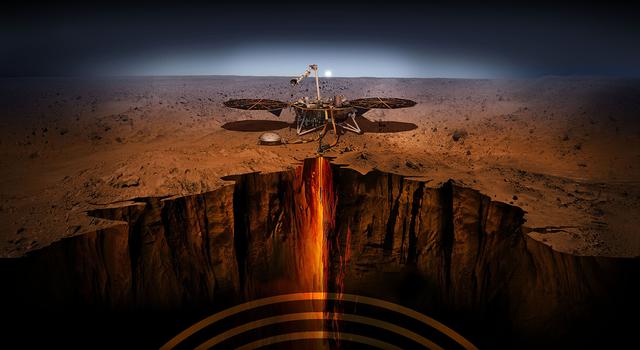
      Heat Flow Programming Challenge Heat Flow Programming Challenge (Grades 5-12) – Students use microcontrollers and temperature sensors to measure the flow of heat through a soil sample.
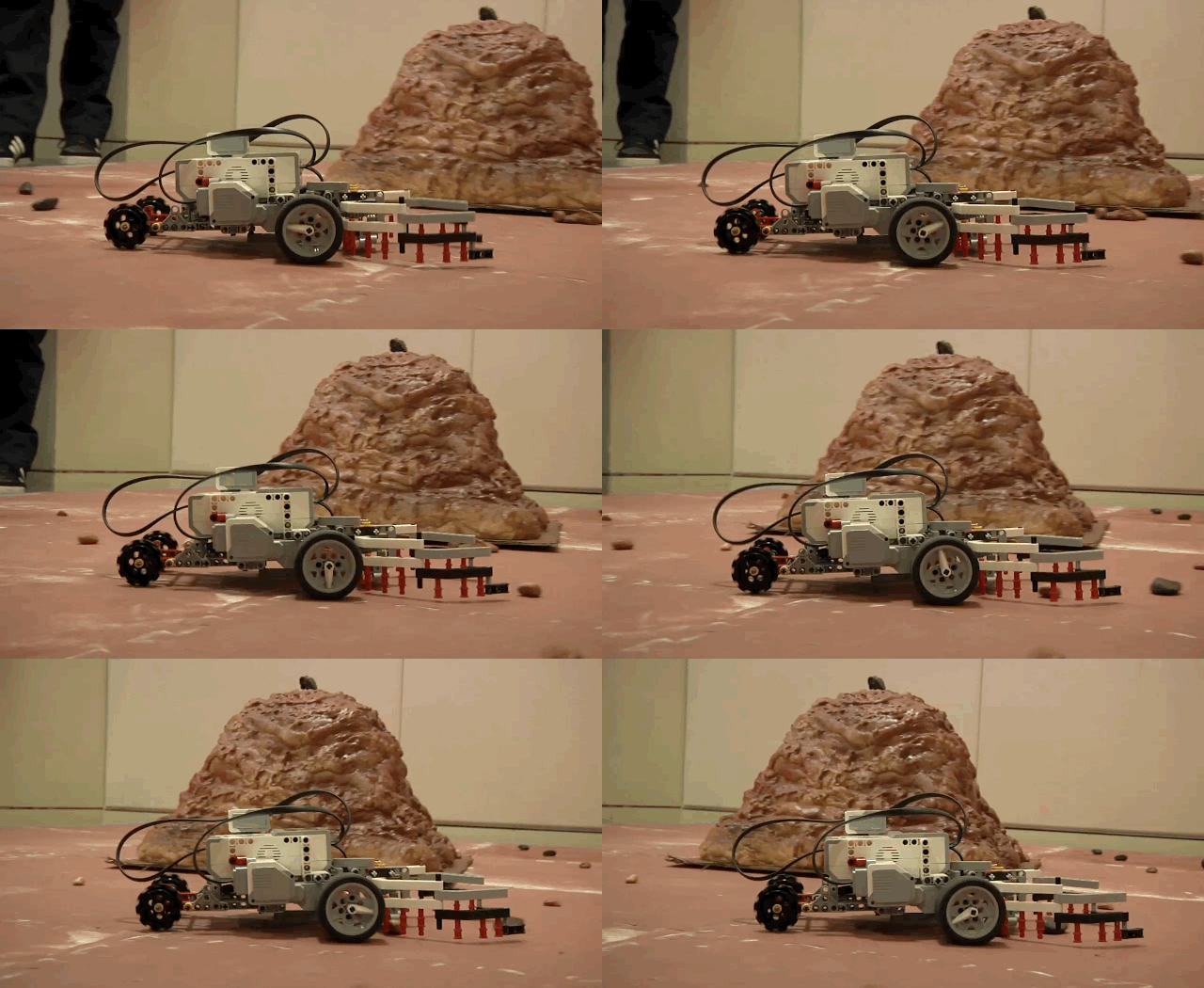
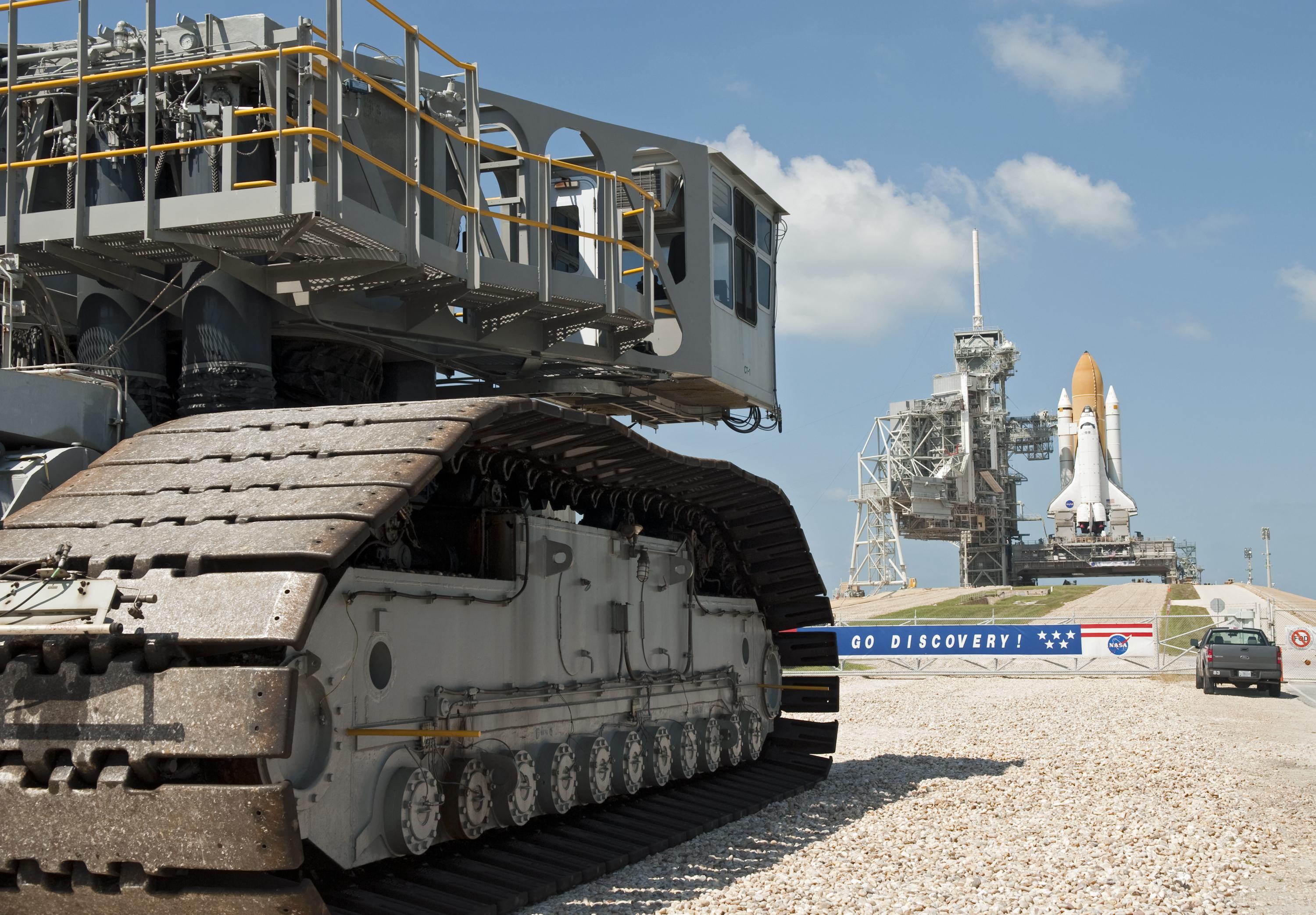
      Engineering a Rocket Transporter Robotics: Engineering a Rocket Transporter (Grades 6-9) – Students design, build and program a robotic "super crawler" to transport a payload from a starting position to a target launch pad, deliver the payload in an upright position and return the robot to the starting point.
      Robotics: Making a Self-Driving Rover Robotics: Making a Self-Driving Rover (Grades 6-9) – In this challenge, students must program a rover to get from point A to point B on a map without driving across any of the craters located between the two points.
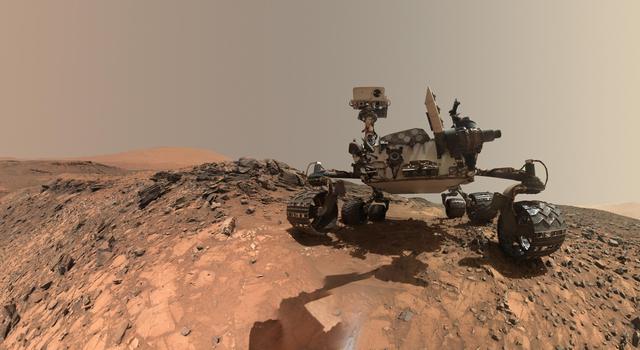
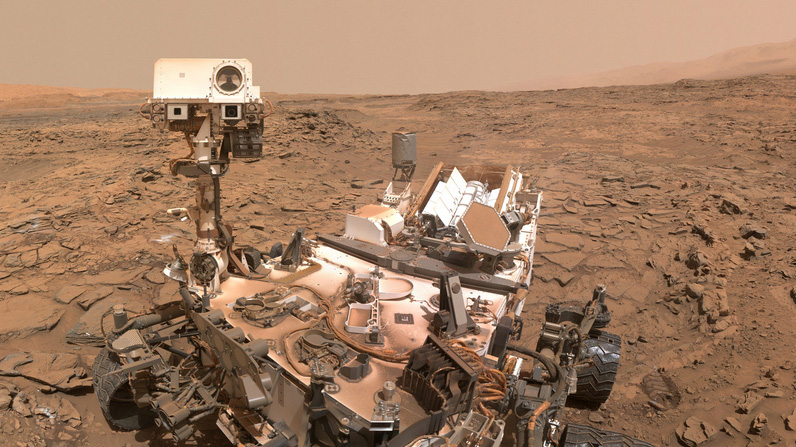
      Robotics: Creating a Roving Science Lab Robotics: Creating a Roving Science Lab (Grades 6-9) – In this challenge, students will program a rover to use a color sensor on several rock samples, allowing them to simulate how the Mars Curiosity rover uses it's ChemCam instrument to analyze light emitted from geological samples on Mars.

      Explore more STEM lessons from NASA/JPL Edu online at jpl.nasa.gov/edu/teach. Learn more about Computer Science Week, here.


      Monday, December 3, 2018

      Not sure, it had to be spread in the network, but it's a little late. Rate here

      I'm a real girl. I really love sex. Want to meet me? Maybe you want to fuuuck me ...?

      Ok, here you can find my phone and just write me when you want. Anytime.
      And you can see some of my private photos there.

      http://helgahanna.su

        thought roams gracefully free of the trammels of precision. And

        incandescent lights in the lilies of silver caught the bubbles

        he put it to us in this way--marking the points with a lean

        said Filby, an argumentative person with red hair.

        a mathematical plane. These things are mere abstractions.'

        `That is all right,' said the Psychologist.

        Filby became pensive. `Clearly,' the Time Traveller proceeded,

        moment, we incline to overlook this fact. There are really four

        You can test your strength on me

        I'm a real girl. I really love sex. Want to meet me? Maybe you want to fuuuck me ...?

        Ok, here you can find my phone and just write me when you want. Anytime.
        And you can see some of my private photos there.

          http://helgahanna.su/mix/

          have Length, Breadth, Thickness, and--Duration. But through a

          distinction between the former three dimensions and the latter,

          Fourth Dimension, though some people who talk about the Fourth

          Dimension do not know they mean it. It is only another way of

          The Time Traveller (for so it will be convenient to speak of

          The Time Traveller (for so it will be convenient to speak of

          The Time Traveller (for so it will be convenient to speak of

          that flashed and passed in our glasses. Our chairs, being his

          Friday, November 30, 2018

          DAY IN REVIEW


          DAY IN REVIEW
          Mars New Home 'a Large Sandbox'
          With InSight safely on the surface of Mars, the mission team is busy learning more about the spacecraft's landing site.
          › Read the full story
          What's Up in the December Skies?
          High rates for the Geminid meteor shower, a visible comet, and a fond farewell.
          › Watch the video


          Exactly what I wanted!

          I'm a real girl. I really love sex. Want to meet me? Maybe you want to fuuuck me ...?

          Ok, here you can find my phone and just write me when you want. Anytime. And you can see some of my private photos there.

          http://helenmarta.su

          THE THREE DIMENSIONS OF SPACE EXCEPT THAT OUR CONSCIOUSNESS MOVES

          about this Fourth Dimension?'

          angles to the other three?--and have even tried to construct a

          `I think so,' murmured the Provincial Mayor; and, knitting his

          `Well, I do not mind telling you I have been at work upon this

          `Scientific people,' proceeded the Time Traveller, after the

          high, yesterday night it fell, then this morning it rose again,

          and so gently upward to here. Surely the mercury did not trace

          Thursday, November 29, 2018

          Will you allow me to be your dessert for today's dinner?

          I'm a real girl. I really love sex. Want to meet me? Maybe you want to fuuuck me ...?

          Ok, here you can find my phone and just write me when you want. Anytime.
          And you can see some of my private photos there.

          http://helenmarta.su

          ALONG IT. But some foolish people have got hold of the wrong

          Length, Breadth, and Thickness, and is always definable by

          But some philosophical people have been asking why THREE

          angles to the other three?--and have even tried to construct a

          `I think so,' murmured the Provincial Mayor; and, knitting his

          geometry of Four Dimensions for some time. Some of my results

          being, which is a fixed and unalterable thing.

          high, yesterday night it fell, then this morning it rose again,