MY SEARCH ENGINE

Friday, November 16, 2018

NASA/JPL Educator Workshop - Earth Science


Earth Science Educator Workshop
 

Earth Science Educator Workshop

When: Saturday, Dec. 1, 10 a.m. to 1 p.m.

Where: NASA Jet Propulsion Laboratory, Pasadena, California

Target Audience: Formal and informal educators for grades K-8

Overview: Explore the impacts of increasing global temperature on glaciers and sea level using real satellite data from NASA alongside special guest scientists from JPL. Discover ways to turn these resources into engineering, math and science lessons for students. Finally, learn to use the engineering design process to develop water-filtration and recycling systems to minimize our adverse impact on the water cycle.

› Register online

  • This workshop is not available online; you must be physically present to participate.
  • Please bring a tablet or laptop, if possible.
  • This workshop is limited to educators at U.S.-based institutions and organizations.
  • Note: Due to Mars InSight landing events, the venue may need to be moved. If any complications arise, you will be notified one week in advance via phone or email.

Questions? Call the Educator Resource Center at 818-393-5917.

Can't attend the workshop? Explore these standards-aligned lessons and resources online.

  • Water Filtration Challenge – Students work in teams employing an iterative design process to design and build a water filtration device using commonly available materials.
  • Lessons in Sea-Level Rise – What is sea-level rise and how does it affect us? This "Teachable Moment" looks at the science behind sea-level rise and offers lessons and tools for teaching students about this important climate topic.

This free workshop is offered through the NASA/JPL Educator Resource Center, which provides formal and informal educators with NASA resources and materials that support STEM learning.


In Case You Missed It: Educator Resources for Nov. 26 Mars Landing!

The Space Place Newsletter Find out how to make NASA's next Mars mission a Teachable Moment and get tips for engaging students. Check it out

Plus!
Explore standards-aligned lessons from NASA/JPL Edu all about Mars InSight!


Thursday, November 15, 2018

Teachable Moment: NASA’s ‘Cyber Monday’ Mars Landing to Deliver Science Firsts

NASA/JPL Edu Teachable Moment: NASA's 'Cyber Monday' Mars Landing to Deliver Science Firsts
 

Teachable Moment: NASA's 'Cyber Monday' Mars Landing to Deliver Science Firsts

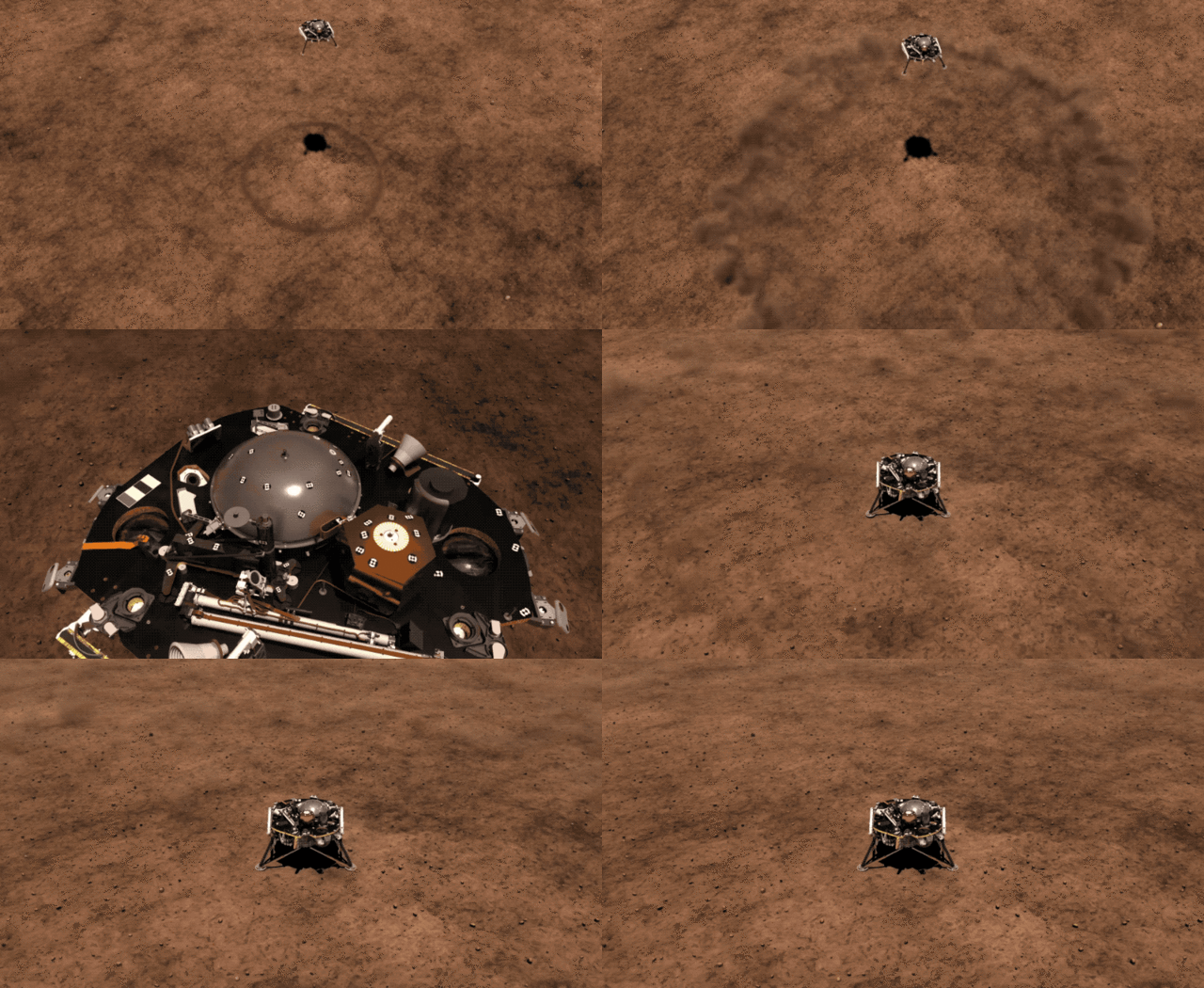
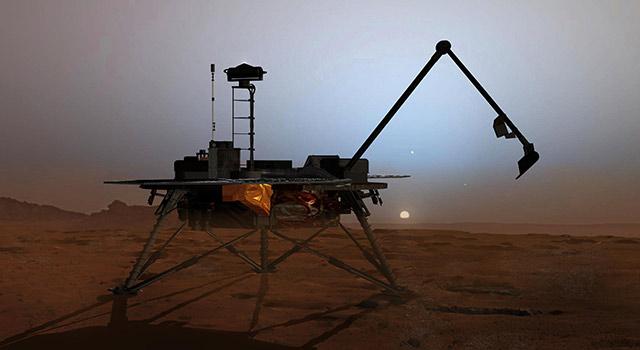
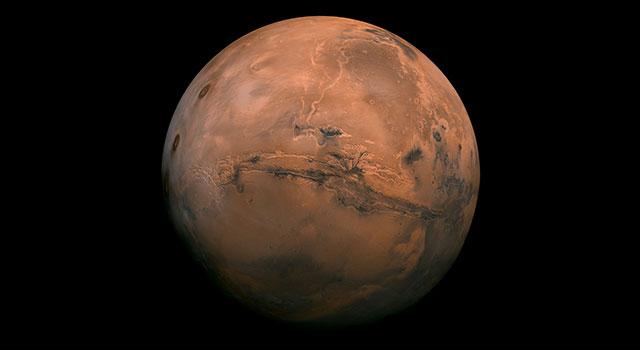
NASA's next mission to Mars, the InSight lander, is scheduled to land around noon PST on Monday, Nov. 26. So while some people are looking for Cyber Monday deals, scientists and engineers at NASA's Jet Propulsion Laboratory will be monitoring their screens for something else: signals from the spacecraft that it successfully touched down on the Red Planet.

In the latest Teachable Moment from NASA/JPL Edu, education specialist Lyle Tavernier explains how this mission will get to work studying the inner workings of Mars as well as its seismic activity, or "marsquakes," by using a six-foot-long robotic arm to deploy science instruments to the surface – a task that's never been done on Mars! It's a great opportunity for educators to engage students in NASA's exploration of Mars and the importance of planetary science while making real-world connections to lessons in science, coding and engineering.


Read the Blog
 

› Tune in with your class to watch live starting at 11 a.m. PST on Nov. 26!

Related Activities for Educators and Students

Use these resources to bring the excitement of NASA's newest Mars mission and the scientific discovery that comes with it into the classroom.

NASA/JPL Edu Lesson: Robotic Arm Challenge Robotic Arm Challenge (Grades K-8) - In this challenge, students will use a model robotic arm to move items from one location to another. They will engage in the engineering design process to design, build and operate the arm.
Get started
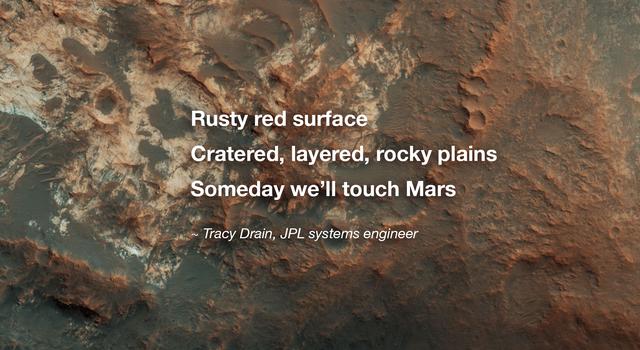
NASA/JPL Edu Lesson: Planetary Poetry *NEW* Planetary Poetry (Grades 2-12) - In this cross-curricular STEM and language arts lesson, students learn about planets, stars and space missions and write STEM-inspired poetry to share their knowledge of or inspiration about these topics.
Get started
NASA/JPL Edu Lesson: Exploring the Colors of Mars *NEW* Exploring the Colors of Mars (Grades 2,5) - Students use satellite and rover images to learn about the various features and materials that cause color variation on the surface of Mars, then create their own "Marscape."
Get started
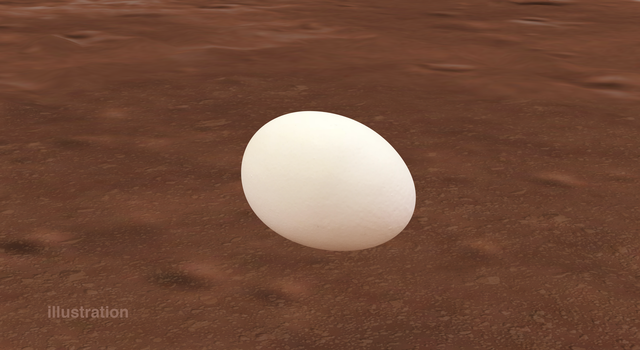
NASA/JPL Edu Lesson: Planetary (Egg) Wobble and Newton's First Law *NEW* Planetary (Egg) Wobble and Newton's First Law (Grades 3,6-8) - Students try to determine the interior makeup of an egg (hard-boiled or raw) based on their understanding of center of mass and Newton's first law of motion.
Get started
NASA/JPL Edu Lesson: Touchdown Touchdown (Grades 3-8) - Students design and build a shock-absorbing system that will protect two "astronauts" when they land.
Get started
NASA/JPL Edu Lesson: Mission to Mars Unit Mission to Mars Unit (Grades 3-8) - In this 19-lesson, standards-aligned unit, students learn about Mars, design a mission to explore the planet, build and test model spacecraft and components, and engage in scientific exploration.
Get started
NASA/JPL Edu Lesson: Heat Flow Programming Challenge *NEW* Heat Flow Programming Challenge (Grades 5-12) - Students use microcontrollers and temperature sensors to measure the flow of heat through a soil sample.
Get started
NASA/JPL Edu Lesson: Quake Quandry Quake Quandry (Grades 11-12) - In this illustrated math problem, students use the mathematical constant pi to identify the timing and location of a seismic event on Mars, called a "marsquake."
Get started
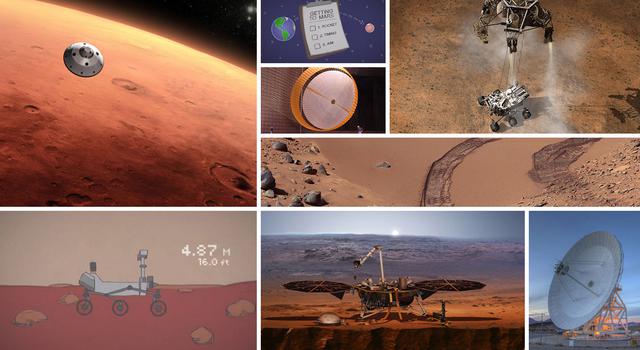
NASA/JPL Edu Student Activity: Mars in a Minute: How Do You Choose a Landing Site? Mars in a Minute: How Do You Choose a Landing Site? - So, you want to study Mars with a lander or rover – but where exactly do you send it? Learn how scientists and engineers tackle the question of where to land on Mars in this 60-second video.
Check it out!
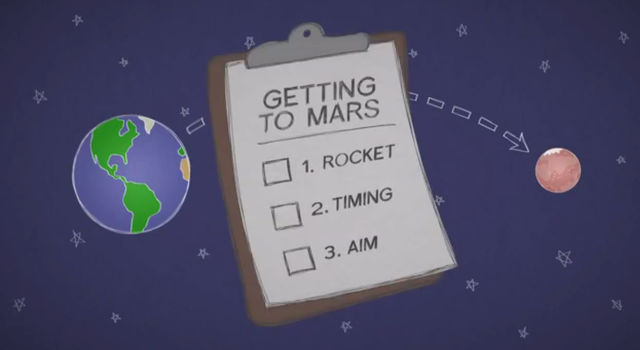
NASA/JPL Edu Student Activity: Mars in a Minute: How Do You Get to Mars? Mars in a Minute: How Do You Get to Mars? - What does it take to get a spacecraft to Mars? This 60-second video covers a few key things to remember when planning a trip to the Red Planet.
Check it out!
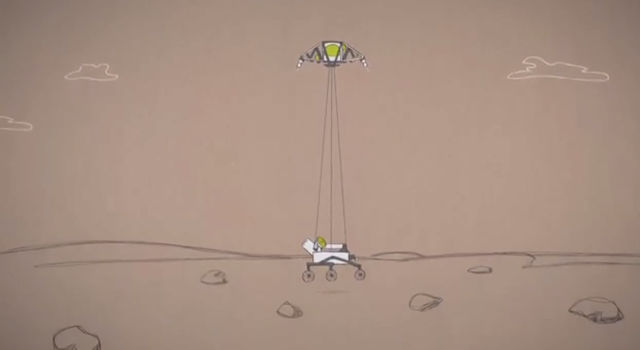
NASA/JPL Edu Student Activity: Mars in a Minute: How Do You Land on Mars? Mars in a Minute: How Do You Land on Mars? - Getting a spacecraft to Mars is one thing. Getting it safely to the ground is a whole other challenge! This 60-second video from NASA's Jet Propulsion Laboratory explains three ways to land on the surface of the Red Planet.
Check it out!
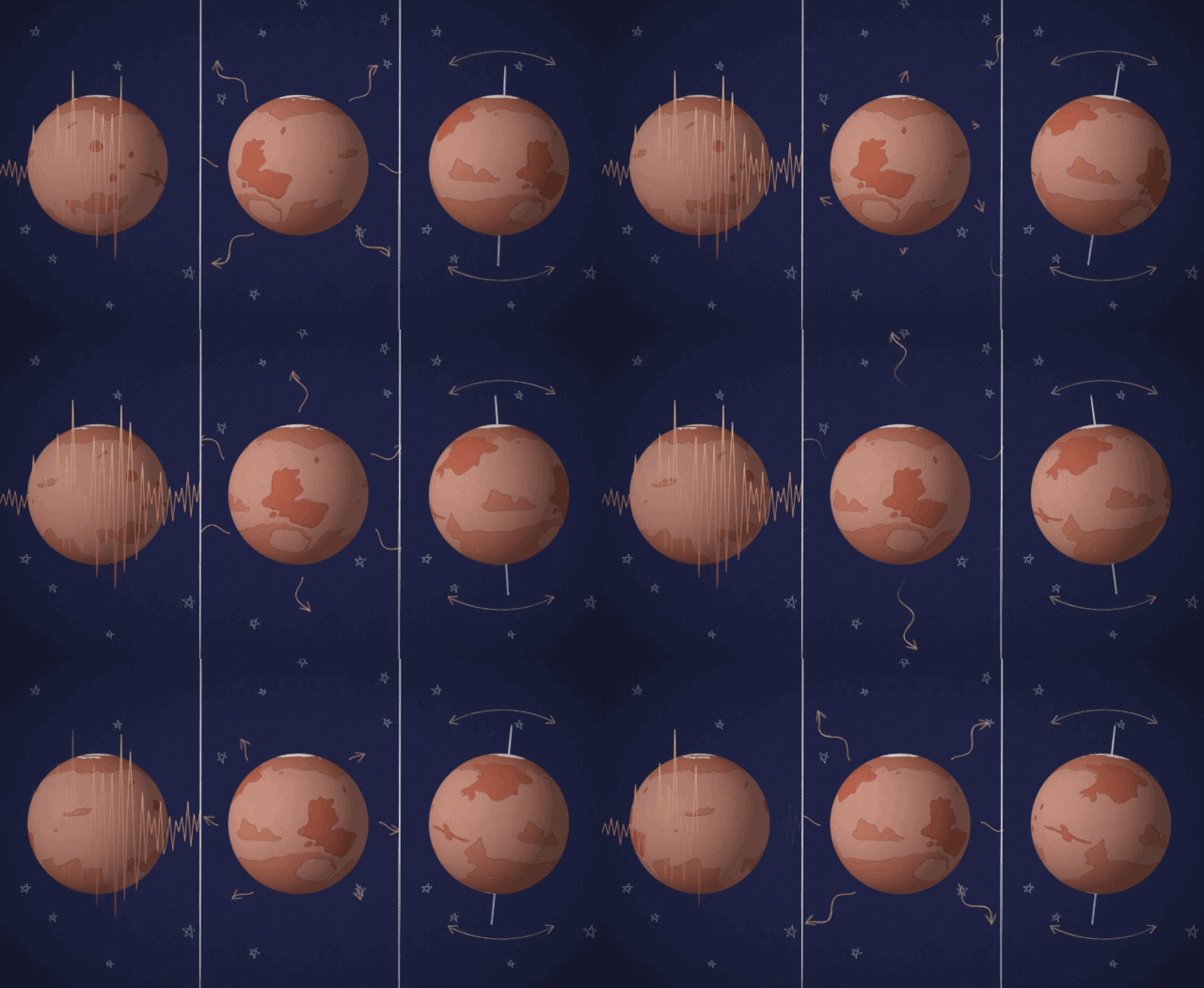
NASA/JPL Edu Student Activity: Mars in a Minute: What's Inside Mars Mars in a Minute: What's Inside Mars? - We know what the Red Planet looks like from the outside – but what's going on under the surface of Mars?
Check it out!
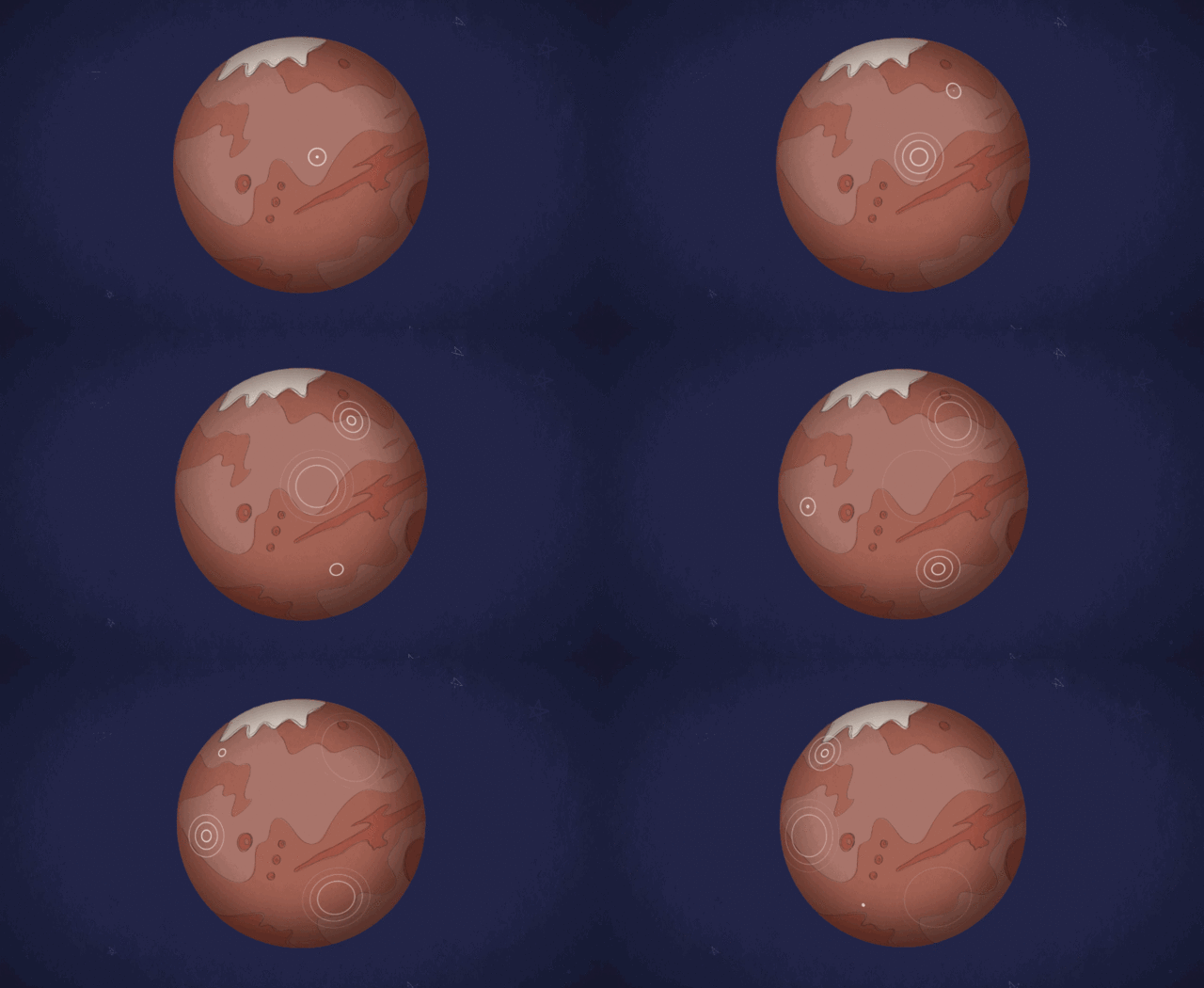
NASA/JPL Edu Student Activity: Mars in a Minute: Are There Quakes on Mars Mars in a Minute: Are There Quakes on Mars? - Are there earthquakes on Mars – or rather, "marsquakes"? What could they teach us about the Red Planet?
Check it out!
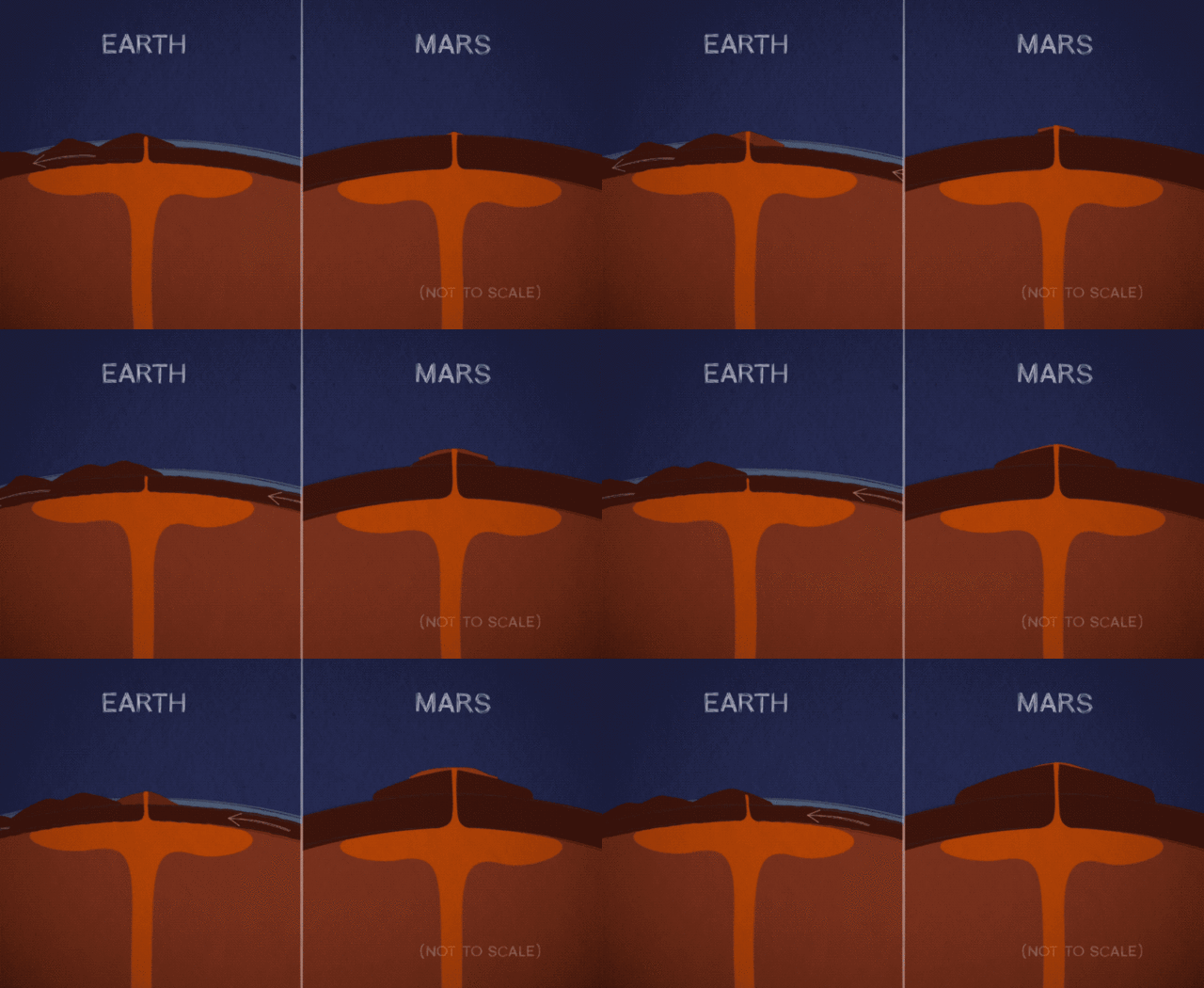
NASA/JPL Edu Student Activity: Mars in a Minute: How Did Mars Get Such Enormous Mountains? Mars in a Minute: How Did Mars Get Such Enormous Mountains? - Why are the tallest peaks in the solar system found on one of its smallest worlds? Like any planet, how Mars looks outside is tied to what goes on inside.
Check it out!


DAY IN REVIEW


DAY IN REVIEW
NASA JPL latest news release
The Most Luminous Galaxy Is Eating Its Neighbors

The most luminous galaxy ever discovered is cannibalizing not one, not two, but at least three of its smaller neighbors, according to a new study published today (Nov. 15) in the journal Science and coauthored by scientists from NASA's Jet Propulsion Laboratory in Pasadena, California. The material that the galaxy is stealing from its neighbors is likely contributing to its uber-brightness, the study shows.

Discovered by NASA's space-based Wide-field Infrared Survey Explorer (WISE) in 2015, the galaxy, called WISE J224607.55-052634.9, is by no means the largest or most massive galaxy we know of, but it radiates at 350 trillion times the luminosity of the Sun. If all galaxies were positioned an equal distance from us, WISE J224607.55-052634.9 (or W2246-0526 for short) would be the brightest.

New observations using the Atacama Large Millimeter/submillimeter Array (ALMA) in Chile reveal distinct trails of dust being pulled from three smaller galaxies into W2246-0526. The trails contain about as much material as the smaller galaxies themselves, and it's unclear whether those galaxies will escape their current fate or will be completely consumed by their luminous neighbor.

W2246-0526 and one of its companions
This image, created using radio data from the Atacama Large Millimeter/submillimeter Array (ALMA), shows W2246-0526 as it syphons material away from three smaller galaxies. W2246-0526 and one of its companions are in the center; the second galaxy is above them; the third is to the lower left. Image Credit: ALMA (ESO/NAOJ/NRAO); S. Dagnello (NRAO/AUI/NSF)
Larger view

Most of W2246-0526's record-breaking luminosity comes not only from stars, but also a collection of hot gas and dust concentrated around the center of the galaxy. At the heart of this cloud is a supermassive black hole, recently determined to be 4 billion times more massive than the Sun. In the intense gravity, matter falls toward the black hole at high speeds, crashing together and heating up to millions of degrees, causing the material to shine with incredible brilliance. Galaxies that contain these types of luminous, black-hole-fueled structures are known as quasars.

Like any engine on Earth, W2246-0526's enormous energy output requires an equally high fuel input. In this case, that means gas and dust to form stars and to replenish the cloud around the central black hole. The new study shows that the amount of material being accreted by WJ2246-0526 from its neighbors is enough to replenish what is being consumed, thereby sustaining the galaxy's tremendous luminosity.

"It is possible that this feeding frenzy has already been ongoing for some time, and we expect the galactic feast to continue for at least a few hundred million years," said Tanio Diaz-Santos of the Universidad Diego Portales in Santiago, Chile, lead author of the study.

In the new study, the scientists used images from ALMA - a collection of individual radio antennas that work together as single telescope - to identify the dusty trails of material. The position of the accretion trails strongly suggests they contain material flowing between W2246-0526 and the other galaxies. In addition, the trails exhibit the right morphology - that is, the shape of the trails is consistent with how the material should flow if it is being pulled from one galaxy into another.

Annotated image made using radio data
This annotated image made using radio data from the Atacama Large Millimeter/submillimeter Array (ALMA) shows how W2246-0526 is being fed by three companion galaxies (C1, C2, and C3). A large tidal tail connects C2 with the main galaxy; dust bridges connect the other two galaxies to W2246-0526. Image Credit: T. Diaz-Santos et al.; N. Lira; ALMA (ESO/NAOJ/NRAO)
Larger view

This kind of galactic cannibalism is not uncommon. Astronomers have previously observed galaxies merging with or accreting matter from their neighbors in the nearby universe. For example, the pair of galaxies collectively known as "the Mice" are so named because each has a long, thin tail of accreting material stretching away from it.

W2246-0526 is the most distant galaxy ever found to be accreting material from multiple sources. The light from W2246-0526 took 12.4 billion years to reach us, so astronomers are seeing the object as it was when our universe was only a tenth of its present age of 13.8 billion years. At that distance, the streams of material falling into W2246-0526 are particularly faint and difficult to detect. The study relies on 2.5 hours of observation time using 40 of ALMA's 12-meter radio dishes.

"We knew from previous data that there were three companion galaxies, but there was no evidence of interactions between these neighbors and the central source," said Diaz-Santos. "We weren't looking for cannibalistic behavior and weren't expecting it, but this deep dive with the ALMA observatory makes it very clear."

W2246-0526 falls into a special category of particularly luminous quasars known as hot, dust-obscured galaxies, or Hot DOGs. Astronomers think that most quasars get some of their fuel from external sources. One possibility is that these objects receive a slow trickle of material from the space between galaxies. Another is that they feed in bursts by eating up other galaxies, which appears to be occurring with W2246-0526. It's unclear whether W2246-0526 is representative of other obscured quasars (those with their central engines obscured by thick clouds of dust) or if it is a special case.

"This galaxy may be one of a kind, because it's nearly twice as luminous as any other galaxy we've found with WISE and it formed very early in the universe's history," said Peter Eisenhardt, JPL project scientist for WISE and a coauthor on the new paper. "But we've discovered many other galaxies with WISE that are similar to this one: distant, dusty and thousands of times more luminous than typical galaxies are today. So with W2246-0526, we may be seeing what goes on during a key stage in the evolution of galaxies and obscured quasars."

Ultimately, the galaxy's gluttony may only lead to self-destruction. Scientists hypothesize that obscured quasars that gather too much material around them end up vomiting gas and dust back out through the galaxy. This onslaught of material halts the formation of new stars, essentially pushing the galaxy into retirement while other galaxies continue to renew themselves with the birth of new stars.

A companion study about W2246-0526, published on Nov. 14 in the Astrophysical Journal, provided the mass measurement for the supermassive black hole at the galaxy's center - 4 billion times the mass of the Sun. This mass is large, but the extreme luminosity of W2246-0526 was thought to require a supermassive black hole with a mass at least three times larger, according to the paper authors. Solving this apparent contradiction will require more observations.

The Atacama Large Millimeter/submillimeter Array (ALMA), an international astronomy facility, is a partnership of the European Southern Observatory (ESO), the U.S. National Science Foundation (NSF) and the National Institutes of Natural Sciences (NINS) of Japan in cooperation with the Republic of Chile. ALMA is funded by ESO on behalf of its Member States, by NSF in cooperation with the National Research Council of Canada (NRC) and the Ministry of Science and Technology (MOST) in Taiwan and by NINS in cooperation with the Academia Sinica (AS) in Taiwan and the Korea Astronomy and Space Science Institute (KASI).

NASA's Jet Propulsion Laboratory in Pasadena, California, managed and operated WISE for NASA's Science Mission Directorate in Washington. The spacecraft operated until 2011. In September 2013, WISE was reactivated, renamed NEOWISE and assigned a new mission to assist NASA's efforts to identify potentially hazardous near-Earth objects.


Wednesday, November 14, 2018

DAY IN REVIEW


DAY IN REVIEW
NASA JPL latest news release
NASA Learns More About Interstellar Visitor 'Oumuamua

In November 2017, scientists pointed NASA's Spitzer Space Telescope toward the object known as 'Oumuamua - the first known interstellar object to visit our solar system. The infrared Spitzer was one of many telescopes pointed at 'Oumuamua in the weeks after its discovery that October.

'Oumuamua was too faint for Spitzer to detect when it looked more than two months after the object's closest aproach to Earth in early September. However, the "non-detection" puts a new limit on how large the strange object can be. The results are reported in a new study published today in the Astronomical Journal and coauthored by scientists at NASA's Jet Propulsion Laboratory in Pasadena, California.

The new size limit is consistent with the findings of a research paper published earlier this year, which suggested that outgassing was responsible for the slight changes in 'Oumuamua's speed and direction as it was tracked last year: The authors of that paper conclude the expelled gas acted like a small thruster gently pushing the object. That determination was dependent on 'Oumuamua being relatively smaller than typical solar system comets. (The conclusion that 'Oumuamua experienced outgassing suggested that it was composed of frozen gases, similar to a comet.)

"'Oumuamua has been full of surprises from day one, so we were eager to see what Spitzer might show," said David Trilling, lead author on the new study and a professor of astronomy at Northern Arizona University. "The fact that 'Oumuamua was too small for Spitzer to detect is actually a very valuable result."

'Oumuamua was first detected by the University of Hawaii's Pan-STARRS 1 telescope on Haleakala, Hawaii (the object's name is a Hawaiian word meaning "visitor from afar arriving first"), in October 2017 while the telescope was surveying for near-Earth asteroids.

Subsequent detailed observations conducted by multiple ground-based telescopes and NASA's Hubble Space Telescope detected the sunlight reflected off 'Oumuamua's surface. Large variations in the object's brightness suggested that 'Oumuamua is highly elongated and probably less than half a mile (2,600 feet, or 800 meters) in its longest dimension.

But Spitzer tracks asteroids and comets using the infrared energy, or heat, that they radiate, which can provide more specific information about an object's size than optical observations of reflected sunlight alone would.

The fact that 'Oumuamua was too faint for Spitzer to detect sets a limit on the object's total surface area. However, since the non-detection can't be used to infer shape, the size limits are presented as what 'Oumuamua's diameter would be if it were spherical. Using three separate models that make slightly different assumptions about the object's composition, Spitzer's non-detection limited 'Oumuamua's "spherical diameter" to 1,440 feet (440 meters), 460 feet (140 meters) or perhaps as little as 320 feet (100 meters). The wide range of results stems from the assumptions about 'Oumuamua's composition, which influences how visible (or faint) it would appear to Spitzer were it a particular size.

Small but Reflective

The new study also suggests that 'Oumuamua may be up to 10 times more reflective than the comets that reside in our solar system - a surprising result, according to the paper's authors. Because infrared light is largely heat radiation produced by "warm" objects, it can be used to determine the temperature of a comet or asteroid; in turn, this can be used to determine the reflectivity of the object's surface - what scientists call albedo. Just as a dark T-shirt in sunlight heats up more quickly than a light one, an object with low reflectivity retains more heat than an object with high reflectivity. So a lower temperature means a higher albedo.

A comet's albedo can change throughout its lifetime. When it passes close to the Sun, a comet's ice warms and turns directly into a gas, sweeping dust and dirt off the comet's surface and revealing more reflective ice.

'Oumuamua had been traveling through interstellar space for millions of years, far from any star that could refresh its surface. But it may have had its surface refreshed through such "outgassing" when it made an extremely close approach to our Sun, a little more than five weeks before it was discovered. In addition to sweeping away dust and dirt, some of the released gas may have covered the surface of 'Oumuamua with a reflective coat of ice and snow - a phenomenon that's also been observed in comets in our solar system.

'Oumuamua is on its way out of our solar system - almost as far from the Sun as Saturn's orbit - and is well beyond the reach of any existing telescopes.

"Usually, if we get a measurement from a comet that's kind of weird, we go back and measure it again until we understand what we're seeing," said Davide Farnocchia, of the Center for Near Earth Object Studies (CNEOS) at JPL and a coauthor on both papers. "But this one is gone forever; we probably know as much about it as we're ever going to know."

JPL manages the Spitzer Space Telescope mission for NASA's Science Mission Directorate in Washington. Science operations are conducted at the Spitzer Science Center at Caltech in Pasadena, California. Spacecraft operations are based at Lockheed Martin Space Systems Company in Littleton, Colorado. Data are archived at the Infrared Science Archive housed at IPAC at Caltech. Caltech manages JPL for NASA.

For more information about Spitzer, visit:

https://spitzer.caltech.edu

https://www.nasa.gov/spitzer


Tuesday, November 13, 2018

DAY IN REVIEW


DAY IN REVIEW
NASA JPL latest news release
NASA Brings Mars Landing to Viewers Everywhere

NASA's Mars Interior Exploration using Seismic Investigations, Geodesy and Heat Transport (InSight) lander is scheduled to touch down on the Red Planet at approximately noon PST (3 p.m. EST) on Nov. 26, and viewers everywhere can watch coverage of the event live on NASA Television, the agency's website and social media platforms.

Launched on May 5, InSight marks NASA's first Mars landing since the Curiosity rover in 2012. The landing will kick off a two-year mission in which InSight will become the first spacecraft to study Mars' deep interior. Its data also will help scientists understand the formation of all rocky worlds, including our own.

InSight is being followed to Mars by two miniature NASA spacecraft, jointly called Mars Cube One (MarCO), the first deep-space mission for CubeSats. If MarCO makes its planned Mars flyby, it will attempt to relay data from InSight as it enters the planet's atmosphere and lands.

InSight and MarCO flight controllers will monitor the spacecraft's entry, descent and landing from Mission Control at JPL.

Broadcast Schedule

All NASA TV news conferences will be available on the agency's website at www.nasa.gov/live. Briefing times and speakers are subject to change. The public may ask questions on social media during the events by tagging them with #askNASA.

Wednesday, Nov. 21

  • 10 a.m. PST (1 p.m. EST) - News conference: Mission engineering overview
  • 11 a.m. PST (2 p.m. EST) - News conference: Mission science overview

Sunday, Nov. 25

  • 10 a.m. PST (1 p.m. EST) - News conference: Final pre-landing update
  • 1 p.m. PST (4 p.m. EST) - NASA Social: InSight team Q&A

Monday, Nov. 26: Landing Day

  • 11 a.m. to 12:30 p.m. PST (2 p.m. to 3:30 p.m. EST) - Live landing commentary on the NASA TV Public Channel and online. In addition, an uninterrupted, clean feed of cameras from inside JPL mission control, with mission audio only, will be available at the same time on the NASA TV Media Channel, at www.nasa.gov/ntv and at https://www.youtube.com/user/JPLraw/live.
  • About 12 noon PST (3 p.m. EST) - Expected time of InSight touchdown on Mars
  • No earlier than 2 p.m. PST (5 p.m. EST) - Post-landing news conference

To watch news conferences and commentary online, you can also visit:

http://www.youtube.com/nasajpl/live

A complete list of ways to watch online can be found at:

https://mars.nasa.gov/insight/timeline/landing/watch-online/

Public Viewing Parties Around the World

About 80 live viewing events for the public to watch the InSight landing will be held worldwide. Major viewing locations include:

--Times Square, New York*

--American Museum of Natural History, New York

--Intrepid Sea, Air & Space Museum, New York

--Smithsonian's National Air and Space Museum Steven F. Udvar-Hazy Center, Chantilly, Virginia*

--U.S. Space and Rocket Center, Huntsville, Alabama*

--Space Center Houston*

--Adler Planetarium, Chicago

--Denver Museum of Nature and Science

--California Science Center, Los Angeles*

--For a complete list of landing event watch parties, go to: https://mars.nasa.gov/insight/timeline/landing/watch-in-person/

*These venues will have NASA representatives

Resources

An InSight landing press kit is available at:

https://go.nasa.gov/insight_pk

JPL manages InSight for NASA's Science Mission Directorate. InSight is part of NASA's Discovery Program, managed by the agency's Marshall Space Flight Center in Huntsville, Alabama. Lockheed Martin Space in Denver built the InSight spacecraft, including its cruise stage and lander, and supports spacecraft operations for the mission.

A number of European partners, including France's Centre National d'Études Spatiales (CNES) and the German Aerospace Center (DLR), are supporting the InSight mission. CNES provided the Seismic Experiment for Interior Structure (SEIS) instrument, with significant contributions from the Max Planck Institute for Solar System Research (MPS) in Germany, the Swiss Institute of Technology (ETH) in Switzerland, Imperial College and Oxford University in the United Kingdom, and JPL. DLR provided the Heat Flow and Physical Properties Package (HP3) instrument, with significant contributions from the Space Research Center (CBK) of the Polish Academy of Sciences and Astronika in Poland. Spain's Centro de Astrobiología (CAB) supplied the wind sensors.

For more detailed information on the InSight mission, visit:

https://mars.nasa.gov/insight

Follow the InSight mission on social media at:

https://twitter.com/NASAInSight

https://facebook.com/NASAInSight

Find more information about MarCO here:

https://www.jpl.nasa.gov/cubesat/missions/marco.php


Monday, November 12, 2018

DAY IN REVIEW


DAY IN REVIEW
NASA JPL latest news release
NASA's ARIA Maps California Wildfires from Space

California continues to be plagued by wildfires - including the Woolsey Fire near Los Angeles and the Camp Fire in Northern California, now one of the deadliest in the state's history. NASA satellites are observing these fires - and the damage they're leaving behind - from space.

The Advanced Rapid Imaging and Analysis (ARIA) team at NASA's Jet Propulsion Laboratory in Pasadena, California, produced new damage maps using synthetic aperture radar images from the Copernicus Sentinel-1 satellites. The first map shows areas likely damaged by the Woolsey Fire as of Sunday, Nov. 11. It covers an area of about 50 miles by 25 miles (80 km by 40 km) - framed by the red polygon. The color variation from yellow to red indicates increasing ground surface change, or damage.

Damage Proxy Maps
The Advanced Rapid Imaging and Analysis (ARIA) team at NASA's Jet Propulsion Laboratory in Pasadena, California, created these Damage Proxy Maps (DPMs) depicting areas in California likely damaged by the Woolsey and Camp Fires. Image Credit: NASA/JPL-Caltech
Larger view

The second map (above) shows damage from the Camp Fire in Northern California as of Saturday, Nov. 10. It depicts an area of about 55 miles by 48 miles (88 km by 77 km) and includes the city of Paradise, one of the most devastated areas. Like the previous map, red areas show the most severe surface change, or damage. The ARIA team compared the data for both images to the Google Crisismap for preliminary validation.

Although the maps may be less reliable over vegetated terrain, like farmland, they can help officials and first responders identify heavily damaged areas and allocate resources as needed.

More information about ARIA is available here:

https://aria.jpl.nasa.gov/


Monday, November 5, 2018

DAY IN REVIEW


DAY IN REVIEW
NASA JPL latest news release
The Mars InSight Landing Site Is Just Plain Perfect

No doubt about it, NASA explores some of the most awe-inspiring locations in our solar system and beyond. Once seen, who can forget the majesty of astronaut Jim Irwin standing before the stark beauty of the Moon's Hadley Apennine mountain range, of the Hubble Space Telescope's gorgeous "Pillars of Creation" or Cassini's magnificent mosaic of Saturn?

Mars also plays a part in this visually compelling equation, with the high-definition imagery from the Curiosity rover of the ridges and rounded buttes at the base of Mount Sharp bringing to mind the majesty of the American Southwest. That said, Elysium Planitia - the site chosen for the Nov. 26 landing of NASA's InSight mission to Mars - will more than likely never be mentioned with those above because it is, well, plain.

"If Elysium Planitia were a salad, it would consist of romaine lettuce and kale - no dressing," said InSight principal investigator Bruce Banerdt at NASA's Jet Propulsion Laboratory in Pasadena, California. "If it were an ice cream, it would be vanilla."

Yes, the landing site of NASA's next Mars mission may very well look like a stadium parking lot, but that is the way the Interior Exploration using Seismic Investigations, Geodesy and Heat Transport (InSight) project likes it.

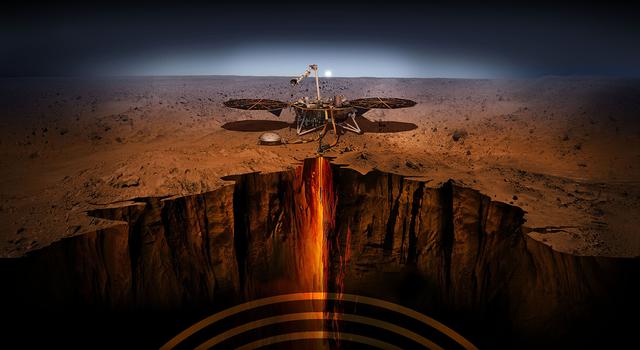
"Previous missions to the Red Planet have investigated its surface by studying its canyons, volcanoes, rocks and soil," said Banerdt. "But the signatures of the planet's formation processes can be found only by sensing and studying evidence buried far below the surface. It is InSight's job to study the deep interior of Mars, taking the planet's vital signs - its pulse, temperature and reflexes."

Taking those vital signs will help the InSight science team look back to a time when the rocky planets of the solar system formed. The investigations will depend on three instruments:

A six-sensor seismometer called the Seismic Experiment for Interior Structure (SEIS) will record seismic waves traveling through the interior structure of the planet. Studying seismic waves will tell scientists what might be creating the waves. (On Mars, scientists suspect that the culprits may be marsquakes or meteorites striking the surface.)

The mission's Heat Flow and Physical Properties Package (HP3) will burrow deeper than any other scoop, drill or probe on Mars before to gauge how much heat is flowing out of the planet. Its observations will shed light on whether Earth and Mars are made of the same stuff.

Finally, InSight's Rotation and Interior Structure Experiment (RISE) experiment will use the lander's radios to assess the wobble of Mars' rotation axis, providing information about the planet's core.

For InSight to do its work, the team needed a landing site that checked off several boxes, because as a three-legged lander - not a rover - InSight will remain wherever it touches down.

"Picking a good landing site on Mars is a lot like picking a good home: It's all about location, location, location," said Tom Hoffman, InSight project manager at JPL. "And for the first time ever, the evaluation for a Mars landing site had to consider what lay below the surface of Mars. We needed not just a safe place to land, but also a workspace that's penetrable by our 16-foot-long (5-meter) heat-flow probe."

The site also needs to be bright enough and warm enough to power the solar cells while keeping its electronics within temperature limits for an entire Martian year (26 Earth months).

So the team focused on a band around the equator, where the lander's solar array would have adequate sunlight to power its systems year-round. Finding an area that would be safe enough for InSight to land and then deploy its solar panels and instruments without obstructions took a little longer.

"The site has to be a low-enough elevation to have sufficient atmosphere above it for a safe landing, because the spacecraft will rely first on atmospheric friction with its heat shield and then on a parachute digging into Mars' tenuous atmosphere for a large portion of its deceleration," said Hoffman. "And after the chute has fallen away and the braking rockets have kicked in for final descent, there needs to be a flat expanse to land on - not too undulating and relatively free of rocks that could tip the tri-legged Mars lander."

Of 22 sites considered, only Elysium Planitia, Isidis Planitia and Valles Marineris met the basic engineering constraints. To grade the three remaining contenders, reconnaissance images from NASA's Mars orbiters were scoured and weather records searched. Eventually, Isidis Planitia and Valles Marineris were ruled out for being too rocky and windy.

That left the 81-mile long, 17-mile-wide (130-kilometer-long, 27-kilometer-wide) landing ellipse on the western edge of a flat, smooth expanse of lava plain.

"If you were a Martian coming to explore Earth's interior like we are exploring Mars' interior, it wouldn't matter if you put down in the middle of Kansas or the beaches of Oahu," said Banerdt. "While I'm looking forward to those first images from the surface, I am even more eager to see the first data sets revealing what is happening deep below our landing pads. The beauty of this mission is happening below the surface. Elysium Planitia is perfect."

After a 205-day journey that began on May 5, NASA's InSight mission will touch down on Mars on Nov. 26 a little before 3 p.m. EST (12 p.m. PST). Its solar panels will unfurl within a few hours of touchdown. Mission engineers and scientists will take their time assessing their "workspace" prior to deploying SEIS and HP3 on the surface - about three months after landing - and begin the science in earnest.

InSight was the 12th selection in NASA's series of Discovery-class missions. Created in 1992, the Discovery Program sponsors frequent, cost-capped solar system exploration missions with highly focused scientific goals.

JPL manages InSight for NASA's Science Mission Directorate. InSight is part of NASA's Discovery Program, managed by the agency's Marshall Space Flight Center in Huntsville, Alabama. Lockheed Martin Space in Denver built the InSight spacecraft, including its cruise stage and lander, and supports spacecraft operations for the mission.

A number of European partners, including France's Centre National d'Études Spatiales (CNES) and the German Aerospace Center (DLR), support the InSight mission. CNES provided the SEIS instrument, with significant contributions from the Max Planck Institute for Solar System Research (MPS) in Germany, the Swiss Institute of Technology (ETH) in Switzerland, Imperial College and Oxford University in the United Kingdom, and JPL. DLR provided the HP3 instrument.

For more information about InSight, visit:

https://mars.nasa.gov/insight/

For more information about NASA's Mars missions, go to:

https://mars.nasa.gov


Thursday, November 1, 2018

DAY IN REVIEW


DAY IN REVIEW
NASA's Dawn Mission to Asteroid Belt Comes to End
NASA declares Dawn's historic mission over after spacecraft depletes its hydrazine fuel and stops communicating with the Deep Space Network.
› Read the full story
Von Karman Lecture Thursday: Deep Space Network
One of the largest uncertainties in projections of future climate change is how do terrestrial ecosystems (communities of land organisms and their environments) contribute to or help counteract the rise in atmospheric carbon dioxide.
› Read more
What's Up in the November Skies?
November brings planets, an asteroid, a comet and the Leonids.
› Watch the video