MY SEARCH ENGINE

Monday, October 29, 2018

DAY IN REVIEW


DAY IN REVIEW
NASA Launches a New Podcast to Mars
NASA's new eight-episode series 'On a Mission' follows the InSight spacecraft on its journey to Mars and details the extraordinary challenges of landing on the Red Planet.
› Read the full story
The Coincidence Between Two Overachieving NASA Missions
Two vastly different NASA spacecraft are about to run out of fuel.
› Read the full story


Friday, October 26, 2018

DAY IN REVIEW


DAY IN REVIEW
Here's What Happens When NASA Has a Pumpkin-Carving Contest
Every Halloween, JPLers take a brief break from building robots that explore the solar system and carve pumpkins that explore the outer reaches of creativity.
› Read the full story
Mars 2020 Parachute a Go
The supersonic parachute that will handle the heaviest payload yet to the Red Planet - Mars 2020 rover - passes its final sounding rocket test with flying colors.
› Read the full story


Thursday, October 25, 2018

NASA to Host Briefing on November Mars InSight Landing


DAY IN REVIEW/span>
NASA JPL latest news release
NASA to Host Briefing on November Mars InSight Landing

NASA's upcoming landing of the first-ever mission to study the heart of Mars will be the topic of a media briefing at 1:30 p.m. EDT (10:30 a.m. PDT) Wednesday, Oct. 31 at NASA Headquarters in Washington. The briefing will air live on NASA Television, the agency's website and the NASA InSight Facebook page.

NASA's InSight Mars Lander (Interior Exploration using Seismic Investigations, Geodesy and Heat Transport) will land on the Red Planet at approximately 3 p.m. EST (noon PST) Monday, Nov. 26. InSight will study the deep interior of Mars to learn how all rocky planets, including Earth and its Moon, formed. The lander's instruments include a seismometer to detect marsquakes and a probe to monitor the flow of heat in the planet's subsurface.

Briefing participants include:

  • Lori Glaze, acting director of the Planetary Science Division, NASA Headquarters, Washington
  • Bruce Banerdt, InSight principal investigator, NASA's Jet Propulsion Laboratory, Pasadena, California
  • Tom Hoffman, InSight project manager at JPL
  • Sue Smrekar, InSight deputy principal investigator at JPL
  • Jaime Singer, InSight instrument deployment lead at JPL

The public can ask questions on Twitter using the hashtag #askNASA or by leaving a comment on the stream of the event on the NASA InSight Facebook page.

For more information about InSight, visit:

https://www.nasa.gov/insight

Follow the mission on Twitter at:

https://twitter.com/nasainsight


Wednesday, October 24, 2018

NASA's InSight Will Study Mars While Standing Still


DAY IN REVIEW
NASA JPL latest news release
NASA's InSight Will Study Mars While Standing Still

You don't need wheels to explore Mars.

After touching down in November, NASA's InSight spacecraft will spread its solar panels, unfold a robotic arm ... and stay put. Unlike the space agency's rovers, InSight is a lander designed to study an entire planet from just one spot.

This sedentary science allows InSight to detect geophysical signals deep below the Martian surface, including marsquakes and heat. Scientists will also be able to track radio signals from the stationary spacecraft, which vary based on the wobble in Mars' rotation. Understanding this wobble could help solve the mystery of whether the planet's core is solid.

Here are five things to know about how InSight conducts its science.

1. InSight Can Measure Quakes Anywhere on the Planet

Quakes on Earth are usually detected using networks of seismometers. InSight has only one - called SEIS (Seismic Experiment for Interior Structure) - so its science team will use some creative measurements to analyze seismic waves as they occur anywhere on the planet.

SEIS will measure seismic waves from marsquakes and meteorite strikes as they move through Mars. The speed of those waves changes depending on the material they're traveling through, helping scientists deduce what the planet's interior is made of.

Seismic waves come in a surprising number of flavors. Some vibrate across a planet's surface, while others ricochet off its center. They also move at different speeds. Seismologists can use each type as a tool to triangulate where and when a seismic event has happened.

This means InSight could have landed anywhere on Mars and, without moving, gathered the same kind of science.

2. InSight's Seismometer Needs Peace and Quiet

Seismometers are touchy by nature. They need to be isolated from "noise" in order to measure seismic waves accurately.

SEIS is sensitive enough to detect vibrations smaller than the width of a hydrogen atom. It will be the first seismometer ever set on the Martian surface, where it will be thousands of times more accurate than seismometers that sat atop the Viking landers.

To take advantage of this exquisite sensitivity, engineers have given SEIS a shell: a wind-and-thermal shield that InSight's arm will place over the seismometer. This protective dome presses down when wind blows over it; a Mylar-and-chainmail skirt keeps wind from blowing in. It also gives SEIS a cozy place to hide away from Mars' intense temperature swings, which can create minute changes in the instrument's springs and electronics.

3. InSight Has a Self-Hammering Nail

Have you ever tried to hammer a nail? Then you know holding it steady is key. InSight carries a nail that also needs to be held steady.

This unique instrument, called HP3 (Heat Flow and Physical Properties Package), holds a spike attached to a long tether. A mechanism inside the spike will hammer it up to 16 feet (5 meters) underground, dragging out the tether, which is embedded with heat sensors.

At that depth, it can detect heat trapped inside Mars since the planet first formed. That heat shaped the surface with volcanoes, mountain ranges and valleys. It may even have determined where rivers ran early in Mars' history.

4. InSight Can Land in a Safe Spot

Because InSight needs stillness - and because it can collect seismic and heat data from anywhere on the planet - the spacecraft is free to land in the safest location possible.

InSight's team selected a location on Mars' equator called Elysium Planitia - as flat and boring a spot as any on Mars. That makes landing just a bit easier, as there's less to crash into, fewer rocks to land on and lots of sunlight to power the spacecraft. The fact that InSight doesn't use much power and should have plenty of sunlight at Mars' equator means it can provide lots of data for scientists to study.

5. InSight Can Measure Mars' Wobble

InSight has two X-band antennas on its deck that make up a third instrument, called RISE (Rotation and Interior Structure Experiment). Radio signals from RISE will be measured over months, maybe even years, to study the tiny "wobble" in the rotation of the planet. That wobble is a sign of whether Mars' core is liquid or solid - a trait that could also shed light on the planet's thin magnetic field.

Collecting detailed data on this wobble hasn't happened since Mars Pathfinder's three-month mission in 1997 (although the Opportunity rover made a few measurements in 2011 while it remained still, waiting out the winter). Every time a stationary spacecraft sends radio signals from Mars, it can help scientists improve their measurements.

About InSight

JPL manages InSight for NASA's Science Mission Directorate. InSight is part of NASA's Discovery Program, managed by the agency's Marshall Space Flight Center in Huntsville, Alabama. Lockheed Martin Space in Denver built the InSight spacecraft, including its cruise stage and lander, and supports spacecraft operations for the mission.

A number of European partners, including France's Centre National d'Études Spatiales (CNES) and the German Aerospace Center (DLR), support the InSight mission. CNES provided the Seismic Experiment for Interior Structure (SEIS) instrument, with significant contributions from the Max Planck Institute for Solar System Research (MPS) in Germany, the Swiss Institute of Technology (ETH) in Switzerland, Imperial College and Oxford University in the United Kingdom, and JPL. DLR provided the Heat Flow and Physical Properties Package (HP3) instrument.

For more information about InSight, visit:

https://mars.nasa.gov/insight/


Tuesday, October 23, 2018

DAY IN REVIEW


DAY IN REVIEW
NASA's Juno Mission Detects Jupiter Wave Trains
The JunoCam imager aboard NASA's Juno mission has resolved smaller distances between crests of atmospheric waves at Jupiter than ever seen before.
› Read the full story
Newborn Stars Blow Bubbles in the Cat's Paw Nebula
The Cat's Paw Nebula, imaged here by NASA's Spitzer Space Telescope, is named for the large bubbles that create the impression of a feline footprint.
› Read the full story
NASA's First Image of Mars from a CubeSat
The image was produced by one of the twin briefcase-sized MarCO spacecraft, the first CubeSats to fly to deep space.
› Read the full story
How We Saved the Deep Space 1 Spacecraft
Deep Space 1 team members on the day of the spacecraft's encounter with Comet Borrelly, Sept. 22, 2001.
› Read the full story


Tuesday, October 16, 2018

Perkhidmatan Carikan Jodoh ! & Membuat Resume / CV (English & BM)

1. Khidmat Mencari Jodoh 1 Malaysia >> www.CariJodohClub.blogspot.my

- Emiliya Natasha
- Janda tanpa anak
- 23 tahun
- menetap KL tapi sanggup pindah
- Tidak kisah poligami
- Kerja sebagai model sambilan


2. Khidmat buat Resume / CV (English / BM) >> http://www.Mudah2u.Co.Vu :

- Emelkan semua dibawah :

a. Latar belakang anda (pengalaman, pendidikan, apa apa pencapaian yang berkaitan)
b. Nyatakan maklumat syarikat yang dipohon ATAU ingin kami carikan Majikan?
c. Resume (pendek) ATAU CV (panjang biasa 8 ~ 10 m/s)
d. Resume Bahasa Melayu ATAU English ATAU kedua-duanya


- Kami akan reply dengan "Quotation Harga" serta akaun pembayaran.
- Buat pembayaran dan kerja kerja membuat resume akan dimulakan.
- Resume/CV yang telah siap akan diemelkan dalam format Ms. Words, dalam tempoh 2 ~ 4 hari


*****Share INFO ini di Wall Facebook Anda !

DAY IN REVIEW


The 'Claw Game' on Mars: NASA InSight Plays to Win
InSight, slated to land on Mars Nov. 26, 2018, will be the first mission to use a robotic arm to grasp instruments and release them into place on another planet.
› Read the full story
Caltech Mom Wins Nobel Prize, Son Is JPL Mars Flight Tech
They took different paths to their science/tech careers: she with academia and research, he with vocational training and military service as a Blackhawk helicopter mechanic.
› Read the full story
Scientists to Debate Landing Site for Next Mars Rover
Hundreds of scientists and Mars-exploration enthusiasts gather this week to present, discuss and deliberate the future landing site for NASA's next Red Planet rover - Mars 2020.
› Read the full story


Friday, October 12, 2018

DAY IN REVIEW


DAY IN REVIEW
NASA JPL latest news release
After Two Long Careers, QuikSCAT Rings Down the Curtain

Launched in June 1999 for an intended two-year mission, NASA's SeaWinds scatterometer instrument on the QuikSCAT spacecraft was turned off on Oct. 2 in accordance with its end-of-mission plan. QuikSCAT spent its first decade creating an unprecedented record of the speed and direction of winds at the ocean surface. Then, for another nine years, it served as the gold standard of accuracy against which new spaceborne scatterometers were calibrated.

Managed by NASA's Jet Propulsion Laboratory in Pasadena, California, QuikSCAT was a unique national resource that far surpassed NASA's original science objective for the mission. During its 10 years of observing winds over the global ocean surface, QuikSCAT measurements were used by the world's weather forecasting agencies to improve forecasts and identify and monitor hurricanes and other storms far out in the open seas. Its data also provided critical information for monitoring, researching, modeling, and forecasting the atmosphere, ocean, ice and climate.

Among its many accomplishments:

• QuikSCAT discovered that hurricane-strength winds occur frequently in the North Atlantic and North Pacific oceans, where such strong winds were not previously expected to exist.

• It provided high-resolution observations of the dramatically accelerating changes in sea ice cover on the Arctic Ocean.

• The mission's measurements were used widely beyond weather forecasting and research -- for example, to help identify efficient shipping routes, plan new offshore wind farms, and guide search-and-rescue operations at sea.

Michael Freilich, the QuikSCAT mission's original principal investigator and now director of NASA's Earth Science Division, noted, "QuikSCAT operated in space for nearly two decades, and we are certain that its impact and legacy will last much longer."

Ernesto Rodríguez, QuikSCAT project scientist at JPL, said, "The decommissioning of QuikSCAT marks the passing of an era. Many scientists and forecasters have built their careers over the last 20 years using QuikSCAT. Its data led to major discoveries on the interaction between the ocean and the atmosphere."

A few months after QuikSCAT's 10th anniversary, an age-related problem caused its spinning antenna to stop rotating, reducing its observing swath to only 19 miles (30 kilometers) wide. The extreme accuracy of this narrow swath measurement, however, allowed QuikSCAT to take on a second mission: calibrating newer satellites to enable a much longer data record of ocean winds.

Satellite instruments are regularly calibrated to ensure their readings match other data that are known to be accurate, and to correct for an instrument's normal drift in accuracy over time. QuikSCAT's exceptional stability made it invaluable in assuring that newer missions from the Indian and European space agencies and from NASA are providing apples-to-apples measurements. This function proved so important to the research community that QuikSCAT's decommissioning was postponed twice to allow time for new scatterometers to be launched and calibrated.

QuikSCAT project manager Rob Gaston of JPL said, "It's a testament to the research community's commitment to climate research that QuikSCAT's intercalibration mission has continued to receive the highest possible marks for science relevance in the reviews that NASA follows to establish funding priorities for missions like QuikSCAT. The intercalibration mission has enabled research that would not have been possible but for the remarkable stability of the SeaWinds instrument and the exceptional reliability and longevity of the QuikSCAT spacecraft."

QuikSCAT was originally a recovery mission after the loss of Japan's Advanced Earth Observing Satellite, which hosted the NASA Scatterometer (NSCAT). The QuikSCAT mission was conceived, developed and launched in less than two years. Ball Aerospace & Technologies Corp. in Boulder, Colorado, built the spacecraft bus, and JPL designed and built the SeaWinds instrument. QuikSCAT was operated by the Laboratory for Atmospheric and Space Physics at the University of Colorado at Boulder.


Wednesday, October 10, 2018

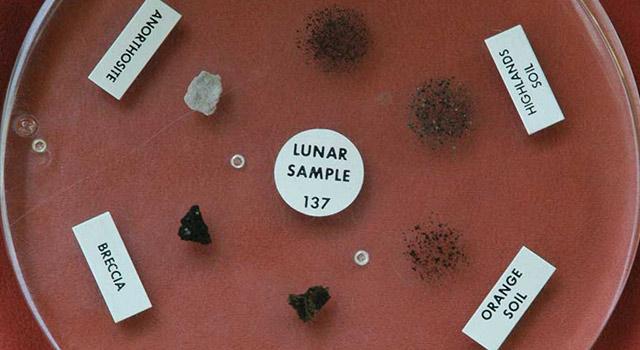
NASA/JPL Educator Workshop – Lunar and Meteorite Sample Certification


Lunar and Meteorite Sample Certification – NASA/JPL Educator Workshop
 

Educator Workshop: Lunar and Meteorite Sample Certification

When: Saturday, Nov. 10, 9:30 a.m. to 1:30 p.m.

Where: NASA Jet Propulsion Laboratory, Pasadena, California

Target Audience: Teachers for grades K-12

Overview: NASA makes actual lunar samples from the historic Apollo missions available to lend to teachers. You must attend this certification workshop to bring the excitement of real lunar rocks and regolith samples to your students.

  • This workshop is not available online; you must be physically present to participate.
  • This Lunar and Meteorite Sample Disk Program is limited to teachers at U.S.-based institutions and is intended for employees of K-12 classrooms, museums, libraries or planetariums. Volunteer groups do not meet the qualifications to be certified and borrow the samples.

› Register Online

Questions? Call the Educator Resource Center at 818-393-5917.

This free workshop is offered through the NASA/JPL Educator Resource Center, which provides formal and informal educators with NASA resources and materials that support STEM learning. For more information, visit the Educator Resource Center page.


Explore Standards-Aligned Lessons from NASA/JPL Edu

NASA/JPL Edu - Teach - Activities Explore our collection of science, technology, engineering and math (STEM) lessons to bring the wonder of NASA missions and science to your students.

Explore More


DAY IN REVIEW


DAY IN REVIEW
Mars Virtual Reality Software Wins NASA Award
A mixed-reality software that allows scientists and engineers to virtually walk on Mars has received NASA's 2018 Software of the Year Award.
› Read the full story
All Eyes on Hurricane Michael
Many NASA instruments are keeping tabs on Hurricane Michael from space, including AIRS and MISR. Here's what they've seen.
› Read the full story