MY SEARCH ENGINE

Tuesday, September 18, 2018

DAY IN REVIEW


DAY IN REVIEW
NASA JPL latest news release
ECOSTRESS Maps LA's Hot Spots

NASA's ECOsystem Spaceborne Thermal Radiometer Experiment on Space Station (ECOSTRESS) captured new imagery of variations in surface-temperature patterns in Los Angeles County. The first of its kind to be taken by the agency's newest Earth-observing mission, it is more detailed than previous imagery and, unlike prior imagery, was acquired at different times of the day.

ECOSTRESS measures surface temperature -- the temperature you would feel if you touched the surface of something -- rather than the air temperature typically reported by weather stations. The images were acquired throughout the day between July 22 and Aug. 14 during an extended period of high temperatures in the Los Angeles area.

Cooler temperatures appear in blue, and warmer temperatures are shown in red. In the image taken July 22 at 4:07 a.m., the hottest (reddest) areas are dark asphalt surfaces that are unshaded during the day and remain warm throughout the night. They include freeways, airports, oil refineries and parking lots. The cool (blue) areas are clouds and higher-elevation mountainous regions (dark blue).

The other images show how different urban surfaces warm up and cool down throughout the day. The daytime image (upper left) acquired at 3:01 p.m. PDT on July 31 shows how hot the inland regions can get during a period of extreme heat. The Santa Anita racetrack parking lot was the hottest area. At 147.3° F, the surface temperature there was hot enough to fry an egg.

Surface temperature variations in Los Angeles, California
ECOSTRESS imagery shows surface temperature variations in Los Angeles, California between July 22 and August 14 at different times of day. Hot areas are shown in red, warm areas in orange and yellow, and cooler areas in blue. Image credit: NASA/JPL-Caltech
Full image and caption

Images in the upper right, lower left and lower right -- acquired at 9:26 p.m., 11:43 p.m. and 4:07 a.m., respectively -- show how urban surfaces cool down, with roof surfaces cooling at a much faster rate than roads and other asphalt surfaces that have a higher heat capacity. Note that in the lower-right image, reds correspond with temperatures in the 80s. The top image from the same time shows a slightly different scale to enhance the contrast between different surfaces -- and reds correspond with temperatures in the 70s.

The Los Angeles area is known for its Mediterranean climate and abundant sunshine but also for its extreme "micro-climate" temperature swings -- from cooler coastal areas to much warmer inland regions like the San Gabriel Valley. ECOSTRESS can detect the distribution and pattern variations of that surface heat over areas the size of a football field.

ECOSTRESS launched on June 29 as part of a SpaceX commercial resupply mission to the International Space Station. The primary mission of ECOSTRESS is to detect plant health by monitoring Earth's surface temperature. However, surface temperature data are also useful in detecting other heat-related phenomena, such as heat waves, volcanoes and fires.

JPL built and manages the ECOSTRESS mission for NASA's Earth Science Division in the Science Mission Directorate at NASA Headquarters in Washington. ECOSTRESS is an Earth Venture Instrument mission; the program is managed by NASA's Earth System Science Pathfinder program at NASA's Langley Research Center in Hampton, Virginia.

For more information on ECOSTRESS, including these data, visit:

https://ecostress.jpl.nasa.gov

For more information on Earth science activities aboard the International Space Station, visit:

http://www.nasa.gov/issearthscience


Thursday, September 13, 2018

DAY IN REVIEW


DAY IN REVIEW
Cassini's Final View of Titan's Northern Lakes and Seas
Mark the one-year anniversary of Cassini's final plunge into Saturn's atmosphere with a look at the spacecraft's final view of Titan's northern lakes and seas.
› Read the full story
Juno Captures Elusive 'Brown Barge'
A long, brown oval known as a "brown barge" in Jupiter's South Equatorial Belt is captured in this color-enhanced image from NASA's Juno spacecraft.
› Read the full story
MarCO Makes Space for Small Explorers
A pair of NASA CubeSats flying to Mars are opening a new frontier for small spacecraft.
› Read the full story


NASA/JPL Educator Workshop – The InSight Mission: Entry, Descent and Landing on Mars


The InSight Mission: Entry, Descent and Landing on Mars – NASA/JPL Educator Workshop
 

Educator Workshop – The InSight Mission: Entry, Descent and Landing on Mars

When: Saturday, Sept. 29, 9 a.m. to 12 p.m.

Where: NASA Jet Propulsion Laboratory, Pasadena, California

Target Audience: Teachers for grades K-12 and informal educators (museums, after-school programs, etc.)

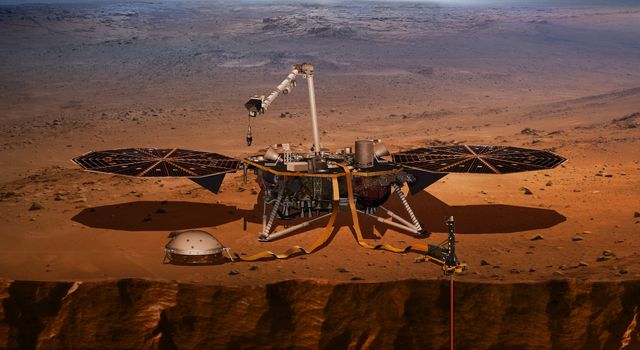
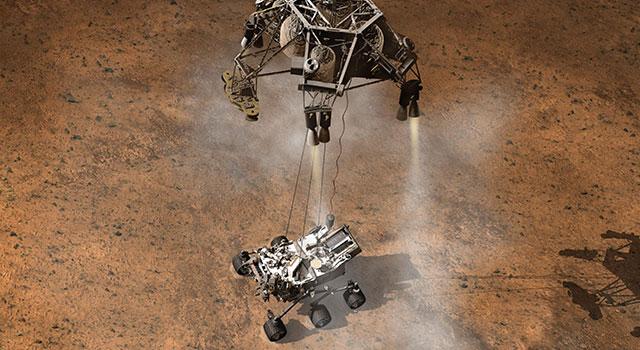
Overview: InSight, NASA's latest Mars mission, is scheduled to make its entry, descent and landing (also known as "EDL") on the Red Planet on November 26. Based on the Phoenix Mars lander design, InSight is equipped with a heat-flow probe and seismometer to investigate the Red Planet's interior as well as give scientists a better understanding of the evolution of rocky planets.

Join us at JPL to hear from an entry, descent and landing engineer for the InSight Mars lander and discover ways to bring the mission into classrooms, museums and after-school programs.

› Register Online

  • There is no charge for this workshop, but registration is required. No walk-in participation will be allowed.
  • This workshop is not available online; you must be physically present to participate.
  • This workshop is limited to educators at U.S.-based institutions and organizations.

Questions? Call the Educator Resource Center at 818-393-5917.

Can't attend the workshop? Explore these standards-aligned lessons online.

Lesson: On Target Lesson: On Target (Grades 6-12) – Students modify a paper cup so it can zip down a line and drop a marble onto a target.
› Get started
Lesson: Touchdown Lesson: Touchdown (Grades 3-8) – Students design and build a shock-absorbing system that will protect two "astronauts" when they land.
› Get started
Lesson: Marsbound! Mission to the Red Planet Lesson: Marsbound! Mission to the Red Planet (Grades 3-12) – This board-game activity teaches students the process of design, engineering and technology for a mission to Mars.
› Get started


Wednesday, September 12, 2018

DAY IN REVIEW


DAY IN REVIEW
NASA JPL latest news release
Hurricane Florence as Viewed by NASA's AIRS Instrument

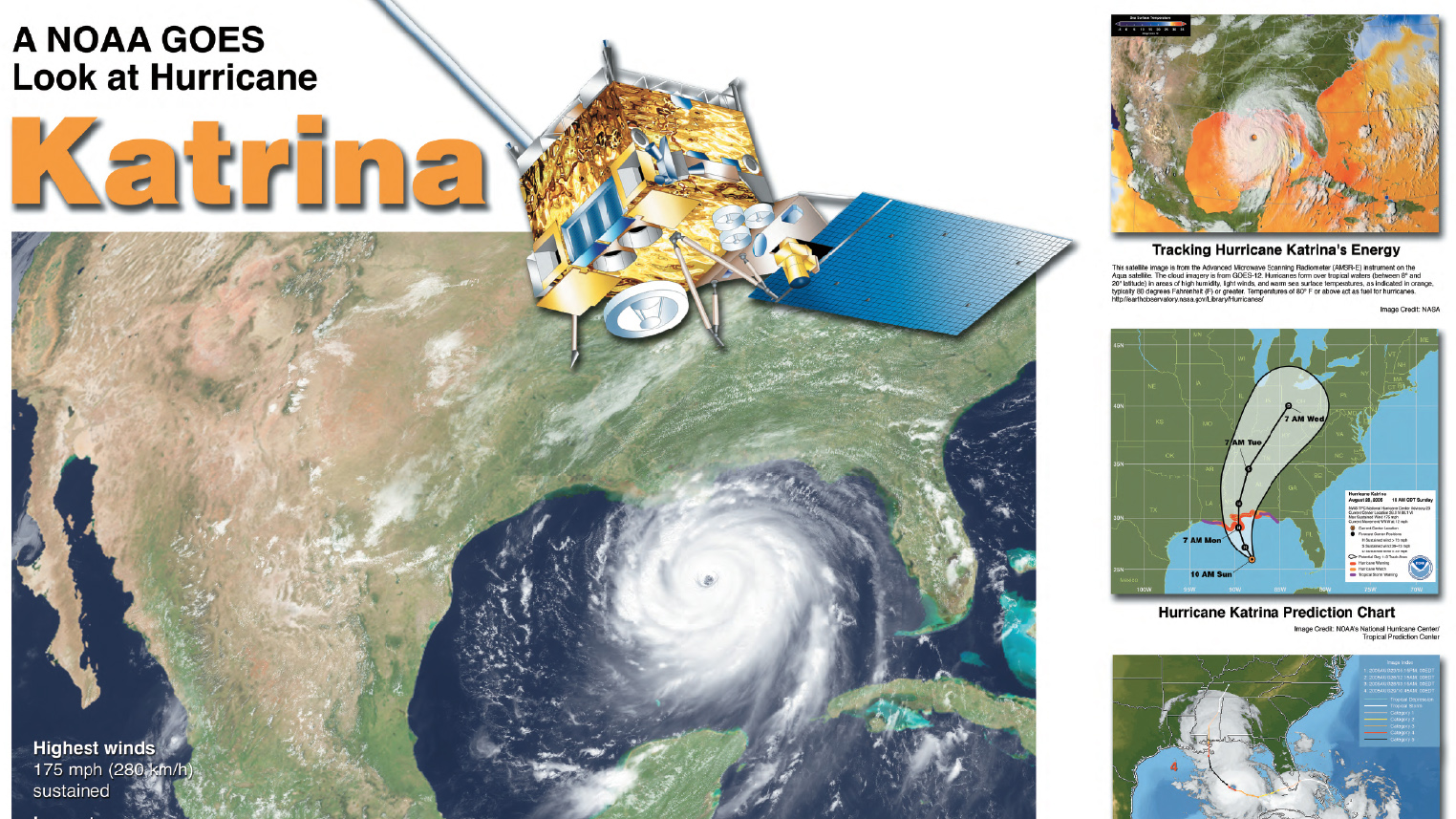
All eyes were on Hurricane Florence Wednesday as the Category 3 storm barreled toward the U.S. East Coast. NASA's Atmospheric Infrared Sounder (AIRS) instrument was watching, too, and captured new imagery of the storm's approach.

AIRS, in conjunction with the Advanced Microwave Sounding Unit (AMSU), senses emitted infrared and microwave radiation from Earth to provide a three-dimensional look at weather and climate. It acquired infrared and visible light images at 1:30 p.m. EDT Wednesday. In the infrared image, a symmetrical ring of deep, cold rain clouds is shown in purple. Warmer areas, including a well-defined eye, are shown in blue. Shallower rain clouds are shown in green, while the red areas represent mostly cloud-free air moving away from the storm. The visible light image shows Florence much as our eyes would see it. It showcases the storm's thick cloud shield with clouds that extend far from the eye of the storm.

Hurricane Florence underwent rapid intensification from a Category 2 storm to a Category 4 storm earlier this week. Although it was downgraded to Category 3 on Wednesday, the storm remains large and powerful with the potential for devastating winds, rain and storm surges. States of emergency have already been declared in several states along the coast.

Launched into orbit in 2002, the AIRS and AMSU instruments fly onboard NASA's Aqua spacecraft and are managed by NASA's Jet Propulsion Laboratory in Pasadena, California, under contract to NASA. JPL is a division of the Caltech in Pasadena.

More information about AIRS can be found at https://airs.jpl.nasa.gov.


Back to School With Free Materials and More From NASA/JPL Edu

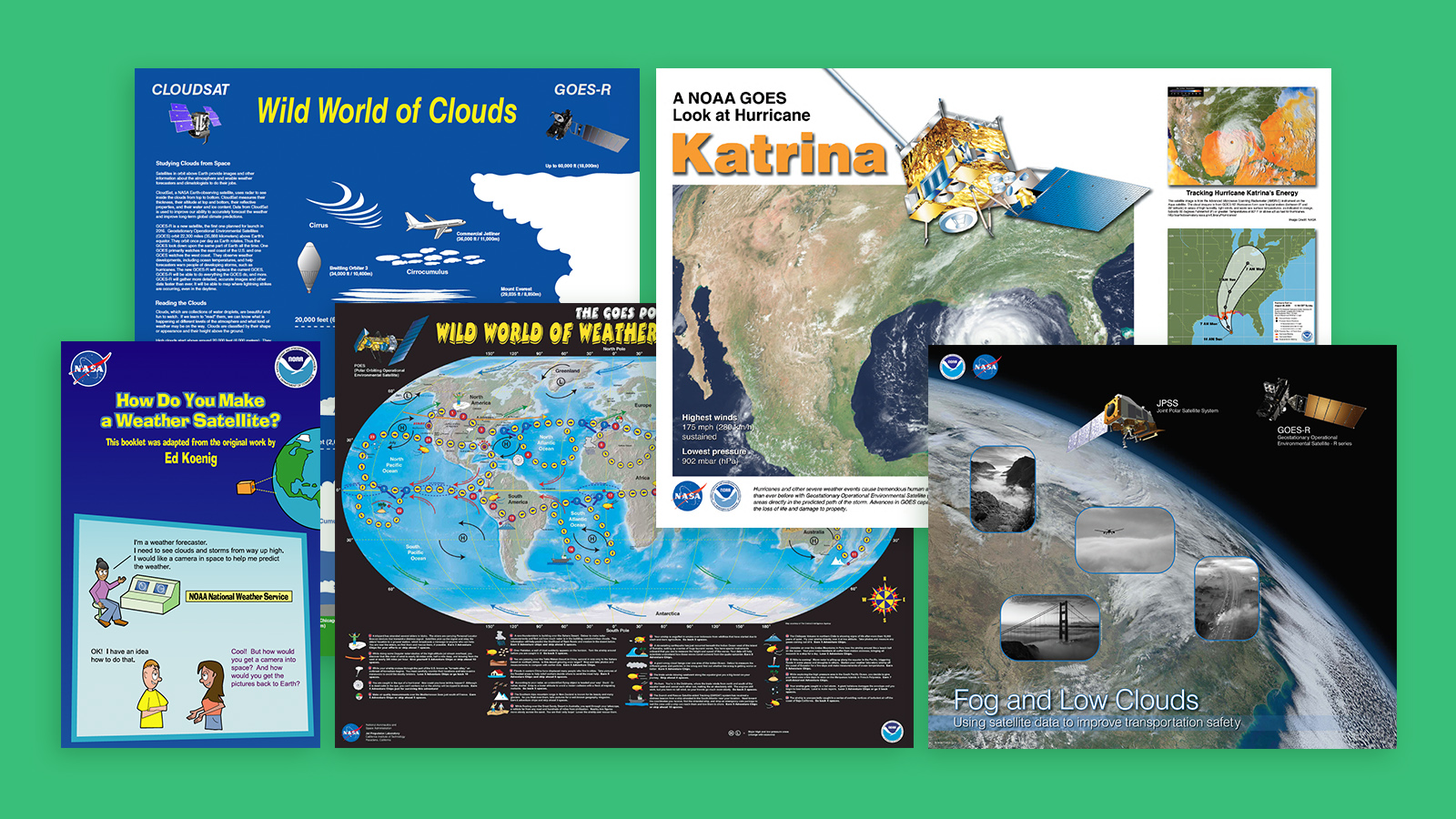
Free 2018 Back-to-School Bulletin Board from NASA/JPL
 

Back to School With Free Materials and More From NASA/JPL Edu

Launch back into STEM with these back-to-school resources from the Education Office at NASA's Jet Propulsion Laboratory. Explore the links below to sign up to receive free classroom bulletin board materials, see how people at NASA respond to the age-old, student question, "When are we ever going to use this?" and check out lessons and activities tied to the latest NASA missions and science. 


Free 2018 Back-to-School Bulletin Board from NASA/JPL Free 2018 Back-to-School Bulletin Board from NASA/JPL - Sign up to receive free classroom bulletin board materials from NASA/JPL all about hurricanes, clouds, weather, Earth science – and the satellites that study them. Available while supplies last.
› Sign Up
NASA Answers When Are We Ever Going to Use This? NASA Answers 'When Are We Ever Going to Use This?' - We asked people at NASA/JPL: What grade-school STEM lessons help you build space robots, make discoveries about planets, and explore the solar system and beyond?
› Read more
STEM Lessons from NASA/JPL Edu STEM Lesson Collection - Explore our catalog of standards-aligned lessons and activities tied to the latest NASA missions and science.
› Explore lesson collection
› Plus, resources for educators!
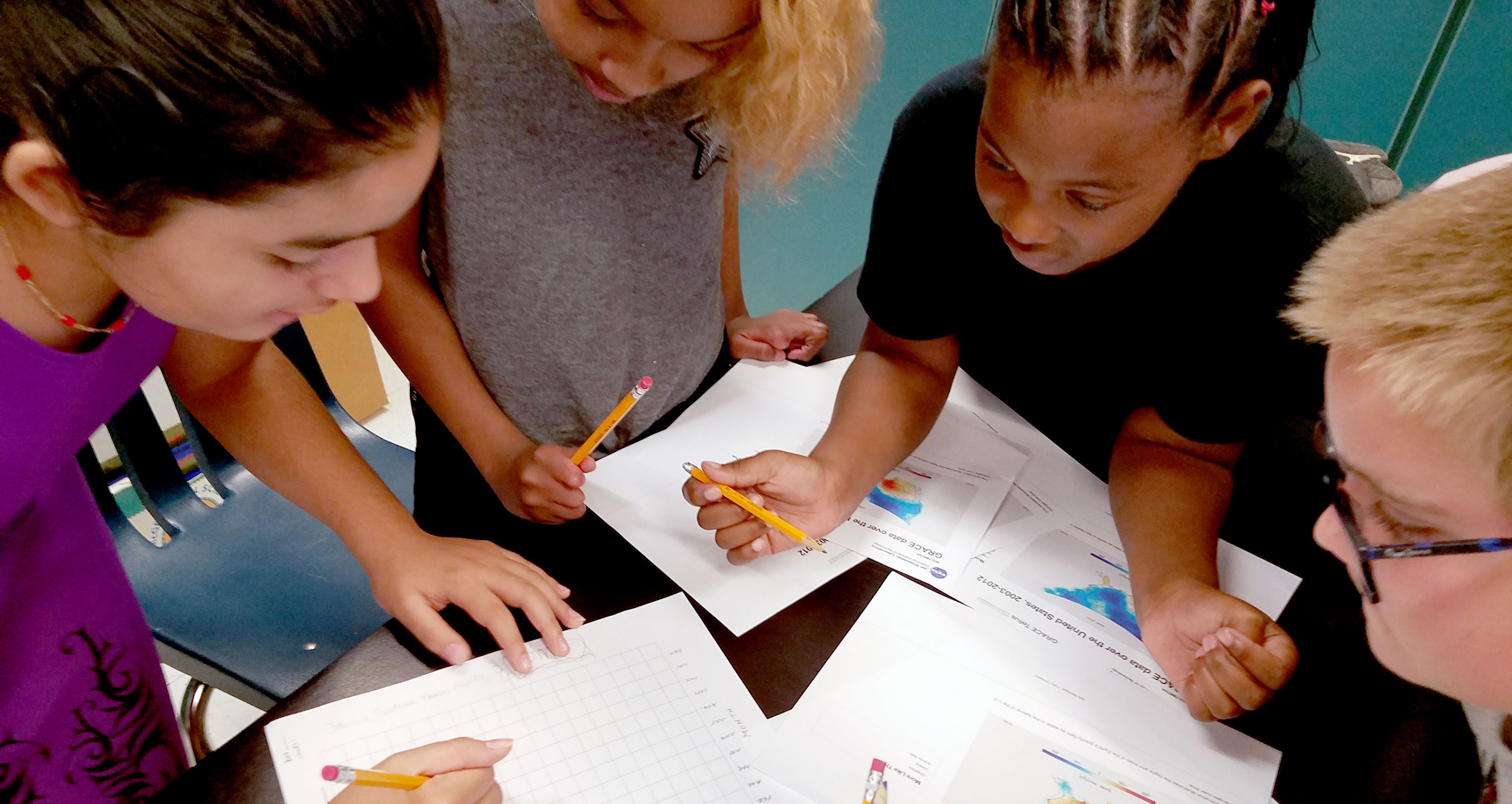
STEM Activities for Students from NASA/JPL Edu STEM Activities for Students - Students can make their own moon-phases calendar and 3-D glasses holder, watch videos and more, all while learning about space and science with NASA.
› Explore activities for students
› Plus, resources for students!


Monday, September 10, 2018

DAY IN REVIEW


DAY IN REVIEW
NASA JPL latest news release
And the Emmy goes to: Cassini's Grand Finale

JPL has won an Emmy Award for Outstanding Original Interactive Program for its coverage of the Cassini mission's Grand Finale at Saturn. The award was presented Saturday, Sept. 8, at the Creative Arts Emmy Awards in Los Angeles by the Academy of Television Arts & Sciences.

Accepting the award were members of the JPL Media Relations and Public Engagement offices, and leaders of the Cassini Mission.

"This award represents the special magic that happens when we combine the stunning imagery and powerful science from a mission such as Cassini with the extraordinary talents of an innovative media and communications team. By honoring our interactive program on the Cassini Grand Finale, the Television Academy honored the great cause of space exploration, and I am tremendously proud of our Public Engagement and Media Relations teams for turning the end of a mission into a new beginning for communicating the wonders of our universe," said Michael Greene, the Lab's director for Communications and Education.

In 2017, after nearly 20 years in space and 13 years revealing the wonders of Saturn, NASA's Cassini orbiter was running out of fuel. As a final act, Cassini began a whole new mission-its Grand Finale. This journey into the unknown would end with a spectacular plunge into the planet. JPL created a multi-month digital campaign to celebrate the mission's science and engineering accomplishments and communicate why the spacecraft needed to meet its end in the skies of Saturn.

Cassini's first, daring dive into the unexplored space between the giant planet and its rings kicked off the campaign on April 26, 2017. It culminated on Sept. 15, 2017, with live coverage of Cassini's plunge into Saturn's atmosphere, with the spacecraft sending back science to the very last second.

"The Cassini team is tremendously grateful that our mission's amazing story was told in such a creative way by the communications team at JPL, and that the TV Academy has chosen to honor that story. Receiving an Emmy is one more amazing first for Cassini," said Cassini Project Manager Earl Maize.

The multifaceted interactive campaign included regular updates on Twitter, Facebook, Snapchat, Instagram and the Cassini mission website; multiple live social, web and TV broadcasts during which reporter and public questions were answered; a dramatic short film to communicate the mission's story and preview its endgame; multiple 360-degree videos, including NASA's first 360-degree livestream of a mission event from inside JPL mission control; an interactive press kit; a steady drumbeat of articles to keep fans updated with news and features about the people behind the mission; state-standards aligned educational materials; a celebration of art by amateur space enthusiasts; and software to provide real-time tracking of the spacecraft, down to its final transmission to Earth.

"To an incredible spacecraft that could and did. To an amazing mission that guided her. To our public that followed her for 20 years before she plunged into Saturn but sent science to the end. Go NASA!" said Alice Wessen, manager at JPL's Public Engagement Office.

"Thank you to space fans, if you're a current space fan or future space fan. We can't fit you all into mission control but we can give you a virtual seat and we can put you at Saturn and we can put you at Mars," said Veronica McGregor, manager of JPL's Media Relations Office. "Thanks also to NASA and JPL for having a culture that tells us to shoot for the stars in all of our positions, whether we are explorers or storytellers. This is for science, for science literacy, and discovery."

The Creative Arts Emmys honor outstanding artistic and technical achievement in multiple categories including animation, casting, cinematography, costumes, visual effects, title design, interactive programs and more. Awards in over 50 categories were announced on Saturday. The prestigious Governor's Award was presented to the "Star Trek" franchise, with William Shatner and 100 cast and crew members from multiple "Star Trek" series appearing on stage. An edited version of the show will air on Sept. 15 on the FXX channel.

The Primetime Emmys will be awarded by the Academy of Television Arts & Sciences in Los Angeles on Sept. 17. A full list of winners is available here.

The Cassini-Huygens mission is a cooperative project of NASA, ESA (European Space Agency) and the Italian Space Agency. JPL manages the mission for NASA's Science Mission Directorate, Washington. JPL designed, developed and assembled the Cassini orbiter.


Friday, September 7, 2018

DAY IN REVIEW


DAY IN REVIEW
NASA JPL latest news release
Legacy of NASA's Dawn, Near the End of its Mission

NASA's Dawn mission is drawing to a close after 11 years of breaking new ground in planetary science, gathering breathtaking imagery, and performing unprecedented feats of spacecraft engineering.

Dawn's mission was extended several times, outperforming scientists' expectations in its exploration of two planet-like bodies, Ceres and Vesta, that make up 45 percent of the mass of the main asteroid belt. Now the spacecraft is about to run out of a key fuel, hydrazine. When that happens, most likely between mid-September and mid-October, Dawn will lose its ability to communicate with Earth. It will remain in a silent orbit around Ceres for decades.

"Although it will be sad to see Dawn's departure from our mission family, we are intensely proud of its many accomplishments," said Lori Glaze, acting director of the Planetary Science Division at NASA Headquarters in Washington. "Not only did this spacecraft unlock scientific secrets at these two small but significant worlds, it was also the first spacecraft to visit and orbit bodies at two extraterrestrial destinations during its mission. Dawn's science and engineering achievements will echo throughout history."

When Dawn launched from Cape Canaveral Air Force Station in Florida in September 2007, strapped on a Delta II-Heavy rocket, scientists and engineers had an idea of what Ceres and Vesta looked like. Thanks to ground- and space-based telescopes, including NASA's Hubble Space Telescope, the bodies in the asteroid belt between Mars and Jupiter were visible -- but even the best pictures were fuzzy.

From 2011 to 2012, Dawn swept over Vesta, capturing images that exceeded everyone's imaginings -- craters, canyons and even mountains. Then on Ceres in 2015, Dawn showed us a cryovolcano and mysterious bright spots, which scientists later found might be salt deposits produced by the exposure of briny liquid from Ceres' interior. Through Dawn's eyes, these bright spots were especially stunning, glowing like diamonds scattered across the dwarf planet's surface.

"Dawn's legacy is that it explored two of the last uncharted worlds in the inner Solar System," said Marc Rayman of NASA's Jet Propulsion Laboratory in Pasadena California, who serves as Dawn's mission director and chief engineer. "Dawn has shown us alien worlds that for two centuries were just pinpoints of light amidst the stars. And it has produced these richly detailed, intimate portraits and revealed exotic, mysterious landscapes unlike anything we've ever seen."

Engineering Feats

Dawn is the only spacecraft to orbit a body in the asteroid belt. And it is the only spacecraft to orbit two extraterrestrial destinations. These feats were possible thanks to ion propulsion, a tremendously efficient propulsion system familiar to science-fiction fans and space enthusiasts. Dawn pushed the limits of the system's capabilities and stamina, showing how useful it is for other missions that aim to visit multiple destinations.

Pushed by ion propulsion, Dawn reached Vesta in 2011 and investigated it from surface to core during 14 months in orbit. In 2012, engineers maneuvered Dawn out of orbit and steered it though the asteroid belt for more than two years before inserting it into orbit around the dwarf planet Ceres, where it has been collecting data since 2015.

Window into the Past

All the while, scientists gained new insight into the early stages of our Solar System, fulfilling Dawn's objective. The mission was named for its purpose: to learn more about the dawn of the Solar System. It targeted Ceres and Vesta because they function as time capsules, intact survivors of the earliest part of our history. And the duo delivered, giving scientists insight into the original building blocks of the Solar System.

"Vesta and Ceres have each told their story of how and where they formed, and how they evolved -- a fiery magmatic history that led to rocky Vesta and a cooler, water-rich history that resulted in the ancient ocean world Ceres," said Carol Raymond of JPL, principal investigator of the Dawn mission. "These treasure troves of information will continue to help us understand other bodies in the Solar System far into the future."

Spectacular Ceres

There was so much that scientists didn't know about Ceres before Dawn arrived. Raymond wondered whether they might find Ceres covered with a smooth, young surface -- an enormous cue ball with a frozen crust. Instead, they found the dwarf planet wearing the chemistry of its old ocean. "What we found was completely mind-blowing. Ceres' history is just splayed all over its surface," she said.

Some of the dazzling bright spots turned out to be brilliant salty deposits, composed mainly of sodium carbonate that made its way to the surface in a slushy brine from within or below the crust.

The findings reinforce the idea that dwarf planets, not just icy moons like Enceladus and Europa, could have hosted oceans during their history -- and potentially still do. Analyses from Dawn data suggest there may still be liquid under Ceres' surface and that some regions were geologically active relatively recently, feeding from a deep reservoir.

One of Dawn's biggest reveals on Ceres lay in the region of Ernutet Crater. Organic molecules were found in abundance. Organics are among the building blocks of life, though Dawn's data can't determine if Ceres' organics were formed by biological processes.

"There is growing evidence that the organics in Ernutet came from Ceres' interior, in which case they could have existed for some time in the early interior ocean," said Julie Castillo-Rogez, Dawn's project scientist and deputy principal investigator at JPL.

Vibrant Vesta

At Vesta, Dawn's investigation into the early Solar System found a 4.5-billion-year-old witness it could interrogate. Dawn mapped the craters of the planet-like world and revealed that its northern hemisphere had experienced more large impacts than expected, suggesting there were more large objects in the asteroid belt early on than scientists thought.

Vesta held other surprises as well. While it's technically classified as an asteroid, that label belies the rich and varied terrain Dawn revealed, and the planet-like processes that Vesta experienced. Hubble had relayed images of a mountain at the center of an enormous basin now called Rheasilvia. Dawn's mapping showed it to be twice the height of Mt. Everest, and it revealed canyons that rival the Grand Canyon in size. Dawn also confirmed Vesta as the source of a very common family of meteorites.

Now, near the end of Dawn's second extended mission at Ceres, the spacecraft has continued to gather high-resolution images, gamma ray and neutron spectra, infrared spectra, and gravity data. Almost once a day, it will swoop over Ceres about 22 miles (35 kilometers) from its surface -- only about three times the altitude of a passenger jet -- gathering valuable data until it expends the last of the hydrazine that feeds thrusters controlling its orientation. Dawn's reaction wheels failed earlier in the mission, leaving it heavily dependent on this key fuel. When Dawn runs out in the next month or two, the spacecraft will lose its ability to communicate with Earth, but it must not crash into Ceres.

Because Ceres has conditions of interest to scientists who study chemistry that leads to the development of life, NASA follows strict planetary protection protocols for the disposal of the Dawn spacecraft. Unlike Cassini, which deliberately plunged into Saturn's atmosphere to protect the system from contamination -- Dawn will remain in orbit around Ceres, which has no atmosphere.

Engineers designed Dawn's final orbit to ensure it will not crash for at least 20 years -- and likely decades longer.

Rayman, who led the team that flew Dawn throughout the mission and into its final orbit, likes to think of Dawn's end this way: as "an inert, celestial monument to human creativity and ingenuity."

More on Dawn's mission legacy here: https://dawn.jpl.nasa.gov/mission/toolkit/

The Dawn mission is managed by JPL for NAPrSA's Science Mission Directorate in Washington. Dawn is a project of the directorate's Discovery Program, managed by NASA's Marshall Space Flight Center in Huntsville, Alabama. JPL is responsible for overall Dawn mission science. Northrop Grumman in Dulles, Virginia, designed and built the spacecraft. The German Aerospace Center, Max Planck Institute for Solar System Research, Italian Space Agency and Italian National Astrophysical Institute are international partners on the mission team.

For a complete list of mission participants, visit:

https://dawn.jpl.nasa.gov/mission

More information about Dawn is available at the following sites:

https://www.nasa.gov/dawn

https://dawn.jpl.nasa.gov


Thursday, September 6, 2018

DAY IN REVIEW


DAY IN REVIEW
NASA JPL latest news release
Curiosity Surveys a Mystery Under Dusty Skies

After snagging a new rock sample on Aug. 9, NASA's Curiosity rover surveyed its surroundings on Mars, producing a 360-degree panorama of its current location on Vera Rubin Ridge.

The panorama includes umber skies, darkened by a fading global dust storm. It also includes a rare view by the Mast Camera of the rover itself, revealing a thin layer of dust on Curiosity's deck. In the foreground is the rover's most recent drill target, named "Stoer" after a town in Scotland near where important discoveries about early life on Earth were made in lakebed sediments.

The new drill sample delighted Curiosity's science team, because the rover's last two drill attempts were thwarted by unexpectedly hard rocks. Curiosity started using a new drill method earlier this year to work around a mechanical problem. Testing has shown it to be as effective at drilling rocks as the old method, suggesting the hard rocks would have posed a problem no matter which method was used.

There's no way for Curiosity to determine exactly how hard a rock will be before drilling it, so for this most recent drilling activity, the rover team made an educated guess. An extensive ledge on the ridge was thought to include harder rock, able to stand despite wind erosion; a spot below the ledge was thought more likely to have softer, erodible rocks. That strategy seems to have panned out, but questions still abound as to why Vera Rubin Ridge exists in the first place.

The rover has never encountered a place with so much variation in color and texture, according to Ashwin Vasavada, Curiosity's project scientist at NASA's Jet Propulsion Laboratory in Pasadena, California. JPL leads the Mars Science Laboratory mission that Curiosity is a part of.

"The ridge isn't this monolithic thing -- it has two distinct sections, each of which has a variety of colors," Vasavada said. "Some are visible to the eye and even more show up when we look in near-infrared, just beyond what our eyes can see. Some seem related to how hard the rocks are."

The best way to discover why these rocks are so hard is to drill them into a powder for the rover's two internal laboratories. Analyzing them might reveal what's acting as "cement" in the ridge, enabling it to stand despite wind erosion. Most likely, Vasavada said, groundwater flowing through the ridge in the ancient past had a role in strengthening it, perhaps acting as plumbing to distribute this wind-proofing "cement."

Much of the ridge contains hematite, a mineral that forms in water. There's such a strong hematite signal that it drew the attention of NASA orbiters like a beacon. Could some variation in hematite result in harder rocks? Is there something special in the ridge's red rocks that makes them so unyielding?

For the moment, Vera Rubin Ridge is keeping its secrets to itself.

Two more drilled samples are planned for the ridge in September. After that, Curiosity will drive to its scientific end zone: areas enriched in clay and sulfate minerals higher up Mt. Sharp. That ascent is planned for early October.


Wednesday, September 5, 2018

WATCH LIVE: NASA@60, September 6 at 7:00 p.m. (PDT)


Von Karman Lecture Series - September
NASA JPL latest news release
NASA@60: The Role of the Robots

Much has changed about the way we explore space in the 60 years since NASA began operations on Oct. 1, 1958. Today's robotic spacecraft are beginning to experiment with laser communications, artificial intelligence and 3-D printed parts. But did you know some of the first spacecraft the U.S. sent to the Moon included parts made of wood, or that spacecraft used to record data on motorized magnetic tape recorders? Despite all the advances, one thing hasn't changed: we still rely on robotic spacecraft to extend our senses above and beyond Earth and to blaze a trail as precursors for human explorers. As NASA celebrates its 60th anniversary, this panel discussion will look back over the decades at how far our robotic exploration has come, and consider where we might be headed.

Part one of the program will focus on major milestones in robotic exploration, what it took to reach those accomplishments, how far we've come, and how have spacecraft changed over the years. Part two will focus on new developments we might look for in robotic spacecraft in the next couple of decades. What demands will we be placing on spacecraft, in terms of capabilities and destinations, that are different?

Watch live


Tuesday, September 4, 2018

NASA to Host Live Chat on Successful Mission to Asteroid Belt


DAY IN REVIEW
NASA JPL latest news release
NASA to Host Live Chat on Successful Mission to Asteroid Belt

NASA's Jet Propulsion Laboratory in Pasadena, California, will host a live-streamed Science Chat at 11 a.m. PDT (2 p.m. EDT) Friday, Sept. 7, during which experts will talk about the role of the agency's Dawn spacecraft in studying the beginning of our solar system, and the approaching end of its 11-year mission.

The event will air live on NASA Television, Facebook Live, Ustream, YouTube and the agency's website.

Participants include:

  • Jim Green, NASA chief scientist
  • Carol Raymond, Dawn principal investigator at JPL
  • Marc Rayman, Dawn mission director and chief engineer at JPL

The public can ask questions on Twitter using the hashtag #askNASA or in the comment section of the JPL Facebook page.

NASA launched Dawn in 2007 to learn more about the beginning of the Solar System. During its mission, the spacecraft studied the asteroid Vesta and dwarf planet Ceres, celestial bodies believed to have formed early in the history of the Solar System.

The mission aided scientists in characterizing the early Solar System and the processes that dominated its formation. Dawn is the only spacecraft to orbit two deep-space destinations, a feat enabled by the efficiency of the spacecraft's ion propulsion system.

For more information about Dawn, visit:

https://www.nasa.gov/dawn