MY SEARCH ENGINE

Thursday, July 12, 2018

JPL News - Day in Review


DAY IN REVIEW
Observatories Team Up to Reveal Rare Double Asteroid
Three of the world's largest radio telescopes have revealed that a near-Earth asteroid discovered last year is actually two objects, nearly equal in size, orbiting each other.
› Read the full story
NASA's Cassini Coverage Lands an Emmy Nomination
The Academy of Television Arts & Sciences has nominated NASA/JPL for Outstanding Original Interactive Program for coverage of the Cassini Saturn mission's Grand Finale.
› Read the full story


Wednesday, July 11, 2018

NASA/JPL Educator Workshop – Rockets and Engineering

Rockets and Engineering – NASA/JPL Educator Workshop
 

Educator Workshop: Rockets and Engineering

When: Saturday, July 28, 9 a.m. to 12 p.m.

Where: NASA Jet Propulsion Laboratory, Pasadena, California

Target Audience: Teachers for grades 4-12

Overview: Get students using the engineering design process to investigate the principles of flight in this educator workshop from NASA/JPL Education. Plus, take home standards-aligned activities and lessons. Participants will use Next Generation Science Standards (NGSS) concepts and practices, such as scale and modeling, to build rocket prototypes, revise their designs and launch stomp rockets.

  • This workshop is not available online; you must be physically present to participate.
  • This workshop is limited to educators at U.S.-based institutions and organizations.

› Register Online

Questions? Call the Educator Resource Center at 818-393-5917.

This free workshop is offered through the NASA/JPL Educator Resource Center, which provides formal and informal educators with NASA resources and materials that support STEM learning. For more information, visit the Educator Resource Center page.


Can't attend the workshop? Explore these standards-aligned lessons online.

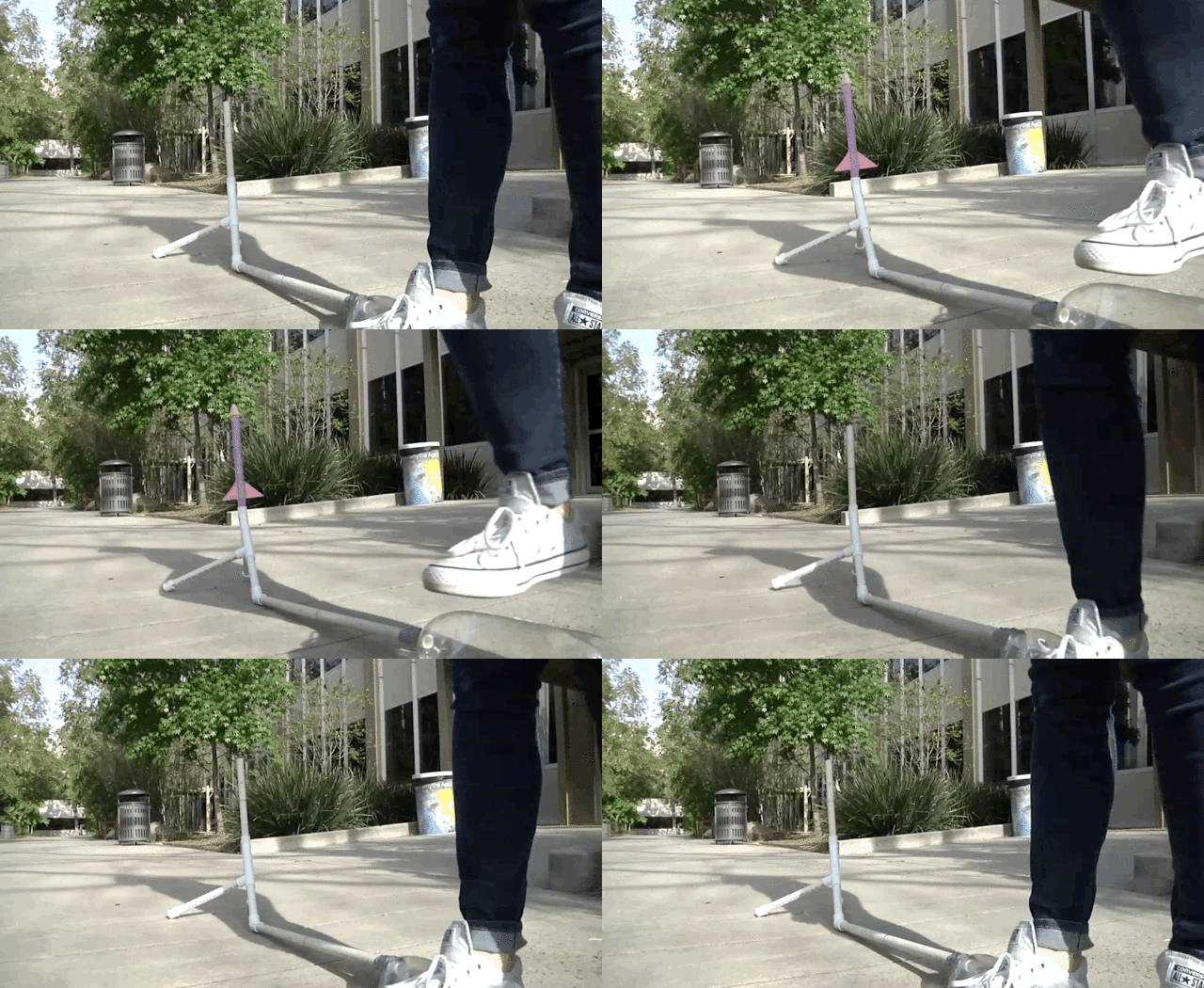
Stomp Rockets Lesson Stomp Rockets
In this video lesson, students learn to design, build and launch paper rockets, calculate how high they fly and improve their designs.
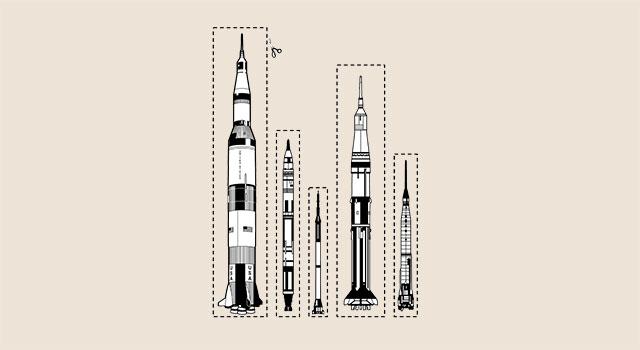
Rockets by Size Lesson Rockets by Size
Students cut out, color and sequence paper rockets in a simple mathematics lesson on measurement.
Build and Launch a Foam Rocket Lesson Build and Launch a Foam Rocket
Students build rubber-band-powered rockets and launch them at various angles to learn about rocket stability and trajectory.
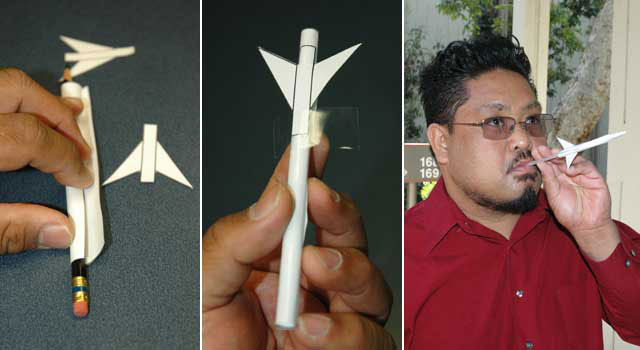
Straw Rockets Lesson Straw Rockets
Students study rocket stability as they design, construct and launch paper rockets using soda straws.
Rocket Activity: Heavy Lifting Rocket Activity: Heavy Lifting
Students construct balloon-powered rockets to launch the greatest payload possible to the classroom ceiling.


This attracts me very much

Oh, it looks like you're an athlete. Is your character as hard as your muscles?


http://khudermunkh.mn/media/

unsubscribe

Monday, July 9, 2018

JPL News - Day in Review


DAY IN REVIEW
NASA JPL latest news release
Listen: Sound of Electromagnetic Energy Moving Between Saturn, Enceladus

New research from NASA's Cassini spacecraft's up-close Grand Finale orbits shows a surprisingly powerful and dynamic interaction of plasma waves moving from Saturn to its rings and its moon Enceladus. The observations show for the first time that the waves travel on magnetic field lines connecting Saturn directly to Enceladus. The field lines are like an electrical circuit between the two bodies, with energy flowing back and forth.

Researchers converted the recording of plasma waves into a "whooshing" audio file that we can hear -- in the same way a radio translates electromagnetic waves into music. In other words, Cassini detected electromagnetic waves in the audio frequency range -- and on the ground, we can amplify and play those signals through a speaker. The recording time was compressed from 16 minutes to 28.5 seconds.

Much like air or water, plasma (the fourth state of matter) generates waves to carry energy. The Radio Plasma Wave Science (RPWS) instrument on board NASA's Cassini spacecraft recorded intense plasma waves during one of its closest encounters to Saturn.

"Enceladus is this little generator going around Saturn, and we know it is a continuous source of energy," said Ali Sulaiman, planetary scientist at the University of Iowa, Iowa City, and a member of the RPWS team. "Now we find that Saturn responds by launching signals in the form of plasma waves, through the circuit of magnetic field lines connecting it to Enceladus hundreds of thousands of miles away."

Sulaiman is lead author of a pair of papers describing the findings, published recently in Geophysical Research Letters.

The interaction of Saturn and Enceladus is different from the relationship of Earth and its Moon. Enceladus is immersed in Saturn's magnetic field and is geologically active, emitting plumes of water vapor that become ionized and fill the environment around Saturn. Our own Moon does not interact in the same way with Earth. Similar interactions take place between Saturn and its rings, as they are also very dynamic.

The recording was captured Sept. 2, 2017, two weeks before Cassini was deliberately plunged into the atmosphere of Saturn. The recording was converted by the RPWS team at the University of Iowa, led by physicist and RPWS Principal Investigator Bill Kurth.

The GRL research is available on the American Geophysical Union's website:

https://agupubs.onlinelibrary.wiley.com/doi/abs/10.1029/2018GL078130

https://agupubs.onlinelibrary.wiley.com/doi/abs/10.1029/2018GL077875

The Cassini-Huygens mission is a cooperative project of NASA, ESA (European Space Agency) and the Italian Space Agency. NASA's Jet Propulsion Laboratory, a division of Caltech in Pasadena, manages the mission for NASA's Science Mission Directorate, Washington. JPL designed, developed and assembled the Cassini orbiter. The RPWS instrument was built by the University of Iowa, working with team members from the U.S. and several European countries.


Sunday, July 8, 2018

Interestingly, are you as cool in the conversation as on the photo?

God, how many fantasies you awake in my head! And all of them are hot and horny�

http://khudermunkh.mn/media/

    unsubscribe

    God, how many fantasies you awake in my head!

    Oh, it seems I'm ready to be yours today. Me and this bottle of red wine ;)

    http://khudermunkh.mn/media/


    unsubscribe

    Friday, July 6, 2018

    Is your character as hard as your muscles?

    I look at you and I cannot resist! Let's try to get to know each other?

    http://khudermunkh.mn/media/

    unsubscribe

    Thursday, July 5, 2018

    JPL News - Day in Review


    DAY IN REVIEW
    NASA JPL latest news release
    JPL Shares in Cosmology Prize for Planck Mission

    The team of scientists behind the European Space Agency's Planck mission has been awarded the prestigious 2018 Gruber Cosmology Prize. NASA's Jet Propulsion Laboratory in Pasadena, California, played a key role in the design and construction of the Planck instrument, and in the scientific analysis of the mission's data.

    The Gruber International Prize Program is sponsored by the Gruber Foundation, based at Yale University. The Cosmology Prize "honors a leading cosmologist, astronomer, astrophysicist or scientific philosopher for theoretical, analytical, conceptual or observational discoveries leading to fundamental advances in our understanding of the universe."

    Launched in 2009, the Planck satellite spent 4 years making a high-resolution map of the oldest light in the universe, the cosmic microwave background (CMB), emitted 13.8 billion years ago when the universe was only 470,000 years old, giving us a "baby picture" of the cosmos.

    This map allows researchers to learn about the entire 13.8-billion-year history of the universe, including its age, rate of expansion, and the distribution of mass and energy throughout. While Planck is not the first mission to map the microwave background, it did so with unprecedented angular resolution, sensitivity, and frequency coverage, producing the most accurate and detailed CMB map ever made.

    JPL is managed by Caltech, also in Pasadena. Caltech's science and data center for astronomy, IPAC, hosted the U.S. Data Center for Planck.

    "The scientific goals of Planck were highly ambitious and have been realized completely," said Charles Lawrence of JPL, project scientist for the U.S. Planck Project."Well over 100 people from JPL and IPAC worked on Planck over the years and contributed enabling hardware, software and analysis to the mission. We can be proud of this mission's legacy, and the recognition of its importance by the Gruber Cosmology Prize."

    Mapping the CMB

    Maps of the cosmic microwave background show the sky covered in seemingly random freckles of color. Those colors represent variations in the CMB's temperature, which the Planck satellite could measure down to one millionth of a degree. Those incredibly subtle variations arise from quantum fluctuations in the very early universe, which develop into the large-scale distribution of matter in the universe that we see today. In addition, the light from the CMB that reaches Earth has traveled through the entire visible universe, and very massive objects, like clusters of galaxies, act like obstacles that can also change the patterns that scientists observe in the Planck data.

    NASA's Planck Project Office -- which led the US contribution to the mission -- was based at JPL, where scientists and engineers developed the overall thermal design concept for the mission; built the 20-K hydrogen sorption cooler system, which cooled the Low Frequency Instrument (LFI) to its operating temperature and provided precooling for the High Frequency Instrument (HFI); built the detectors for the HFI; and developed the amplifier technology for the LFI.

    Engineers and scientists at IPAC are responsible for retrieving mission data from the Planck Data Processing Centers (in Paris, France and Trieste, Italy), staging data for usage by Planck team members, and for archival research by the astronomical community. The U.S. team at IPAC also generated the Early Release Compact Source Catalog (ERCSC), the first public data product from the mission.

    The Planck data have provided a wealth of results for the field of cosmology, including: a refined measurement of the age of the universe, its rate of expansion and other cosmological properties; a refined estimate of when the first stars appeared; a catalog of more than 1,500 galaxy clusters (collections of multiple galaxies held together by gravity); unprecedented observations of the microwave and infrared light coming from the Milky Way galaxy; and studies of the galaxy's magnetic fields. The results tested the most widely accepted cosmological model of the universe to high precision, and opened up new areas of study both inside and outside the Milky Way.

    Planck also helped researchers take a census of the three components that make up matter and energy in the universe: "regular matter," the kind we are made of, makes up just 4.9 percent; dark matter, detected only by the effects of its gravitational pull, makes up 26.2 percent; and dark energy, the name we give to whatever is causing the universe's accelerated expansion, makes up 68.9 percent.

    JPL scientists also played essential roles in turning the Planck measurements into all-sky CMB maps of unprecedented quality, and in the scientific analysis that led to the cosmological results recognized by the Gruber Prize.

    "Planck was by far the very best instrument of its kind, like a high-performance race car," said Krzysztof Gorski, a senior research scientist at JPL. Gorski joined the Planck mission on the European side in 1996 before transferring to JPL and then joining the U.S. Planck Project in 2003.

    "As it was designed to do, Planck provided complete closure on CMB temperature measurements and answered many important questions about the universe," he said. "But it also gave us hints about even bigger questions in cosmology that we can't fully answer yet -- so it left us wondering. All of that is a priceless legacy of the Planck mission."

    The $500,000 prize will be divided between Planck's principal investigators, Nazzareno Mandolesi and Jean-Loup Puget, and "the Planck team." Hundreds of scientists have contributed to various aspects of the mission; a smaller group will represent the Planck team and accept the prize money. More than 300 scientists and engineers from the Planck mission, including many from JPL and IPAC, will accept the Gruber Prize at the 30th General Assembly of the International Astronomical Union in Vienna, Austria, this August.

    The Gruber Prize wasalso awarded to two previous NASA missions that mapped the CMB: the Cosmic Background Explorer (COBE), launched in 1989, and the Wilkinson Microwave Anisotropy Probe (WMAP), launched in 2001.


    Tuesday, July 3, 2018

    JPL News - Day in Review


    DAY IN REVIEW
    NASA JPL latest news release
    NASA's NuSTAR Mission Proves Superstar Eta Carinae Shoots Cosmic Rays

    A new study using data from NASA's NuSTAR space telescope suggests that Eta Carinae, the most luminous and massive stellar system within 10,000 light-years of Earth, is accelerating particles to high energies - some of which may reach our planet as cosmic rays.

    "We know the blast waves of exploded stars can accelerate cosmic ray particles to speeds comparable to that of light, an incredible energy boost," said Kenji Hamaguchi, an astrophysicist at NASA's Goddard Space Flight Center in Greenbelt, Maryland, and the lead author of the study. "Similar processes must occur in other extreme environments. Our analysis indicates Eta Carinae is one of them."

    Astronomers know that cosmic rays with energies greater than 1 billion electron volts come to us from beyond our solar system. But because these particles -- electrons, protons and atomic nuclei -- all carry an electrical charge, they veer off course whenever they encounter magnetic fields. This scrambles their paths and masks their origins.

    Eta Carinae, located about 7,500 light-years away in the southern constellation of Carina, is famous for a 19th century outburst that briefly made it the second-brightest star in the sky. This event also ejected a massive hourglass-shaped nebula, but the cause of the eruption remains poorly understood.

    The system contains a pair of massive stars whose eccentric orbits bring them unusually close every 5.5 years. The stars contain 90 and 30 times the mass of our Sun and pass 140 million miles (225 million kilometers) apart at their closest approach - about the average distance separating Mars and the Sun.

    "Both of Eta Carinae's stars drive powerful outflows called stellar winds," said team member Michael Corcoran, also at Goddard. "[The location] where these winds clash changes during the orbital cycle, which produces a periodic signal in low-energy X-rays we've been tracking for more than two decades."

    NASA's Fermi Gamma-ray Space Telescope also observes a change in gamma rays -- light packing far more energy than X-rays -- from a source in the direction of Eta Carinae. But Fermi's vision isn't as sharp as that of X-ray telescopes, so astronomers couldn't confirm the connection.

    To bridge the gap between low-energy X-ray monitoring and Fermi observations, Hamaguchi and his colleagues turned to NuSTAR. Launched in 2012, NuSTAR can focus X-rays of much greater energy than any previous telescope. Using both newly taken and archival data, the team examined NuSTAR observations acquired between March 2014 and June 2016, along with lower-energy X-ray observations from the European Space Agency's XMM-Newton satellite over the same period.

    Eta Carinae's low-energy, or soft, X-rays come from gas at the interface of the colliding stellar winds, where temperatures exceed 70 million degrees Fahrenheit (40 million degrees Celsius). But NuSTAR detects a source emitting X-rays above 30,000 electron volts, some three times higher than can be explained by shock waves in the colliding winds. For comparison, the energy of visible light ranges from about 2 to 3 electron volts.

    The team's analysis, presented in a paper published July 2 in Nature Astronomy, shows that these "hard" X-rays vary with the binary orbital period and show a similar pattern of energy output to the gamma rays observed by Fermi.

    The researchers say that the best explanation for both the hard X-ray and the gamma-ray emission is electrons accelerated in violent shock waves along the boundary of the colliding stellar winds. The X-rays detected by NuSTAR and the gamma rays detected by Fermi arise from starlight given a huge energy boost by interactions with these electrons.

    Some of the superfast electrons, as well as other accelerated particles, must escape the system, and perhaps some eventually wander to Earth, where they may be detected as cosmic rays.

    "We've known for some time that the region around Eta Carinae is the source of energetic emission in high-energy X-rays and gamma rays," said Fiona Harrison, the principal investigator of NuSTAR and a professor of astronomy at Caltech in Pasadena, California. "But until NuSTAR was able to pinpoint the radiation, show it comes from the binary and study its properties in detail, the origin was mysterious."

    NuSTAR is a Small Explorer mission led by Caltech and managed by JPL for NASA's Science Mission Directorate in Washington. NuSTAR was developed in partnership with the Danish Technical University and the Italian Space Agency (ASI). The spacecraft was built by Orbital Sciences Corp., Dulles, Virginia. NuSTAR's mission operations center is at UC Berkeley, and the official data archive is at NASA's High Energy Astrophysics Science Archive Research Center. ASI provides the mission's ground station and a mirror archive. Caltech manages JPL for NASA.

    For more information on NuSTAR, visit:

    https://www.nasa.gov/nustar

    https://www.nustar.caltech.edu


    Monday, July 2, 2018

    JPL News - Day in Review


    DAY IN REVIEW
    Dawn's Latest Orbit Reveals Dramatic New Views of Occator Crater
    NASA's Dawn spacecraft reached its lowest-ever and final orbit around dwarf planet Ceres on June 6 and has been returning thousands of stunning images and other data.
    › Read the full story
    First Laser Light for GRACE Follow-On
    The laser ranging interferometer (LRI) instrument has been successfully switched on aboard the recently launched twin U.S./German Gravity Recovery and Climate Experiment Follow-On (GRACE-FO) satellites.
    › Read the full story