MY SEARCH ENGINE

Wednesday, January 17, 2018

hi

You seem like my type and I would like to know you more! Write me if you are interested, here is my email adrianahhq9@rambler.ru and, if you want, I will send some of my photos. Hugs, Diana

Tuesday, January 16, 2018

hi

You seem like my type and I would like to know you more! Write me if you are interested, here is my email nikol04omonika@rambler.ru and, if you want, I will send some of my photos. Hugs, Anya

hi

You seem like my type and I would like to know you more! Write me if you are interested, here is my email veronikaang7e@rambler.ru and, if you want, I will send some of my photos. Hugs, Masha

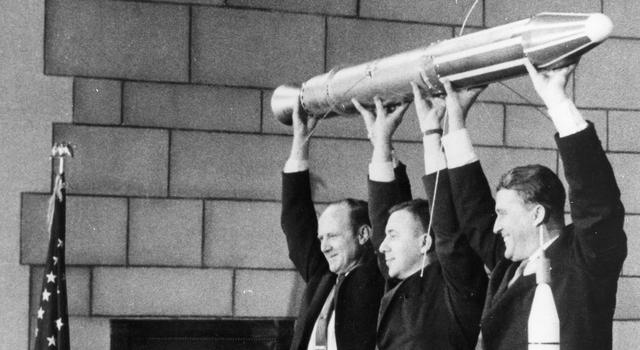
Teachable Moment: Explorer 1 Anniversary Marks 60 Years of Science in Space

NASA/JPL Edu Teachable Moment: Explorer 1 Anniversary Marks 60 Years of Science in Space
 

Teachable Moment: Explorer 1 Anniversary Marks 60 Years of Science in Space

This month marks the 60th anniversary of the launch of America's first satellite, Explorer 1. The small, pencil-shaped satellite did more than launch the U.S. into the Space Age. With its collection of instruments, or scientific tools, it turned space into not just a new frontier, but also a place of boundless scientific exploration that could eventually unveil secrets of new worlds – as well as the mysteries of our own planet.

In the latest Teachable Moment from NASA/JPL Edu, education specialist Ota Lutz explains how a team at the Jet Propulsion Laboratory in Pasadena, California, modified an Army rocket to make the first scientific study from space possible – and how data from Explorer 1 is still inspiring tantilizing new questions today.

Find out how to engage students in this important piece of space history on the NASA/JPL Edu Teachable Moments blog:


Read the Blog
 

Related Lessons and Activities

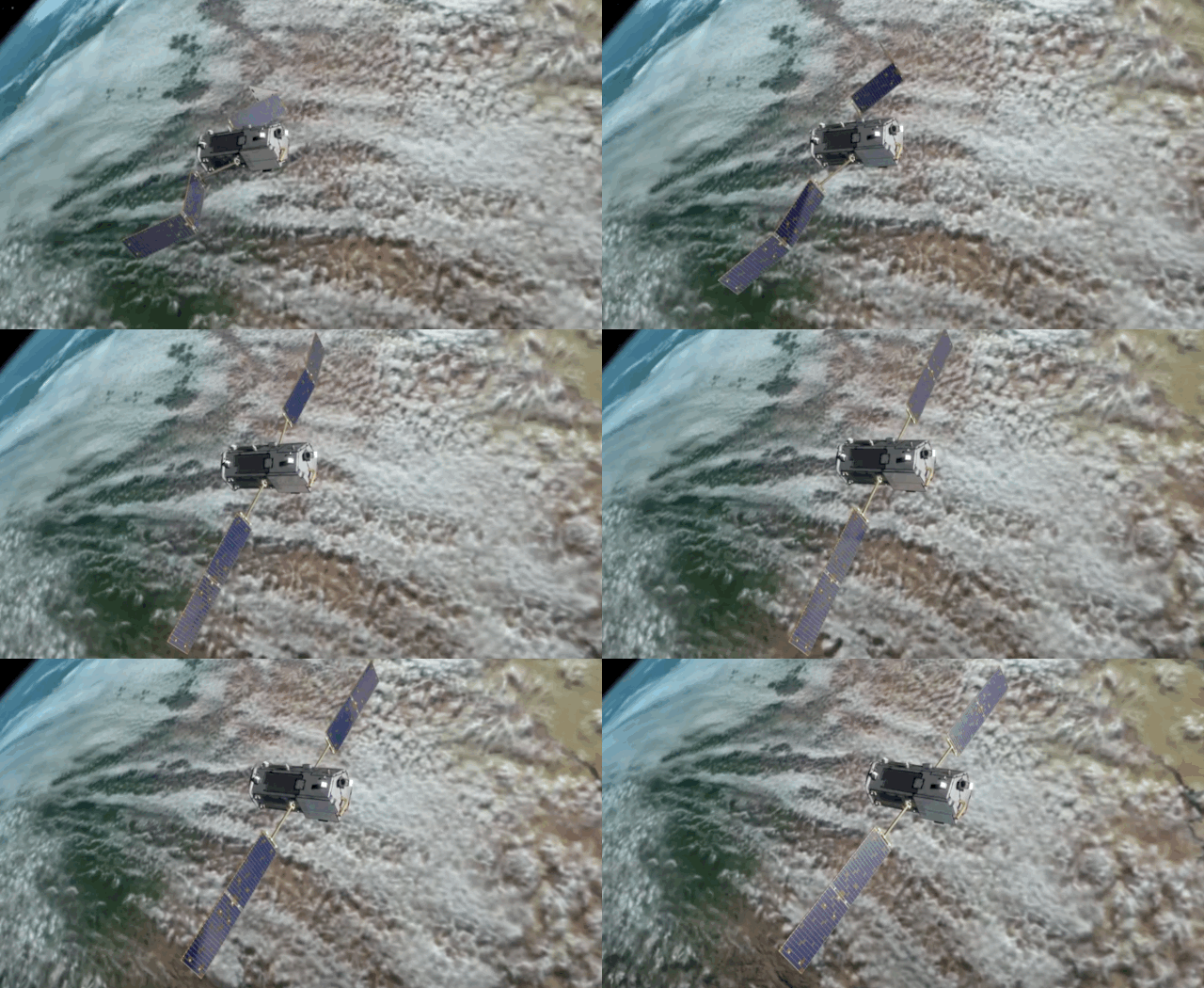
Get students building their own rockets and model satellites, plus learning about how NASA studies Earth from space today with these standards-aligned lessons from NASA/JPL Edu:

NASA/JPL Edu Lesson: Build a Satellite *NEW* Build a Satellite (Grades 5-8) – Students will use the engineering design process to design, build, test and improve a model satellite intended to investigate the surface of a planet.
Get started
NASA/JPL Edu Lesson Collection: Rocket Lessons and Activities Rocket Lessons and Activities (Grades K-9) – Use these exciting lessons to help your students experience the thrill of building and launching their own rockets using the engineering design process!
Get started
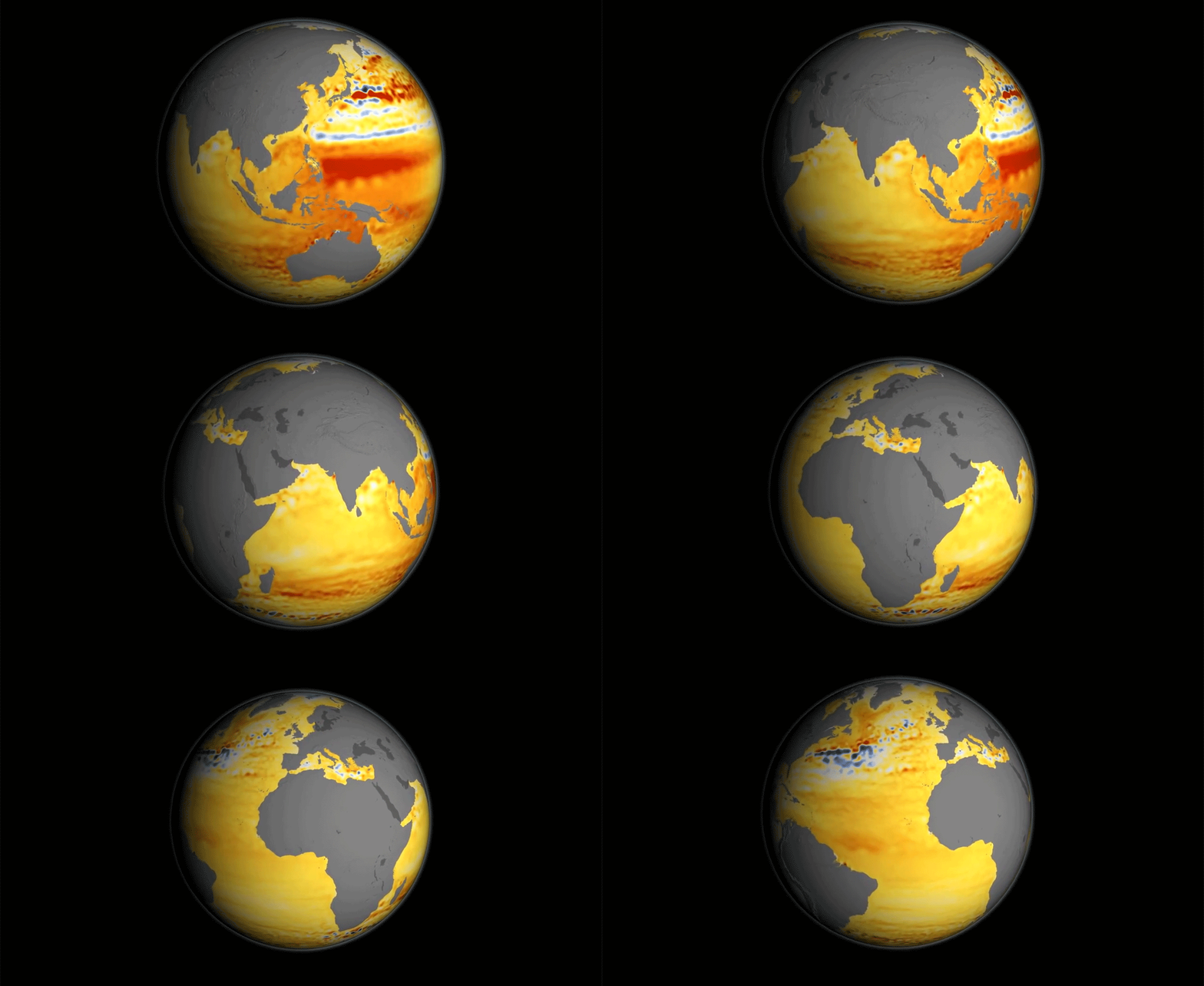
NASA/JPL Edu Lesson Collection: Rocket Lessons and Activities Earth Science Lessons and Activities (Grades K-12) – Use these lessons to engage your students in studying Earth from space!
Get started
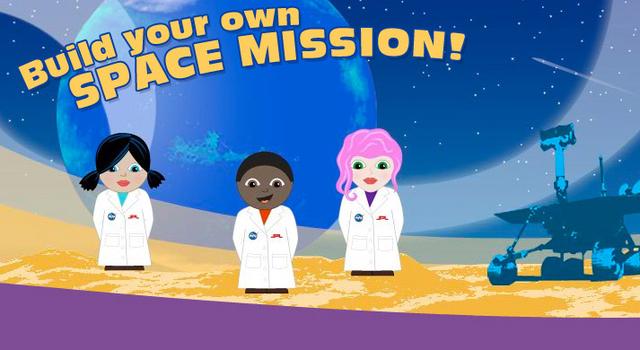
NASA/JPL Edu Game: Build Your Own Space Mission Game: Build Your Own Space Mission – Have younger students play this game to place instruments aboard a spacecraft and launch it into space!
Read more
NASA GLOBE Observer App Download the GLOBE Observer app and have students be citizen scientists in support of NASA Earth science missions! Learn more about how to participate.


This message was sent to chantybanty1.chanti@blogger.com from education@jpl.nasa.gov

NASA/JPL Edu
NASA's Jet Propulsion Laboratory
4800 Oak Grove Dr
Pasadena, CA 91109

Monday, January 15, 2018

Could this digital currency actually make you a millionaire?

Every once in a while, an opportunity comes around. What divides winners from losers is those who seize it and those who don't. By now, you must have heard about all the people who made a killing with bitcoin over the last year. Some of them made more than ten million with just an initial purchase of a thousand bucks. What I want to ask you though is: Did you know that there are hundreds of other digital currencies that have had even bigger gains over the last twelve months? This includes Ripple, Ethereum and Raiblocks � you may have heard about some of them. What is the next big one for 2018? The answer in my opinion is simple. It's Swisscoin [SIC]. The reason for that is very straight forward. It's because it is supported by the Switzerland government. It is already considered as legal in the country and it is entirely shielded from any political instability. It's the type of coin that you can buy a thousand bucks of, and sit on for a few months or even years and that few thousand will likely be worth a few million. SIC has already doubled in value since Saturday and it will double or triple again by this Friday. So, what are you waiting for? For the time being it can only be purchased on /coinexchange [dot] io/ (that's the website address of the exchange). You can set up an account in about thirty seconds, then you send bitcoins to it and you can easily buy swiss coin. If you don't have any bitcoin already you can just google how to get some, it's super simple and will just take you 10 minutes at most, then transfer them to coinexchange's website and get the SIC

Thursday, January 11, 2018

JPL News - Day in Review


DAY IN REVIEW
NASA Space Telescopes Provide a 3-D Journey Through the Orion Nebula
Data from NASA's Spitzer and Hubble space telescopes were combined to make a three-dimensional, fly-through view of the picturesque Orion Nebula.
› Read the full story
NASA's Great Observatories Team Up to Find Magnified and Stretched Image of Distant Galaxy
An intensive survey by NASA's Hubble and Spitzer space telescopes has yielded the farthest galaxy yet seen in an image stretched and amplified by gravitational lensing.
› Read the full story
Steep Slopes on Mars Reveal Structure of Buried Ice
Researchers using NASA's Mars Reconnaissance Orbiter (MRO) have found eight sites where thick deposits of ice beneath Mars' surface are exposed in faces of eroding slopes.
› Read the full story
GeoCarb: A New View of Carbon Over the Americas
A new NASA Earth satellite mission may transform our understanding of the global carbon cycle by mapping key carbon gases from a new vantage point: geostationary orbit.
› Read the full story


This message was sent to chantybanty1.chanti@blogger.com from jplnewsroom@jpl.nasa.gov

NASA Jet Propulsion Laboratory
NASA's Jet Propulsion Laboratory
4800 Oak Grove Dr
Pasadena, CA 91109

Monday, January 8, 2018

NASA/JPL Educator Workshop – Exploring Earth Science in Our Communities


Exploring Earth Science in Our Communities – NASA/JPL Educator Workshop
 

Educator Workshop: Exploring Earth Science in Our Communities

When: Saturday, Jan. 20, 8:30 a.m. to 12 p.m.

Where: Chino Basin Water Conservation District, 4594 San Bernardino St., Montclair, California

Target Audience: Teachers for grades K-12

Overview: Explore activities and methods for bringing standards-aligned Earth science activities into your classroom using NASA data. The California Regional Environmental Education Community and the San Bernardino County Superintendent of Schools Office will open the session with an introduction from experts at the Chino Basin Water Conservation District. Then, we'll use Next Generation Science Standards (NGSS) aligned activities developed by the Center of the Collaborative Classroom and the Jet Propulsion Laboratory to help students make connections in the classroom.

Please note that a portion of the session will be outdoors, so please dress for the weather.

  • This workshop is not available online; you must be physically present to participate.
  • This workshop is limited to educators at U.S.-based institutions and organizations.

› Register Online

Questions? Call the Educator Resource Center at 818-393-5917.

Can't attend the workshop? Explore these standards-aligned lessons and resources online.

  • Water Filtration Challenge (Grades 5-12) – Learn how to filter and recycle water for varying applications, ranging from agriculture to providing clean drinking water to astronauts.
  • Watershed Education – Experience NGSS by using the concept of watersheds as a lens to explore hands-on engagement in scientific practices in the classroom and the outdoors.

Discover More From NASA Space Place

The Space Place Newsletter NASA Space Place is a premier destination for science, technology, engineering and mathematics content for children between the ages of 8 and 13. Subscribe to The Space Place Newsletter to discover new educational games, videos and hands-on activities.


This message was sent to chantybanty1.chanti@blogger.com from education@jpl.nasa.gov

NASA/JPL Edu
NASA's Jet Propulsion Laboratory
4800 Oak Grove Dr
Pasadena, CA 91109

Thursday, January 4, 2018

JPL News - Day in Review


DAY IN REVIEW
NASA JPL latest news release
NASA Sees First Direct Proof of Ozone Hole Recovery

For the first time, scientists have shown through direct observations of the ozone hole by a satellite instrument, built by NASA's Jet Propulsion Laboratory in Pasadena, California, that levels of ozone-destroying chlorine are declining, resulting in less ozone depletion.

Measurements show that the decline in chlorine, resulting from an international ban on chlorine-containing human-produce chemicals called chlorofluorocarbons (CFCs), has resulted in about 20 percent less ozone depletion during the Antarctic winter than there was in 2005 -- the first year that measurements of chlorine and ozone during the Antarctic winter were made by NASA's Aura satellite.

"We see very clearly that chlorine from CFCs is going down in the ozone hole, and that less ozone depletion is occurring because of it," said lead author Susan Strahan, an atmospheric scientist from NASA's Goddard Space Flight Center in Greenbelt, Maryland.

CFCs are long-lived chemical compounds that eventually rise into the stratosphere, where they are broken apart by the Sun's ultraviolet radiation, releasing chlorine atoms that go on to destroy ozone molecules. Stratospheric ozone protects life on the planet by absorbing potentially harmful ultraviolet radiation that can cause skin cancer and cataracts, suppress immune systems and damage plant life.

Two years after the discovery of the Antarctic ozone hole in 1985, nations of the world signed the Montreal Protocol on Substances that Deplete the Ozone Layer, which regulated ozone-depleting compounds. Later amendments to the Montreal Protocol completely phased out production of CFCs.

Past studies have used statistical analyses of changes in the ozone hole's size to argue that ozone depletion is decreasing. This study is the first to use measurements of the chemical composition inside the ozone hole to confirm that not only is ozone depletion decreasing, but that the decrease is caused by the decline in CFCs.

The study was published Jan. 4 in the journal Geophysical Research Letters.

The Antarctic ozone hole forms during September in the Southern Hemisphere's winter as the returning Sun's rays catalyze ozone destruction cycles involving chlorine and bromine that come primarily from CFCs.To determine how ozone and other chemicals have changed year to year, scientists used data from JPL's Microwave Limb Sounder (MLS) aboard the Aura satellite, which has been making measurements continuously around the globe since mid-2004. While many satellite instruments require sunlight to measure atmospheric trace gases, MLS measures microwave emissions and, as a result, can measure trace gases over Antarctica during the key time of year: the dark southern winter, when the stratospheric weather is quiet and temperatures are low and stable.

The change in ozone levels above Antarctica from the beginning to the end of southern winter -- early July to mid-September -- was computed daily from MLS measurements every year from 2005 to 2016. "During this period, Antarctic temperatures are always very low, so the rate of ozone destruction depends mostly on how much chlorine there is," Strahan said. "This is when we want to measure ozone loss."

They found that ozone loss is decreasing, but they needed to know whether a decrease in CFCs was responsible. When ozone destruction is ongoing, chlorine is found in many molecular forms, most of which are not measured. But after chlorine has destroyed nearly all the available ozone, it reacts instead with methane to form hydrochloric acid, a gas measured by MLS. "By around mid-October, all the chlorine compounds are conveniently converted into one gas, so by measuring hydrochloric acid we have a good measurement of the total chlorine," Strahan said.

Nitrous oxide is a long-lived gas that behaves just like CFCs in much of the stratosphere. The CFCs are declining at the surface but nitrous oxide is not. If CFCs in the stratosphere are decreasing, then over time, less chlorine should be measured for a given value of nitrous oxide. By comparing MLS measurements of hydrochloric acid and nitrous oxide each year, they determined that the total chlorine levels were declining on average by about 0.8 percent annually.

The 20 percent decrease in ozone depletion during the winter months from 2005 to 2016 as determined from MLS ozone measurements was expected. "This is very close to what our model predicts we should see for this amount of chlorine decline," Strahan said. "This gives us confidence that the decrease in ozone depletion through mid-September shown by MLS data is due to declining levels of chlorine coming from CFCs. But we're not yet seeing a clear decrease in the size of the ozone hole because that's controlled mainly by temperature after mid-September, which varies a lot from year to year."

Looking forward, the Antarctic ozone hole should continue to recover gradually as CFCs leave the atmosphere, but complete recovery will take decades. "CFCs have lifetimes from 50 to 100 years, so they linger in the atmosphere for a very long time," said Anne Douglass, a fellow atmospheric scientist at Goddard and the study's co-author. "As far as the ozone hole being gone, we're looking at 2060 or 2080. And even then there might still be a small hole."

To read the study, visit:

http://onlinelibrary.wiley.com/doi/10.1002/2017GL074830/abstract

For more on MLS, visit:

https://mls.jpl.nasa.gov/index-eos-mls.php


This message was sent to chantybanty1.chanti@blogger.com from jplnewsroom@jpl.nasa.gov

NASA Jet Propulsion Laboratory
NASA's Jet Propulsion Laboratory
4800 Oak Grove Dr
Pasadena, CA 91109

Wednesday, January 3, 2018

JPL News - Day in Review


DAY IN REVIEW
NASA JPL latest news release
Lightening Up Soybean Leaves May Boost Food Supply

A new university-led study has shown that lightening the color of soybean leaves may increase the growth and yield of this major world food crop. The finding offers a strategy to help address Earth's future food needs.

A science team led by Donald Ort of the University of Illinois and research scientist Berkley Walker of the University of Düsseldorf, Germany, combined detailed field measurements of nearly 70 varieties of soybeans with a sophisticated model of the above-ground portion of soybean plants, developed by co-author Darren Drewry of NASA's Jet Propulsion Laboratory in Pasadena, California. They set out to examine how variations in the amount of chlorophyll, the key pigment used to capture light for photosynthesis, could provide new avenues for enhancing photosynthesis. This is a key step toward increasing crop yields to help meet the world's growing food requirements.

The team used soybean variants with lighter green leaves than those typically planted for food production. The green pigment chlorophyll gives the leaves their color; a decrease in chlorophyll lightens the leaves. The scientists found that reducing chlorophyll by 20 percent conserved 9 percent of the plant's use of nitrogen, a major component of chlorophyll, without reducing the plant canopy's photosynthesis rate. Over time, it might be possible to breed plants that would apply this extra nitrogen to growing more beans.

"Our study demonstrates that soybean fields can have reduced chlorophyll while still maintaining high levels of photosynthesis," said JPL's Drewry. His model, called MLCan, acts as a synthetic field laboratory, allowing scientists to perform experiments that would require extensive field trials and vast resources if done using actual plants.

"This study was a crucial step in the process to increase food production," Ort said. "The next step is to figure out where to redirect that conserved nitrogen." This study paves the way for future studies to determine how nitrogen can be better distributed for a more efficient plant.

Results are published in the journal Plant Physiology. The research was supported by the Bill and Melinda Gates Foundation, JPL, and the Alexander von Humboldt Foundation. JPL is managed for NASA by Caltech in Pasadena, California.


This message sent to chantybanty1.chanti@blogger.com from jplnewsroom@jpl.nasa.gov

NASA Jet Propulsion Laboratory
NASA's Jet Propulsion Laboratory
4800 Oak Grove Dr
Pasadena, CA 91109

Tuesday, January 2, 2018

NASA-led Study Solves a Methane Puzzle


DAY IN REVIEW
NASA JPL latest news release
NASA-led Study Solves a Methane Puzzle

A new NASA-led study has solved a puzzle involving the recent rise in atmospheric methane, a potent greenhouse gas, with a new calculation of emissions from global fires. The new study resolves what looked like irreconcilable differences in explanations for the increase.

Methane emissions have been rising sharply since 2006. Different research teams have produced viable estimates for two known sources of the increase: emissions from the oil and gas industry, and microbial production in wet tropical environments like marshes and rice paddies. But when these estimates were added to estimates of other sources, the sum was considerably more than the observed increase. In fact, each new estimate was large enough to explain the whole increase by itself.

Scientist John Worden of NASA's Jet Propulsion Laboratory in Pasadena, California, and colleagues focused on fires because they're also changing globally. The area burned each year decreased about 12 percent between the early 2000s and the more recent period of 2007 to 2014, according to a new study using observations by NASA's Moderate Resolution Imaging Spectrometer satellite instrument. The logical assumption would be that methane emissions from fires have decreased by about the same percentage. Using satellite measurements of methane and carbon monoxide, Worden's team found the real decrease in methane emissions was almost twice as much as that assumption would suggest.

When the research team subtracted this large decrease from the sum of all emissions, the methane budget balanced correctly, with room for both fossil fuel and wetland increases. The research is published in the journal Nature Communications.

Fast Facts:

› Atmospheric methane concentrations are given by their weight in teragrams.

› One teragram equals 110,000 tons -- the weight of about 17,000 elephants.

› Methane emissions are increasing by about 25 teragrams a year, with total emissions currently around 550 teragrams a year.

Most methane molecules in the atmosphere don't have identifying features that reveal their origin. Tracking down their sources is a detective job involving multiple lines of evidence: measurements of other gases, chemical analyses, isotopic signatures, observations of land use, and more. "A fun thing about this study was combining all this different evidence to piece this puzzle together," Worden said.

Carbon isotopes in the methane molecules are one clue. Of the three methane sources examined in the new study, emissions from fires contain the largest percentage of heavy carbon isotopes, microbial emissions have the smallest, and fossil fuel emissions are in between. Another clue is ethane, which (like methane) is a component of natural gas. An increase in atmospheric ethane indicates increasing fossil fuel sources. Fires emit carbon monoxide as well as methane, and measurements of that gas are a final clue.

Worden's team used carbon monoxide and methane data from the Measurements of Pollutants in the Troposphere instrument on NASA's Terra satellite and the Tropospheric Emission Spectrometer instrument on NASA's Aura to quantify fire emissions of methane. The results show these emissions have been decreasing much more rapidly than expected.

Combining isotopic evidence from ground surface measurements with the newly calculated fire emissions, the team showed that about 17 teragrams per year of the increase is due to fossil fuels, another 12 is from wetlands or rice farming, while fires are decreasing by about 4 teragrams per year. The three numbers combine to 25 teragrams a year -- the same as the observed increase.

Worden's coauthors are at the National Center for Atmospheric Research, Boulder, Colorado; and the Netherlands Institute for Space Research and University of Utrecht, both in Utrecht, the Netherlands.


This message sent to chantybanty1.chanti@blogger.com from jplnewsroom@jpl.nasa.gov

NASA Jet Propulsion Laboratory
NASA's Jet Propulsion Laboratory
4800 Oak Grove Dr
Pasadena, CA 91109