MY SEARCH ENGINE

Thursday, August 24, 2017

JPL News - Day in Review


LATEST NEWS
NASA JPL latest news release
Vote for the #MessageToVoyager

Join NASA in celebrating the Voyager mission's 40 years of exploring space. Inspired by the messages of goodwill carried on Voyager's Golden Record, you're invited to help choose a short, uplifting #MessageToVoyager and all that lies beyond it. Vote for your favorite message by 5 p.m. PDT on Tuesday, Aug. 29. NASA will beam the winning message into interstellar space on Sept. 5, 2017—the 40th anniversary of Voyager 1's launch.

> Cast Your Vote


This message sent to chantybanty1.chanti@blogger.com from jplnewsroom@jpl.nasa.gov

NASA Jet Propulsion Laboratory
NASA's Jet Propulsion Laboratory
4800 Oak Grove Dr
Pasadena, CA 91109

JPL News - Day in Review


DAY IN REVIEW
NASA JPL latest news release
NASA Announces Cassini End-of-Mission Activities

On Sept. 15, NASA's Cassini spacecraft will complete its remarkable story of exploration with an intentional plunge into Saturn's atmosphere, ending its mission after nearly 20 years in space. News briefings, photo opportunities and other media events will be held at NASA's Jet Propulsion Laboratory in Pasadena, California, and will air live on NASA Television and the agency's website.

NASA also will hold a media teleconference Tuesday, Aug. 29 to preview activities for Cassini during its final two weeks.

› DOWNLOAD VIDEO Cassini: The Wonder of Saturn

Launched in 1997, Cassini arrived in orbit around Saturn in 2004 on a mission to study the giant planet, its rings, moons and magnetosphere. In April of this year, Cassini began the final phase of its mission, called its Grand Finale -- a daring series of 22 weekly dives between the planet and its rings. On Sept. 15, Cassini will plunge into Saturn, sending new and unique science about the planet's upper atmosphere to the very end. After losing contact with Earth, the spacecraft will burn up like a meteor. This is the first time a spacecraft has explored this unique region of Saturn -- a dramatic conclusion to a mission that has revealed so much about the ringed planet.

Cassini flight controllers will monitor the spacecraft's final transmissions from JPL Mission Control.

Cassini Media Events and Schedule

(All media teleconferences and NASA TV news conferences will be available on the agency's website, and times are subject to change)

Tuesday, Aug. 29

  • 2 p.m. EDT -- Media teleconference about spacecraft science and operations activities for the final orbits leading up to the end of the mission will include:

        - Curt Niebur, Cassini program scientist, Headquarters, Washington

        - Earl Maize, Cassini project manager, JPL

        - Linda Spilker, Cassini project scientist, JPL

Visuals discussed during the telecon will be available at the start of the event at:

https://www.nasa.gov/cassinitelecon

Wednesday, Sept. 13

  • 1 p.m. EDT -- News conference from JPL with a detailed preview of final mission activities (also available on NASA TV and online)

Thursday, Sept. 14

  • 10 a.m. to 3 p.m PDT -- NASA Social -- onsite gathering for 30 pre-selected social media followers. Events will include a tour, and a speaker program that will be carried on NASA TV and online.
  • About 8 p.m. PDT -- Final downlink of images expected to begin (streamed online only)

Friday, Sept. 15: End of Mission

  • 7 to 8:30 a.m. EDT -- Live commentary on NASA TV and online. In addition, an uninterrupted, clean feed of cameras from JPL Mission Control, with mission audio only, will be available during the commentary on the NASA TV Media Channel and on Ustream.
  • About 8 a.m. EDT -- Expected time of last signal and science data from Cassini
  • 9:30 a.m. EDT -- Post-mission news conference at JPL (on NASA TV and online)

Media and the public also may ask questions during the events using #askNASA.

For online streaming, visit:

https://www.nasa.gov/live

To watch the news conferences online, visit:

https://www.nasa.gov/live

http://www.youtube.com/nasajpl/live

Accreditation

To cover these events at JPL, media must have pre-arranged credentials issued via the JPL Media Relations Office. The deadlines to apply for credentials have passed.

Resources

A Cassini press kit will be available beginning on Aug. 29 at:

https://saturn.jpl.nasa.gov/mission/grand-finale/for-media

Video for the Cassini mission is available for download at:

https://vimeo.com/album/4649677

The Cassini-Huygens mission is a cooperative project of NASA, ESA (European Space Agency) and the Italian Space Agency. JPL manages the mission for NASA's Science Mission Directorate. JPL designed, developed and assembled the Cassini orbiter.

For more information on the Cassini mission's finale, including graphics, fact sheets, press kit, and an up-to-date timeline of mission events, visit:

https://saturn.jpl.nasa.gov/grandfinale

Follow the mission on social media at:

http://www.twitter.com/CassiniSaturn

https://www.facebook.com/NASACassini


This message sent to chantybanty1.chanti@blogger.com from jplnewsroom@jpl.nasa.gov

NASA Jet Propulsion Laboratory
NASA's Jet Propulsion Laboratory
4800 Oak Grove Dr
Pasadena, CA 91109

Wednesday, August 23, 2017

Voyager 40th Anniversary: Free online lecture - Thursday, August 24 at 7pm PDT


Von Karman Lecture
NASA JPL latest news release
40 Years in Space: Voyager's Remarkable Journey Continues

In 1977, NASA's twin Voyager spacecraft embarked on an incredible journey to the outer planets and beyond. After delivering stunning images of Jupiter, Saturn, Uranus and Neptune, the probes sailed on to study the boundary of our heliosphere, the bubble that encompasses our sun, planets and solar wind.

Please join JPL with host Alan Cummings, Senior Research Scientist at Caltech and Voyager team member since 1973 as he discusses the past, present and future of the historic Voyager mission into interstellar space.

Click here for more info


This message sent to chantybanty1.chanti@blogger.com from jplnewsroom@jpl.nasa.gov

NASA Jet Propulsion Laboratory
NASA's Jet Propulsion Laboratory
4800 Oak Grove Dr
Pasadena, CA 91109

Thursday, August 17, 2017

Trabajo en Casa (USD $ 2,500) Traductor Inglés - Español Requerido

LINGGOWORLD busca:


TRADUCTOR EN LÍNEA
(CHINO / ÁRABE / INGLÉS / THAI / SUECO / COREANO / JAPONÉS / ESPAÑOL / FRANCÉS / RUSO / OTROS IDIOMAS)

...traducir...

... cartas, revistas, tesis, artículos, informes, libros, ebooks, acuerdo, letras, papel, 'presentación', periódico, cómic, manga, copia-escritura, anuncio, etc. ,


REQUISITO:

- Capaz de leer y escribir con habilidad en el idioma que va a traducir

- Conocimientos básicos de informática

- Capaz de trabajar desde casa a través de Internet

- No se necesita experiencia


PARA SOLICITAR: Por favor llene el formulario aquí - >> http://majalah30.blogspot.com/p/blog-page_64.html


***** ¡Comparte esta INFORMACIÓN en tu muro de Facebook!


Traductor chino, traductor chino, traductor chino, traductor chino, traductor chino, traductor chino, traductor chino, traductor japonés, traductor japonés, traductor japonés, traductor japonés, traductor japonés, traductor japonés al inglés, ruso Trabajo de traducción, traductor de ruso, traductor de ruso, traductor de ruso, trabajo de traducción al ruso, encontrar trabajo, encontrar un empleo, encontrar trabajo, encontrar empleo en línea, encontrar un trabajo en línea, buscar trabajo de traducción, Servicios de reclutamiento de idiomas, agencias de reclutamiento, agencias de reclutamiento de idiomas, reclutamiento multilingüe, reclutamiento de traductores, trabajo en línea desde casa, trabajo en línea desde casa, trabajo desde casa en línea, trabajo desde casa en línea, trabajo en línea en casa, trabajo en línea desde casa, trabajo en casa Empleos en línea, trabajo en línea en el hogar, oportunidades de trabajo para traductores, traductor job oppo Rtunities, oportunidades de trabajo de traducción, ofertas de empleo, oportunidades de empleo, oportunidades de empleo de carrera, oportunidades de trabajo para, en busca de trabajo, en busca de empleo, en busca de empleo, en busca de empleo en línea, en busca de un trabajo en línea, Trabajar en línea, trabajar en línea, trabajar en línea, trabajar en línea y recibir pagos, trabajo en línea gratuito, trabajo a tiempo parcial en línea, trabajos de traducción al alemán al inglés, traductor inglés al alemán, trabajos de traducción del inglés al hindi, trabajos de traducción al coreano al inglés , Empleos en internet, trabajos en internet, trabajos en internet, trabajos en internet, trabajos en internet, trabajos en internet, trabajo en internet, trabajos en internet, trabajos en internet en casa, trabajos freelance en línea, trabajos freelance, trabajos freelance uk, job Freelance, traductor arabic traductor, traductor arabic traductor, traductor arabic traductor, traductor arabic traductor, traductor arabic Trabajos de traductores, traductores de español, traductores de español, traductores de español, trabajos de traductores españoles

.

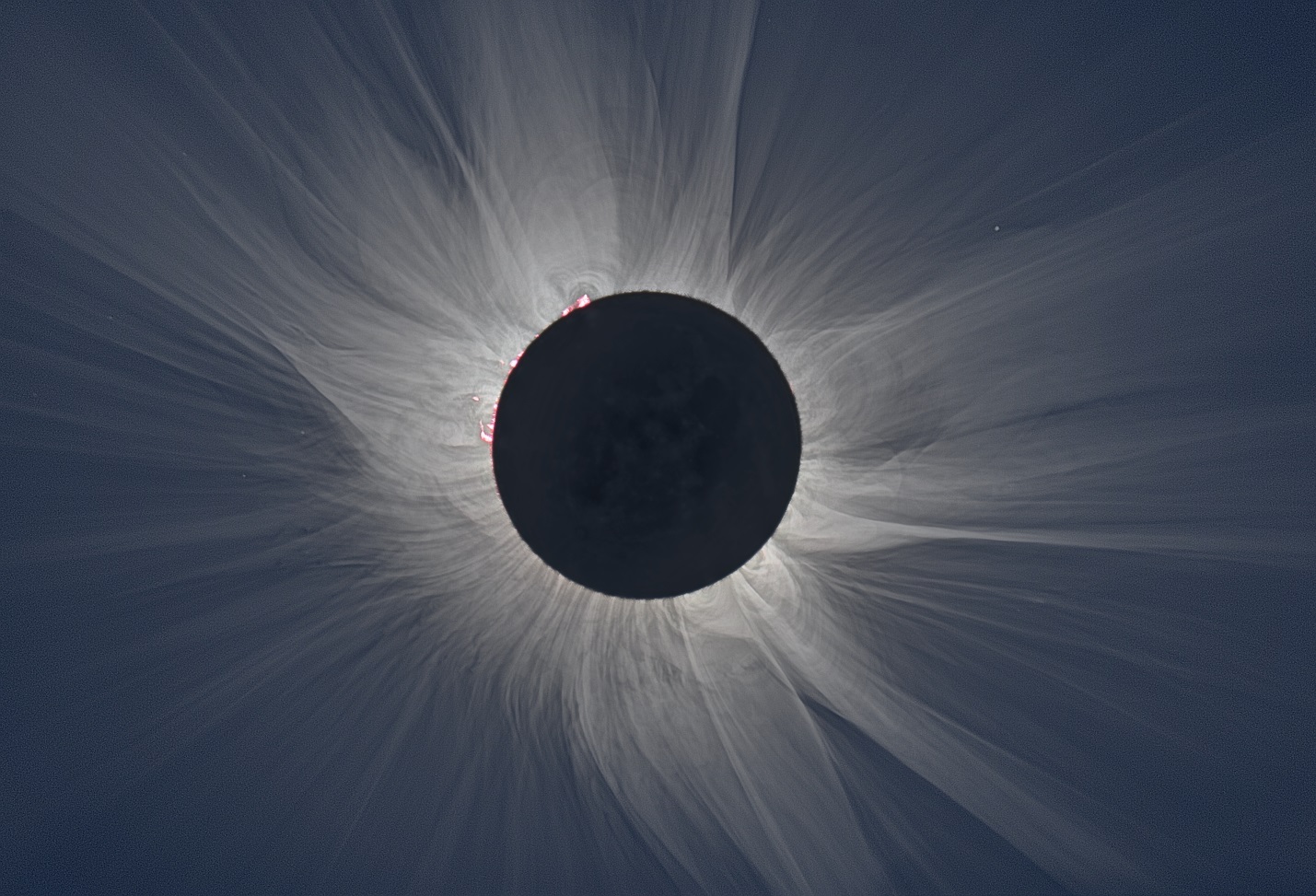
Get Ready for Monday's Total Solar Eclipse! Tips, Lessons & Activities from NASA/JPL Edu

NASA/JPL Education – Teachable Moment: Get Students Excited About Science With This Month's Total Solar Eclipse
 

Get Ready for Monday's Total Solar Eclipse

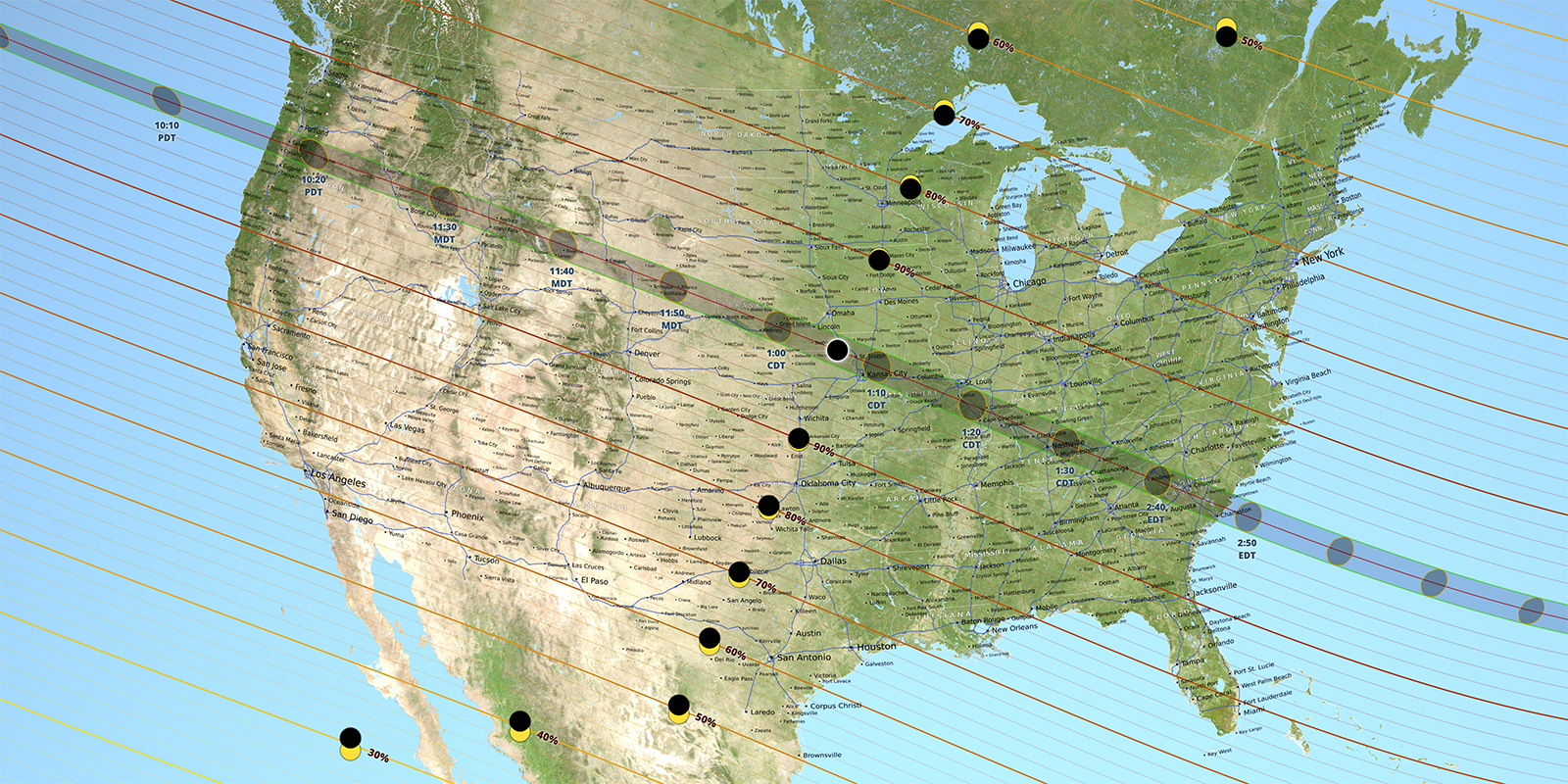
This Monday, Aug. 21, every state in the U.S. will have a chance to see one of the sky's most captivating shows, a solar eclipse. Some, in what's called the path of totality, will even get to see a total solar eclipse, where the moon completely covers the disk of the sun.

These lessons, activities and resources from NASA/JPL Edu will help you engage students in scientific observations and discovery before, during and after the eclipse. Plus find information on how solar eclipses work, how to safely view one in action and how to contribute to NASA science!

NASA/JPL Edu News – Teachable Moment – Eclipse 2017 Teachable Moment Blog – Learn all about the eclipse, how to watch it safely and how to make it a Teachable Moment for students.
Read more
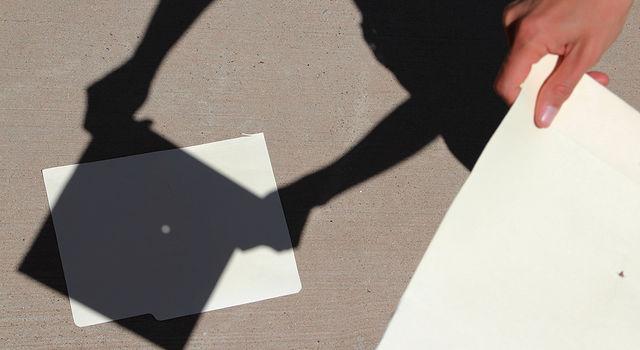
NASA/JPL Edu Learn – Projects– How to Make a Pinhole Camera Project: How to Make a Pinhole Camera – Learn how to make your very own pinhole camera to safely see a solar eclipse in action!
Read more
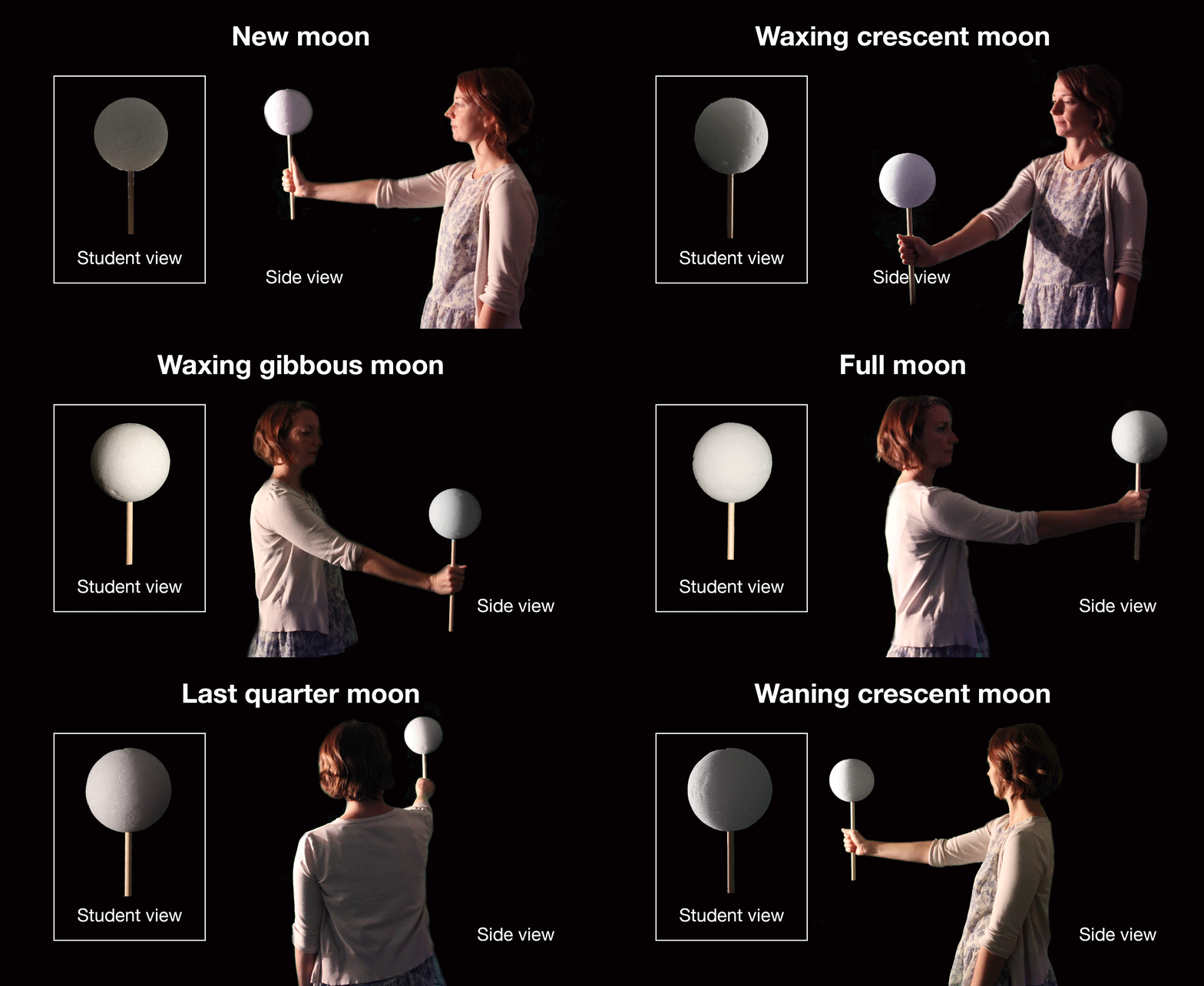
NASA/JPL Edu Teach – Activities – Moon Phases Lesson: Moon Phases (Grades 1-6) – Students learn about the phases of the moon by acting them out.
Read more
NASA/JPL Edu Teach – Activities – Measuring Solar Energy During an Eclipse NEW! Lesson: Measuring Solar Energy During an Eclipse (Grades 4-7) – Students use mobile devices to measure the impact a solar eclipse has on the energy received at Earth's surface.
Read more
NASA/JPL Edu Teach – Activities – Modeling the Earth-Moon System NEW! Lesson: Modeling the Earth-Moon System (Grades 6-8) – Students learn about scale models and distance by creating a classroom-size Earth-Moon system.
Read more
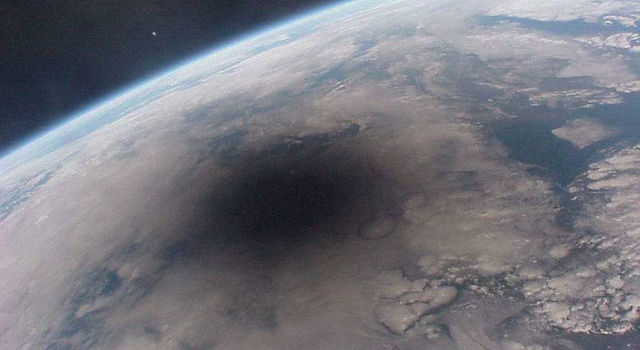
NASA/JPL Edu Teach – Activities – Epic Eclipse: A Pi in the Sky Math Challenge Lesson: Epic Eclipse: A Pi in the Sky Math Challenge (Grades 6-12) – In this lesson, students use the mathematical constant pi to approximate the area of land covered by the Moon's shadow during the eclipse.
Read more
NASA Eclipse 2017 Website NASA Eclipse 2017 Website – Find more eclipse info, including safety tips, maps and how to watch on NASA TV.
Read more


This message sent to chantybanty1.chanti@blogger.com from education@jpl.nasa.gov

NASA/JPL Edu
NASA's Jet Propulsion Laboratory
4800 Oak Grove Dr
Pasadena, CA 91109

JPL News - Day in Review


DAY IN REVIEW
NASA JPL latest news release
Scientists Improve Brown Dwarf Weather Forecasts

Dim objects called brown dwarfs, less massive than the Sun but more massive than Jupiter, have powerful winds and clouds -- specifically, hot patchy clouds made of iron droplets and silicate dust. Scientists recently realized these giant clouds can move and thicken or thin surprisingly rapidly, in less than an Earth day, but did not understand why.

Now, researchers have a new model for explaining how clouds move and change shape in brown dwarfs, using insights from NASA's Spitzer Space Telescope. Giant waves cause large-scale movement of particles in brown dwarfs' atmospheres, changing the thickness of the silicate clouds, researchers report in the journal Science. The study also suggests these clouds are organized in bands confined to different latitudes, traveling with different speeds in different bands.

"This is the first time we have seen atmospheric bands and waves in brown dwarfs," said lead author Daniel Apai, associate professor of astronomy and planetary sciences at the University of Arizona in Tucson.

Just as in Earth's ocean, different types of waves can form in planetary atmospheres. For example, in Earth's atmosphere, very long waves mix cold air from the polar regions to mid-latitudes, which often lead clouds to form or dissipate.

The distribution and motions of the clouds on brown dwarfs in this study are more similar to those seen on Jupiter, Saturn, Uranus and Neptune. Neptune has cloud structures that follow banded paths too, but its clouds are made of ice. Observations of Neptune from NASA's Kepler spacecraft, operating in its K2 mission, were important in this comparison between the planet and brown dwarfs.

"The atmospheric winds of brown dwarfs seem to be more like Jupiter's familiar regular pattern of belts and zones than the chaotic atmospheric boiling seen on the Sun and many other stars," said study co-author Mark Marley at NASA's Ames Research Center in California's Silicon Valley.

Brown dwarfs can be thought of as failed stars because they are too small to fuse chemical elements in their cores. They can also be thought of as "super planets" because they are more massive than Jupiter, yet have roughly the same diameter. Like gas giant planets, brown dwarfs are mostly made of hydrogen and helium, but they are often found apart from any planetary systems. In a 2014 study using Spitzer, scientists found that brown dwarfs commonly have atmospheric storms.

Due to their similarity to giant exoplanets, brown dwarfs are windows into planetary systems beyond our own. It is easier to study brown dwarfs than planets because they often do not have a bright host star that obscures them.

"It is likely the banded structure and large atmospheric waves we found in brown dwarfs will also be common in giant exoplanets," Apai said.

Using Spitzer, scientists monitored brightness changes in six brown dwarfs over more than a year, observing each of them rotate 32 times. As a brown dwarf rotates, its clouds move in and out of the hemisphere seen by the telescope, causing changes in the brightness of the brown dwarf. Scientists then analyzed these brightness variations to explore how silicate clouds are distributed in the brown dwarfs.

Researchers had been expecting these brown dwarfs to have elliptical storms resembling Jupiter's Great Red Spot, caused by high-pressure zones. The Great Red Spot has been present in Jupiter for hundreds of years and changes very slowly: Such "spots" could not explain the rapid changes in brightness that scientists saw while observing these brown dwarfs. The brightness levels of the brown dwarfs varied markedly just over the course of an Earth day.

To make sense of the ups and downs of brightness, scientists had to rethink their assumptions about what was going on in the brown dwarf atmospheres. The best model to explain the variations involves large waves, propagating through the atmosphere with different periods. These waves would make the cloud structures rotate with different speeds in different bands.

University of Arizona researcher Theodora Karalidi used a supercomputer and a new computer algorithm to create maps of how clouds travel on these brown dwarfs.

"When the peaks of the two waves are offset, over the course of the day there are two points of maximum brightness," Karalidi said. "When the waves are in sync, you get one large peak, making the brown dwarf twice as bright as with a single wave."

The results explain the puzzling behavior and brightness changes that researchers previously saw. The next step is to try to better understand what causes the waves that drive cloud behavior.

JPL manages the Spitzer Space Telescope mission for NASA's Science Mission Directorate, Washington. Science operations are conducted at the Spitzer Science Center at Caltech in Pasadena, California. Spacecraft operations are based at Lockheed Martin Space Systems Company, Littleton, Colorado. Data are archived at the Infrared Science Archive housed at the Infrared Processing and Analysis Center at Caltech. Caltech manages JPL for NASA. For more information about Spitzer, visit:

http://spitzer.caltech.edu

https://www.nasa.gov/spitzer


This message sent to chantybanty1.chanti@blogger.com from jplnewsroom@jpl.nasa.gov

NASA Jet Propulsion Laboratory
NASA's Jet Propulsion Laboratory
4800 Oak Grove Dr
Pasadena, CA 91109

Outstanding invoices email 1 of 2

Hi

Further to our conversation, there are four aged invoices outstanding. 

Please can you look at these and provide an update regarding payment. 

Thank you. 


P.Auger

Wednesday, August 16, 2017

JPL News - Day in Review


DAY IN REVIEW
NASA JPL latest news release
NASA-led Mission Studies Storm Intensification

A group of NASA and National Oceanic and Atmospheric Administration (NOAA) scientists, including scientists from NASA's Jet Propulsion Laboratory, Pasadena, California, are teaming up this month for an airborne mission focused on studying severe storm processes and intensification. The Hands-On Project Experience (HOPE) Eastern Pacific Origins and Characteristics of Hurricanes (EPOCH) field campaign will use NASA's Global Hawk autonomous aircraft to study storms in the Northern Hemisphere to learn more about how storms intensify as they brew out over the ocean.

The scope of the mission initially focused only on the East Pacific region, but was expanded to both the Gulf and Atlantic regions to give the science team broader opportunities for data collection.

"Our key point of interest is still the Eastern Pacific, but if the team saw something developing off the East Coast that may have high impact to coastal communities, we would definitely recalibrate to send the aircraft to that area," said Amber Emory, NASA's principal investigator.

Having a better understanding of storm intensification is an important goal of HOPE EPOCH. The data will help improve models that predict storm impact to coastal regions, where property damage and threat to human life can be high.

NASA has led the campaign through integration of the HOPE EPOCH science payload onto the Global Hawk platform and maintained operational oversight for the six planned mission flights. NOAA's role will be to incorporate data from dropsondes -- devices dropped from aircraft to measure storm conditions -- into NOAA National Weather Service operational models to improve storm track and intensity forecasts that will be provided to the public. NOAA first used the Global Hawk to study Hurricane Gaston in 2016.

With the Global Hawk flying at altitudes of 60,000 feet (18,300 meters), the team will conduct six 24-hour-long flights, three of which are being supported and funded through a partnership with NOAA's Unmanned Aircraft Systems program.

NASA's autonomous Global Hawk is operated from NASA's Armstrong Flight Research Center at Edwards Air Force Base in California and was developed for the U.S. Air Force by Northrop Grumman. It is ideally suited for high-altitude, long-duration Earth science flights.

The ability of the Global Hawk to autonomously fly long distances, remain aloft for extended periods of time and carry large payloads brings a new capability to the science community for measuring, monitoring and observing remote locations of Earth not feasible or practical with piloted aircraft or space satellites.

The science payload consists of a variety of instruments that will measure different aspects of storm systems, including wind velocity, pressure, temperature, humidity, cloud moisture content and the overall structure of the storm system.

Many of the science instruments have flown previously on the Global Hawk, including the High-Altitude MMIC Sounding Radiometer (HAMSR), a microwave sounder instrument that takes vertical profiles of temperature and humidity; and the Airborne Vertical Atmospheric Profiling System (AVAPS) dropsondes, which are released from the aircraft to profile temperature, humidity, pressure, wind speed and direction.

New to the science payload is the ER-2 X-band Doppler Radar (EXRAD) instrument that observes vertical velocity of a storm system. EXRAD has one conically scanning beam as well as one nadir beam, which looks down directly underneath the aircraft. EXRAD now allows researchers to get direct retrievals of vertical velocities directly underneath the plane.

The EXRAD instrument is managed and operated by NASA's Goddard Space Flight Center in Greenbelt, Maryland; and the HAMSR instrument is managed by JPL. The National Center for Atmospheric Research developed the AVAPS dropsonde system, and the NOAA team will manage and operate the system for the HOPE EPOCH mission.

Besides the scientific value that the HOPE EPOCH mission brings, the campaign also provides a unique opportunity for early-career scientists and project managers to gain professional development.

HOPE is a cooperative workforce development program sponsored by the Academy of Program/Project & Engineering Leadership (APPEL) program and NASA's Science Mission Directorate. The HOPE Training Program provides an opportunity for a team of early-entry NASA employees to propose, design, develop, build and launch a suborbital flight project over the course of 18 months. This opportunity enables participants to gain the knowledge and skills necessary to manage NASA's future flight projects.

Emory started as a NASA Pathways Intern in 2009. The HOPE EPOCH mission is particularly exciting for her, as some of her first science projects at NASA began with the Global Hawk program.

The NASA Global Hawk had its first flights during the 2010 Genesis and Rapid Intensification Processes (GRIP) campaign. Incidentally, the first EPOCH science flight targeted Tropical Storm Franklin as it emerged from the Yucatan peninsula into the Gulf of Campeche along a track almost identical to that of Hurricane Karl in 2010, which was targeted during GRIP and where Emory played an important role.

"It's exciting to work with people who are so committed to making the mission successful," Emory said. "Every mission has its own set of challenges, but when people come to the table with new ideas on how to solve those challenges, it makes for a very rewarding experience and we end up learning a lot from one another."


This message sent to chantybanty1.chanti@blogger.com from jplnewsroom@jpl.nasa.gov

NASA Jet Propulsion Laboratory
NASA's Jet Propulsion Laboratory
4800 Oak Grove Dr
Pasadena, CA 91109

Monday, August 14, 2017

JPL News - Day in Review


DAY IN REVIEW
NASA JPL latest news release
Study Finds Drought Recoveries Taking Longer

As global temperatures continue to rise, droughts are expected to become more frequent and severe in many regions during this century. A new study with NASA participation finds that land ecosystems took progressively longer to recover from droughts in the 20th century, and incomplete drought recovery may become the new normal in some areas, possibly leading to tree death and increased emissions of greenhouse gases.

In results published Aug. 10 in the journal Nature, a research team led by Christopher Schwalm of Woods Hole Research Center, Falmouth, Massachusetts, and including a scientist from NASA's Jet Propulsion Laboratory, Pasadena, California, measured recovery time following droughts in various regions of the world. They used projections from climate models verified by observations from the Moderate Resolution Imaging Spectroradiometer (MODIS) instrument on NASA's Terra satellite and ground measurements. The researchers found that drought recovery was taking longer in all land areas. In two particularly vulnerable regions -- the tropics and northern high latitudes -- recovery took ever longer than in other regions.

Schwalm noted that in model projections that assumed no new restrictions on greenhouse gas emissions (the so-called business-as-usual scenario), "Time between drought events will likely become shorter than the time needed for land ecosystems to recover from them."

"Using the vantage point of space, we can see all of Earth's forests and other ecosystems getting hit repeatedly and increasingly by droughts," said study co-author Josh Fisher of JPL. "Some of these ecosystems recover, but, with increasing frequency, others do not. Data from our 'eyes' in space allow us to verify our simulations of past and current climate, which, in turn, helps us reduce uncertainties in projections of future climate."

The scientists argue that recovery time is a crucial metric for assessing the resilience of ecosystems, shaping the odds of crossing a tipping point after which trees begin to die. Shorter times between droughts, combined with longer drought recovery times, may lead to widespread tree death, decreasing the ability of land areas to absorb atmospheric carbon.

The research is funded by the National Science Foundation and NASA. Other participating institutions include Northern Arizona University, Flagstaff; the University of Utah, Salt Lake City; Carnegie Institution for Science, Stanford, California; the University of New Mexico, Albuquerque; the U.S. Forest Service, Ogden, Utah; Arable Labs Inc., Princeton, New Jersey; the National Snow and Ice Data Center, Boulder, Colorado; Oak Ridge National Laboratory, Oak Ridge, Tennessee; the University of Maine, Orono; Pacific Northwest National Laboratory, Richland, Washington; the University of Illinois, Urbana; the University of Nevada, Reno; and Auburn University, Auburn, Alabama.


This message sent to chantybanty1.chanti@blogger.com from jplnewsroom@jpl.nasa.gov

NASA Jet Propulsion Laboratory
NASA's Jet Propulsion Laboratory
4800 Oak Grove Dr
Pasadena, CA 91109

Friday, August 11, 2017

JPL News - Day in Review


DAY IN REVIEW
TRAPPIST-1 is Older Than Our Solar System
If we want to know more about whether life could survive on a planet outside our solar system, it's important to know the age of its star.
› Read the full story
Cassini Prepares to Say Goodbye to a True Titan
The giant, hazy moon Titan has been essential to Cassini's mission, from the spacecraft's 2004 arrival at Saturn to the very end.
› Read the full story
NASA Announces Television Coverage for Aug. 21 Solar Eclipse
NASA TV will carry the Aug. 21 solar eclipse live from unique vantage points on the ground, from aircraft and from spacecraft, including the International Space Station.
› Read the full story


This message sent to chantybanty1.chanti@blogger.com from jplnewsroom@jpl.nasa.gov

NASA Jet Propulsion Laboratory
NASA's Jet Propulsion Laboratory
4800 Oak Grove Dr
Pasadena, CA 91109